


La Spinetta
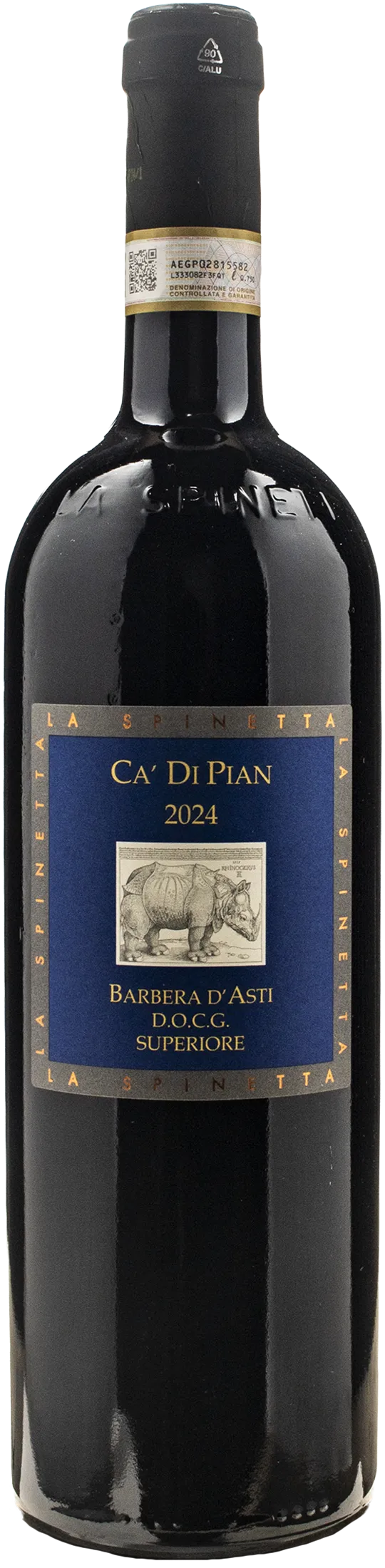
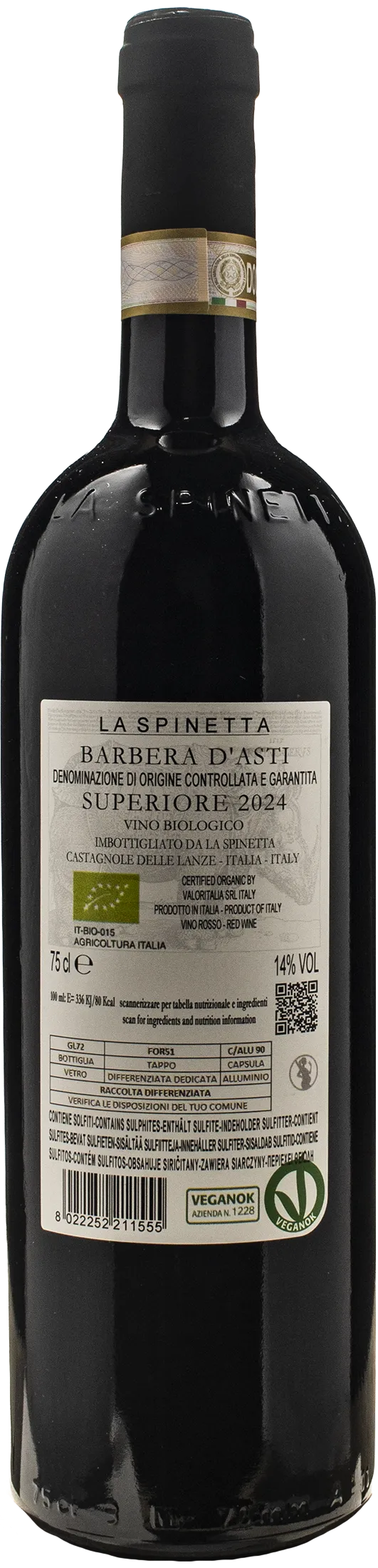
Barbera d'Asti Superiore Ca di Pian 2024
| Denomination | DOCG Barbera d'Asti Superiore |
|---|---|
| Size | 0,75 l |
| Alcohol content | 14.0% by volume |
| Area | Piedmont (Italy) |
| Grape varieties | 100% Barbera |
| Aging | Entirely in new French barriques with medium toasting for 12 months; then around 6 months in stainless steel tanks and bottle ageing for 12 months. |
- Identity: Organic Barbera d’Asti Superiore DOCG 2024, vegan, 0.75 l, 14.5% vol
- Aroma and colour: garnet red with violet highlights; notes of morello cherry, blackberry and plum
- Taste: fruity and fresh on the palate, enveloping structure; lively acidity and balanced tannins
- Vinification: fermentation in rotofermenters at controlled temperature; malolactic fermentation and 12 months in barrique
- Serving and pairings: 16–18 °C, decant for 1 hour; pasta, white meats, cheeses
Description
What kind of wine it is
Ca di Pian by La Spinetta is a still organic red wine, also suitable for those following a vegan lifestyle, which fully enhances the Barbera grapes. To the eye, it displays an intense garnet colour with bright violet highlights. The bouquet reveals clear notes of morello cherry, blackberry and ripe plum. On the palate, the silky texture accompanies a distinctly fruity sip. This Barbera d’Asti Superiore reveals an enveloping and dynamic structure, driven by a lively acidity and well-balanced tannins.
Where it comes from
The grapes ripen in the Piedmont territories of Castagnole delle Lanze, Costigliole d’Asti and Montegrosso d’Asti. The vineyards are situated at three hundred metres above sea level, with optimal southern exposure. The vines, trained using the Guyot system and with an average age of forty years, sink their roots into marl-limestone soils. This particular geological matrix gives the Barbera a defined flavour profile, perfectly balanced between structure and freshness. The agronomic conditions favour a deep fruit intensity and a calibrated tannic structure, an authentic expression of the territory.
How it is produced
The harvest takes place between the end of September and the beginning of October. The process begins with maceration and alcoholic fermentation in rotofermenters at a controlled temperature, a technique aimed at extracting colour and phenolic substances. The subsequent malolactic fermentation takes place in French barrels, softening the natural acidic drive of the grapes. The wine then matures for twelve months in the same French barrels, followed by a six-month period in stainless steel. A final rest of twelve months completes the evolution, ensuring harmony between fruit and tannins.
History and Curiosities
Founded in Piedmont in 1977 by the Rivetti family, La Spinetta winery stands as an undisputed symbol of oenological excellence. Originally established for the production of Moscato, since 1985 the company has enhanced the value of Barbera d’Asti Superiore through the iconic Cà di Pian. Distinguished by its famous label featuring a rhinoceros, this refined organic red is produced from forty-year-old historic vines. The 2024 vintage, awarded 89 points by Wine Spectator, embodies the pinnacle of a tradition capable of delivering a rich, deep and highly structured sip.
Tasting notes

Perfume

Color

Taste
Serve at:
14 -16 °C
Longevity:
05 - 10 years
Decanting time:
1 hour

- Start up year: 1977
- Oenologist: Giorgio Rivetti, Andrea Rivetti
- Bottles produced: 500.000
- Hectares: 100


| Name | La Spinetta Barbera d'Asti Superiore Ca di Pian 2024 |
|---|---|
| Type | Red organic still |
| Denomination | Barbera d'Asti DOCG |
| Vintage | 2024 |
| Size | 0,75 l |
| Alcohol content | 14.0% by volume |
| Grape varieties | 100% Barbera |
| Country | Italy |
| Region | Piedmont |
| Vendor | La Spinetta |
| Story | History and Curiosities Founded in Piedmont in 1977 by the Rivetti family, La Spinetta winery stands as an undisputed symbol of oenological excellence. Originally established for the production of Moscato, since 1985 the company has enhanced the value of Barbera d’Asti Superiore through the iconic Cà di Pian. Distinguished by its famous label featuring a rhinoceros, this refined organic red is produced from forty-year-old historic vines. The 2024 vintage, awarded 89 points by Wine Spectator, embodies the pinnacle of a tradition capable of delivering a rich, deep and highly structured sip. |
| Origin | Castagnole delle Lanze, Costigliole d'Asti and Montegrosso d'Asti (Piedmont) |
| Climate | Altitude: 300 m a.s.l. Exposure: South. |
| Soil composition | Marly-calcareous |
| Cultivation system | Guyot |
| Harvest | End of September, early October |
| Fermentation temperature | Constant temperature |
| Fermentation | 6-7 days |
| Production technique | Maceration and alcoholic fermentation at controlled temperature in rotofermenters; malolactic fermentation in French barriques; ageing in barriques followed by further ageing in bottle |
| Wine making | Maceration and alcoholic fermentation in rotofermenters at controlled temperature for about 6–7 days; malolactic fermentation in French barriques; ageing for 12 months in French barriques, then about 6 months in stainless steel tanks and subsequent ageing in bottle for 12 months. |
| Aging | Entirely in new French barriques with medium toasting for 12 months; then around 6 months in stainless steel tanks and bottle ageing for 12 months. |
| Residual sugar | 4.0 gr/L |
| Allergens | Contains sulphites |