


La Braccesca (Antinori)
Cortona Syrah Achelo 2024
| Denomination | DOC Cortona Rosso |
|---|---|
| Size | 0,75 l |
| Alcohol content | 13.5% by volume |
| Area | Tuscany (Italy) |
| Grape varieties | 100% Syrah |
| Aging | The wine was transferred, 70% into second and third use French oak barriques where malolactic fermentation took place, and the remaining part into stainless steel. |
- Grape variety and designation: 100% Syrah, Cortona DOC, 2024 harvest
- Aromatic profile: notes of blueberry, black cherry, blackberry, black pepper and liquorice
- Taste and structure: full-bodied structure, soft tannins, pronounced freshness and a long, vanilla finish
- Vinification and ageing: cold maceration; 70% in oak barriques, 30% in stainless steel
- Serving and pairings: temperature 14–16°C, 1 hour decanting; ideal with pasta, meats, game and cheeses
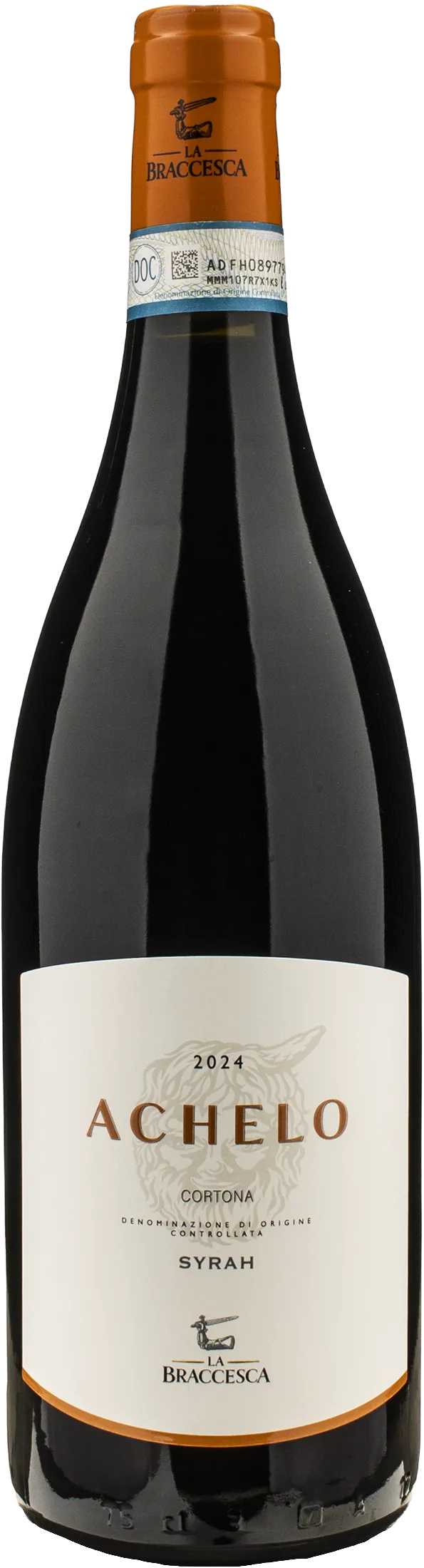
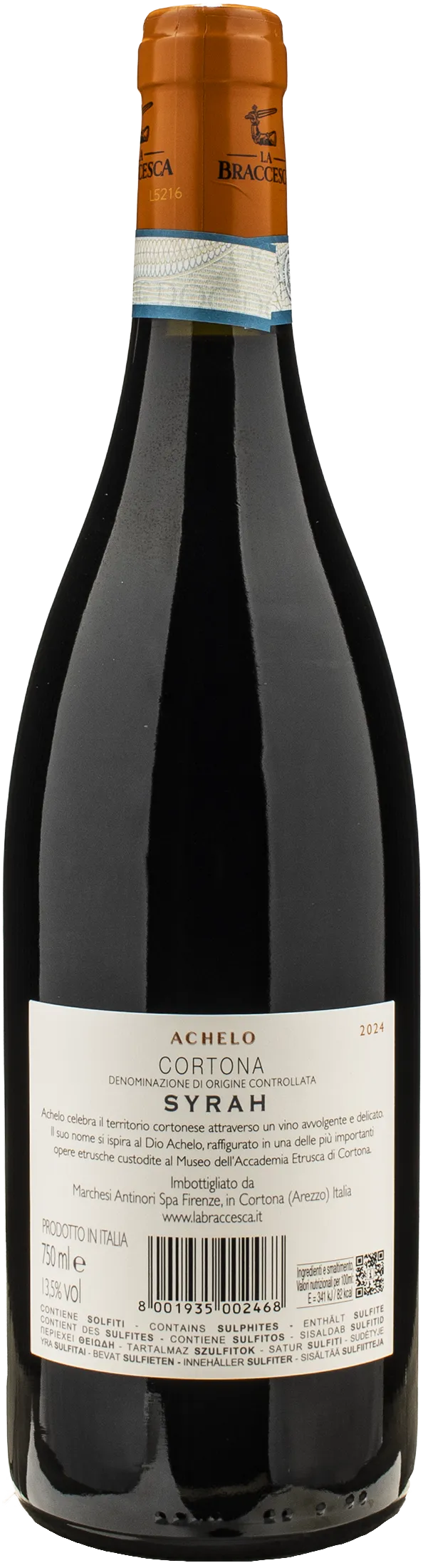
Description
What kind of wine it is
Achelo by La Braccesca is a red wine that elegantly interprets Syrah grown in the Cortona area. To the eye, it displays an intense ruby red colour with violet highlights, hinting at an aromatic bouquet dominated by notes of blueberry, black cherry and blackberry, enhanced by touches of black pepper and liquorice. On the palate, it reveals a full-bodied structure and a rich body, balanced by silky tannins and a pleasant freshness that leads to a harmonious finish. It is ideal for pairing with flavourful pasta dishes, red meats, game and mature cheeses.
Where it comes from
This wine is born in the heart of Cortona, from the vineyards of the La Braccesca estate. The vines grow at the foot of the hills surrounding the ancient Etruscan city, rooted in loamy-clay soil and influenced by a generally dry climate. These conditions favour consistent ripening, giving the grapes a profile rich in dark fruits and spicy notes. The name Achelo pays homage to the Etruscan deity depicted in a work kept at the local Etruscan Academy. Vineyard care aims to enhance the pedoclimatic characteristics of the site, reflecting the area's deep territorial vocation.
How it is produced
After destemming and gentle crushing, the grapes undergo a cold maceration in stainless steel tanks to enhance the integrity of the fruity aromas. Fermentation continues at a controlled temperature for about ten days. Ageing takes place partly in steel and partly in French oak barrels, vessels in which malolactic fermentation also occurs. This process achieves a harmonious structural balance and a refined tannic texture, completing the wine's evolution before bottling.
History and Curiosities
Originally from the ancient estate of the Counts Bracci, this wine boasts the proud crest depicting an arm wielding a sword. Today, the Antinori family leads the La Braccesca estate, combining the historic tradition of Nobile di Montepulciano with the modern innovation of Syrah di Cortona. The underground cellar blends cutting-edge technology with traditional methods to enhance the authentic spirit of the region. Its name pays tribute to the god Achelo, a renowned deity depicted on an artefact kept at the Museum of the Etruscan Academy.
Tasting notes

Perfume

Color

Taste
Serve at:
14 -16 °C
Longevity:
05 - 10 years
Decanting time:
1 hour

- Start up year: 1990
- Oenologist: Fabrizio Balzi
- Bottles produced: 429.800
- Hectares: 340


| Name | La Braccesca Cortona Syrah Achelo 2024 |
|---|---|
| Type | Red still |
| Denomination | Cortona DOC |
| Vintage | 2024 |
| Size | 0,75 l |
| Alcohol content | 13.5% by volume |
| Grape varieties | 100% Syrah |
| Country | Italy |
| Region | Tuscany |
| Vendor | La Braccesca (Antinori) |
| Story | History and Curiosities Originally from the ancient estate of the Counts Bracci, this wine boasts the proud crest depicting an arm wielding a sword. Today, the Antinori family leads the La Braccesca estate, combining the historic tradition of Nobile di Montepulciano with the modern innovation of Syrah di Cortona. The underground cellar blends cutting-edge technology with traditional methods to enhance the authentic spirit of the region. Its name pays tribute to the god Achelo, a renowned deity depicted on an artefact kept at the Museum of the Etruscan Academy. |
| Origin | Cortona (Arezzo) |
| Climate | Dry and arid |
| Soil composition | Franco-argilloso |
| Harvest | Mid-late September (from 10 to 13 September) |
| Fermentation temperature | Non superiore a 25 °C |
| Fermentation | About 10 days |
| Production technique | Destemming and crushing; cold pre-fermentation maceration in stainless steel tanks; fermentation in stainless steel at controlled temperature (max 25°C); ageing 70% in second and third use French oak barriques and 30% in steel; malolactic fermentation in barriques and in steel |
| Wine making | After destemming and crushing, the must was transferred to stainless steel tanks for a cold pre-fermentation maceration; fermentation in stainless steel took place at a controlled temperature not exceeding 25°C for about 10 days. |
| Aging | The wine was transferred, 70% into second and third use French oak barriques where malolactic fermentation took place, and the remaining part into stainless steel. |
| Year production | 429800 bottles |
| Allergens | Contains sulphites |