


Cantina Kurtatsch
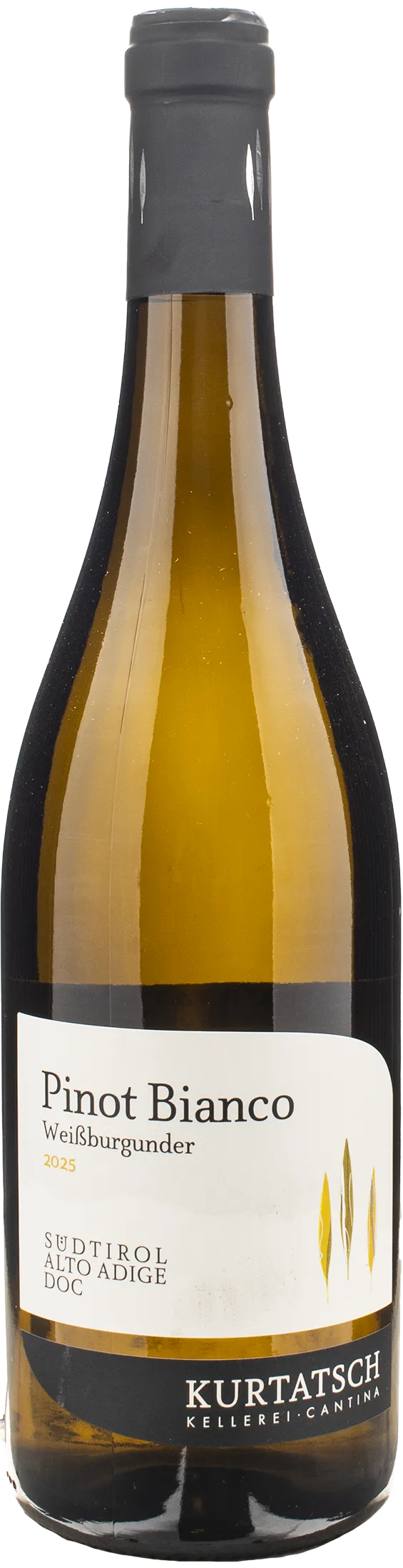
Pinot Bianco 2025
| Denomination | DOC Alto Adige Pinot Bianco |
|---|---|
| Size | 0,75 l |
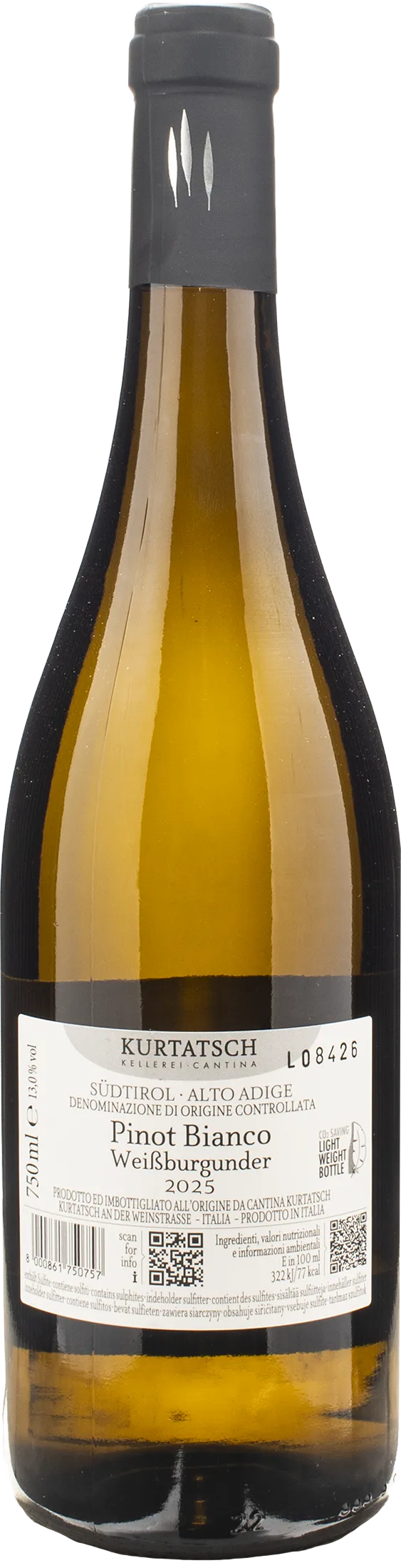
| Alcohol content | 13.0% by volume |
| Area | Trentino Alto Adige (Italy) |
| Grape varieties | 100% Pinot Bianco |
| Aging | Ageing on fine lees in stainless steel for several months (sur lie), without the use of wood. |
- Grape variety and style: 100% Pinot Bianco, still white wine from Alto Adige DOC
- Vinification: fermentation in stainless steel at controlled temperature, ageing on fine lees
- Aromas: notes of apple and pear, wildflowers, almond and white pepper
- Taste: lively acidity, saline minerality, long and precise finish
- Serving and pairings: ideal with fish and risottos; serving temperature 8–12 °C, does not require decanting
Description
What kind of wine it is
Kurtatsch Pinot Bianco is a still white wine with Controlled Designation of Origin from Alto Adige. Made exclusively from Pinot Bianco grapes and vinified in stainless steel, it stands out for its delicate notes of apple, pear and wildflowers, enhanced by hints of white pepper. On the palate it is dry and elegant, with a lively acidity that highlights its freshness. The pronounced saline minerality balances the medium-bodied structure, offering a harmonious finish, perfect for accompanying risottos and fish dishes.
Where it comes from
Born on the steep slopes of the hills of Cortaccia, along the Wine Road, this white grows at altitudes between four hundred and nine hundred metres. The meeting of warm Mediterranean days and cold Alpine night winds ensures a marked temperature range, ideal for aromatic concentration. The soil, a geological mosaic of limestone, clay and sandy gravel rich in dolomite, gives the sip a vibrant tension and a profound territorial character.
How it is produced
The grapes reflect sustainable cultivation, carefully tended by hand with passion. In the winery, vinification takes place in stainless steel tanks at controlled temperatures to protect the purity of the fruit. Without the use of wood, the wine undergoes a long ageing on fine lees, a process that enhances its elegant structure, giving fullness and complexity, while never losing its innate freshness.
History and Curiosities
An expression of the most important white grape variety in South Tyrol since the early twentieth century, Pinot Bianco Kurtatsch is born from the dedication of one hundred and ninety families among the cool hills of Cortaccia. The wine celebrates the authentic South Tyrolean identity, highlighted by the bilingual label bearing the name Weissburgunder. It has also received multiple awards from guides such as Wine Enthusiast and Falstaff.
Tasting notes

Perfume

Color

Taste
Serve at:
10 - 12 °C
Longevity:
03 - 05 years
- Start up year: 1900
- Oenologist: Erwin Carli
- Bottles produced: 1.600.000
- Hectares: 190
Outstanding wine is made in the vineyard. That’s why we consider our members – who do the vineyard work – to be the protagonists. For generations, they have cultivated a special connection to their vineyards, and know every single grapevine. This invaluable knowledge, paired with the small structure of our winery, offers the best prerequisites for the production of unique, characterful wines.
Thanks to the 190 small-structured family farms that cultivate 190 hectares of vineyards in a sustainable way, we are able to select the best grape material for each individual location.
We, together with our 190 members, have committed ourselves to producing nature-oriented wines through a comprehensive policy of sustainibility. The goal: sustainability in all areas – from the work in the vineyard through to the final product. During the year, we are in continuous exchange with our members to advise and support. Sustainibility is also a topic in the cellars: continuing education and optimizing guarantee sustainably designed work methods. Read more


| Name | Kurtatsch Pinot Bianco 2025 |
|---|---|
| Type | White still |
| Denomination | Alto Adige DOC |
| Vintage | 2025 |
| Size | 0,75 l |
| Alcohol content | 13.0% by volume |
| Grape varieties | 100% Pinot Bianco |
| Country | Italy |
| Region | Trentino Alto Adige |
| Vendor | Cantina Kurtatsch |
| Story | History and Curiosities An expression of the most important white grape variety in South Tyrol since the early twentieth century, Pinot Bianco Kurtatsch is born from the dedication of one hundred and ninety families among the cool hills of Cortaccia. The wine celebrates the authentic South Tyrolean identity, highlighted by the bilingual label bearing the name Weissburgunder. It has also received multiple awards from guides such as Wine Enthusiast and Falstaff. |
| Origin | Hills of Cortaccia on the Wine Route, Alto Adige (South Tyrol), Italy |
| Climate | Cool climate of South Tyrol with a strong diurnal temperature range and cold night winds; Mediterranean influence with warm days and cool nights |
| Soil composition | Sandy and gravelly soils, rich in dolomite |
| Production technique | Fermentation at controlled temperature in stainless steel tanks followed by ageing on fine lees (sur lie) |
| Wine making | Fermentation at controlled temperature in stainless steel with subsequent ageing on fine lees. |
| Aging | Ageing on fine lees in stainless steel for several months (sur lie), without the use of wood. |
| Total acidity | 6.0 gr/L |
| Residual sugar | 2.1 gr/L |
| Allergens | Contains sulphites |