


Cantina Kurtatsch
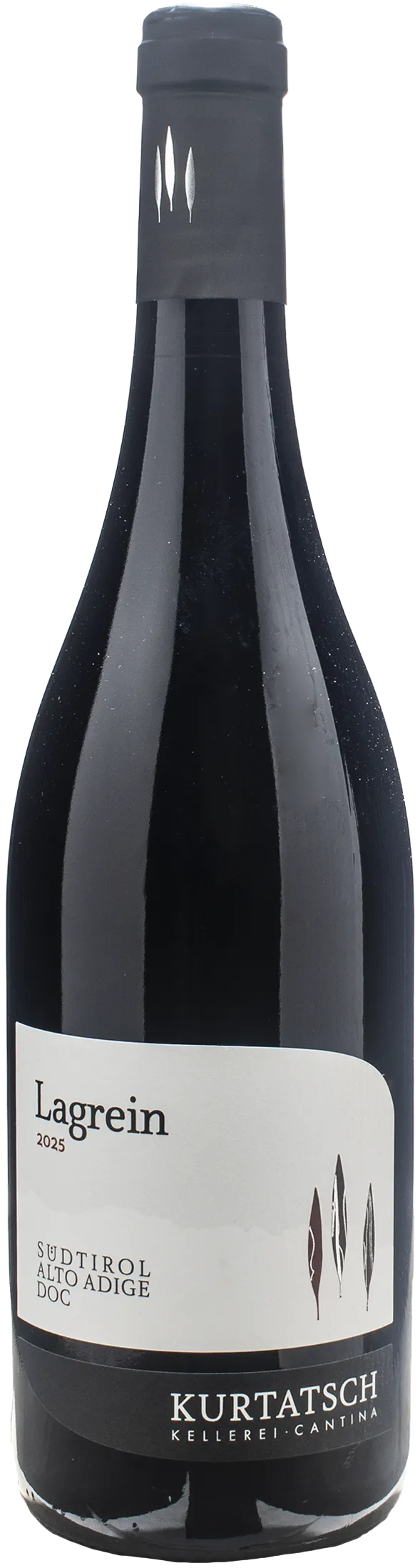
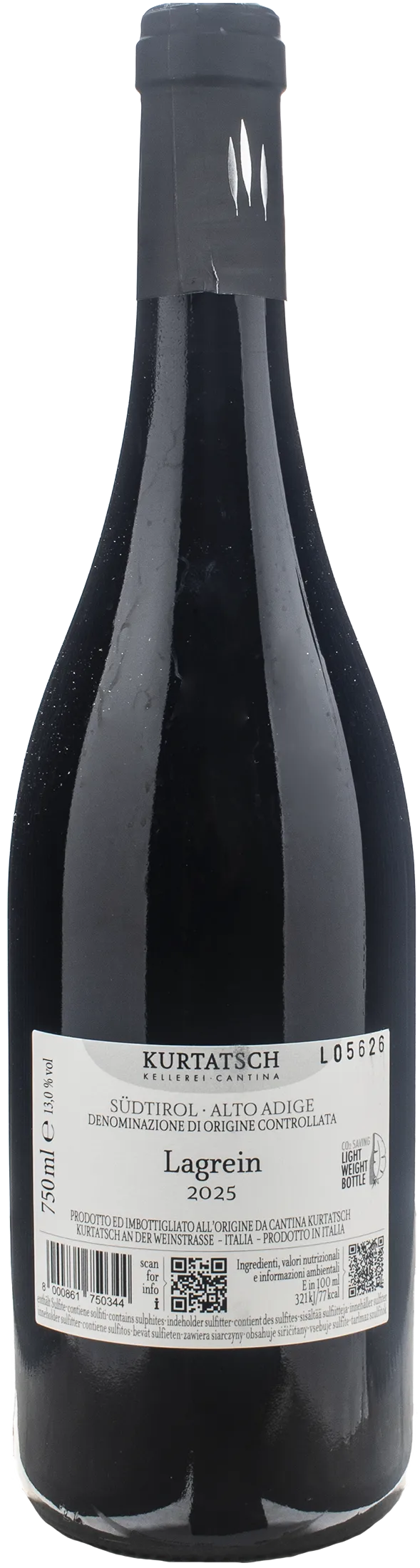
Lagrein 2025
| Denomination | DOC Alto Adige Lagrein |
|---|---|
| Size | 0,75 l |
| Alcohol content | 13.0% by volume |
| Area | Trentino Alto Adige (Italy) |
| Grape varieties | 100% Lagrein |
| Aging | Maturation in large wooden barrels; aged in large oak casks and concrete. |
- Denomination and grape: Alto Adige DOC red wine, 100% Lagrein
- Aromatic characteristics: Notes of violet, plum, dark forest fruits, cocoa and spices
- Taste profile: Full-bodied and velvety, fine and juicy tannins, lingering finish
- Winemaking: Fermentation in stainless steel, ageing in wooden barrels and concrete
- Food pairings: Red meat, game and mature cheeses; serve at 16-17 °C
Description
Style of wine
The Lagrein from Kurtatsch Winery is a still red wine from the Alto Adige appellation that expresses the character of the terroir through a dry, full and structured palate. Fermented in steel and aged in large oak barrels and concrete, it offers a velvety texture on the palate and intense yet juicy tannins, accompanied by a freshness that supports the persistent finish. On the nose, it delivers clear floral hints of violet, enriched by a bouquet of plum, dark berries and spicy notes of cocoa. A robust expression, perfect for pairing with matured cheeses and grilled red meats.
Origin
The grapes are grown in Cortaccia, in an area of Alto Adige characterised by the region's warmest sites, which are ideal for this specific variety. The vineyards stretch across slopes of various altitudes, benefiting from a unique microclimate. The vines take root in deep soils, composed of clay, sandy and gravelly sediments resting on a mineral base of porphyry, granite, mica schist and limestone. This remarkable altitudinal exposure gives the glass a rich character and an elegant gustatory tension.
Production method
After a careful selection of the grapes, the temperature-controlled fermentation takes place in stainless steel, with gentle movement of the skins for optimal extraction. Malolactic fermentation continues within large wooden barrels. To promote the perfect balance of the structure, the wine undergoes ageing in oak barrels and concrete tanks. This production method preserves a clear aromatic profile, keeping the fine and grainy texture of the tannins and the natural longevity of the wine intact.
History and curiosities
Lagrein, South Tyrol’s oldest indigenous grape variety and a genetic relative of Syrah, holds a unique charm for enthusiasts. This prestigious label from the Kurtatsch Winery originates in Cortaccia, where around 190 families of member-growers practice sustainable viticulture to protect the environment. Territorial identity is expressed through the careful selection of plots situated on slopes at various altitudes. Here, soils composed of fluvial sediments, porphyry, granite and limestone bestow an unmistakable character upon the wine.
Tasting notes

Perfume

Color

Taste
Serve at:
14 -16 °C
Longevity:
05 - 10 years
Decanting time:
1 hour
- Start up year: 1900
- Oenologist: Erwin Carli
- Bottles produced: 1.600.000
- Hectares: 190
Outstanding wine is made in the vineyard. That’s why we consider our members – who do the vineyard work – to be the protagonists. For generations, they have cultivated a special connection to their vineyards, and know every single grapevine. This invaluable knowledge, paired with the small structure of our winery, offers the best prerequisites for the production of unique, characterful wines.
Thanks to the 190 small-structured family farms that cultivate 190 hectares of vineyards in a sustainable way, we are able to select the best grape material for each individual location.
We, together with our 190 members, have committed ourselves to producing nature-oriented wines through a comprehensive policy of sustainibility. The goal: sustainability in all areas – from the work in the vineyard through to the final product. During the year, we are in continuous exchange with our members to advise and support. Sustainibility is also a topic in the cellars: continuing education and optimizing guarantee sustainably designed work methods. Read more


| Name | Kurtatsch Lagrein 2025 |
|---|---|
| Type | Red still |
| Denomination | Alto Adige DOC |
| Vintage | 2025 |
| Size | 0,75 l |
| Alcohol content | 13.0% by volume |
| Grape varieties | 100% Lagrein |
| Country | Italy |
| Region | Trentino Alto Adige |
| Vendor | Cantina Kurtatsch |
| Story | History and curiosities Lagrein, South Tyrol’s oldest indigenous grape variety and a genetic relative of Syrah, holds a unique charm for enthusiasts. This prestigious label from the Kurtatsch Winery originates in Cortaccia, where around 190 families of member-growers practice sustainable viticulture to protect the environment. Territorial identity is expressed through the careful selection of plots situated on slopes at various altitudes. Here, soils composed of fluvial sediments, porphyry, granite and limestone bestow an unmistakable character upon the wine. |
| Origin | Cortaccia (Bolzano) |
| Climate | Warm climate (warm sites in southern South Tyrol) |
| Soil composition | Clayey, sandy and gravelly sediments from rivers and streams on porphyry, granite, mica-schist and limestone. |
| Fermentation temperature | At a controlled temperature |
| Production technique | Temperature-controlled fermentation in stainless steel; malolactic fermentation in large wooden casks; ageing in large oak casks and in concrete. |
| Wine making | Temperature-controlled fermentation in stainless steel; malolactic fermentation in large wooden casks; ageing in large wooden casks. |
| Aging | Maturation in large wooden barrels; aged in large oak casks and concrete. |
| Total acidity | 5.3 gr/L |
| Residual sugar | 2.4 gr/L |
| Allergens | Contains sulphites |