


Kettmeir
Alto Adige Athesis Rosè Metodo Classico Brut 2023
| Denomination | DOC Alto Adige Spumante Rose' |
|---|---|
| Size | 0,75 l |
| Alcohol content | 12.5% by volume |
| Area | Trentino Alto Adige (Italy) |
| Grape varieties | 60% Pinot Nero, 40% Chardonnay |
| Aging | Ageing on the lees for at least 22 months in the bottle before disgorgement and release for sale. |
- Metodo Classico Brut Rosé: second fermentation in the bottle, dry and lively character
- Cuvée Pinot Nero and Chardonnay: 60/40, pale pink hue with peach reflections
- Aged on the lees: at least 22 months before disgorgement, creamy and elegant texture
- Aromas and taste: raspberry, small red fruits, sweet spices and bread crust
- Serving and pairings: 6–8°C; ideal as an aperitif, with seafood dishes, spicy cuisine, cheese and pizza
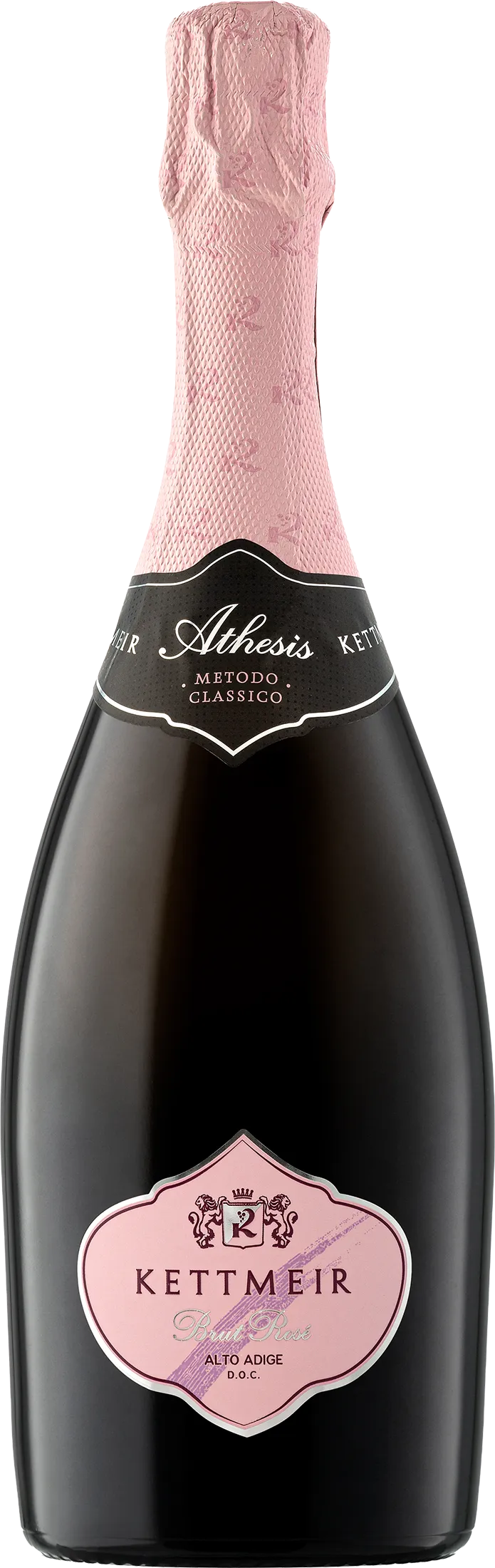
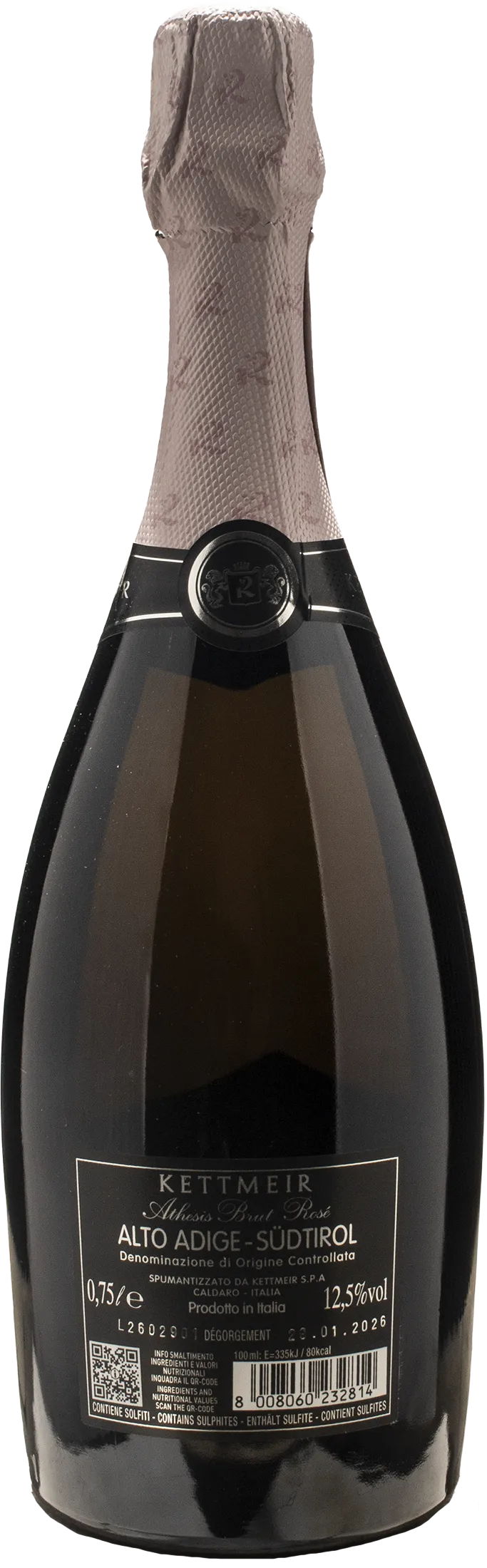
Description
What kind of wine is it
Alto Adige Athesis Rosé Metodo Classico Brut by Kettmeir is a refined sparkling rosé with controlled designation of origin, created from a meticulous blend of Pinot Noir and Chardonnay. Produced using the Traditional Method, it displays a pale pink colour with peach reflections and a fine, persistent perlage. The bouquet evokes notes of raspberry, wild berries, sweet spices and bread crust. On the palate, it offers a dry and dynamic style, enriched by a delicate creaminess that enhances the fruity notes in a finish of vibrant freshness.
Where does it come from
The grapes grow on the hills of Oltradige and Bassa Atesina, in the Alto Adige region. The vineyards, situated between 450 and 750 metres above sea level, rest on calcareous soils, generally loose and with a significant presence of clay. This specific mountainous conformation gives the grapes a pronounced aromatic finesse, ensuring the gustatory tension necessary to create sparkling wine bases of great character.
How is it produced
After the harvest, the varieties follow separate paths: the Pinot Noir undergoes a brief maceration on the skins, while the Chardonnay is subjected to gentle pressing. Once the blend is created, the secondary fermentation begins in the bottle according to the Traditional Method. Ageing on the lees lasts at least 22 months before disgorgement, enriching the sip with a creamy and persistent texture, ideal for accompanying elaborate seafood dishes, spicy cuisine or flavourful cheeses.
History and Curiosities
Founded in 1919 in South Tyrol, the Kettmeir winery boasts a long history that combines tradition and innovation. An interesting fact about the Athesis Rosé Metodo Classico Brut 2023 is its annual production, which stands at around 290,000 bottles. Furthermore, the prestige of this sparkling wine is highlighted by the significant recognition it has received from critics, with a score of 91 points awarded by James Suckling.
Tasting notes

Perlage

Perfume

Color

Taste
Serve at:
06 - 08 °C
Longevity:
05 - 10 years

- Start up year: 1919
- Oenologist: Josef Romen
- Bottles produced: 290.000
- Hectares: 55
Tradition as a value to be handed down, and progress as a vision to be perpetuated. Innovators, but with the awareness that one must not abandon the heritage of tradition, preserved as a fundamental bond with the land and one's own history.
One example is the architecture of the Kettmeir winery, preserved intact since the Second World War as a precious testimony to its past. And it is in the historic wine cellar, where both the wines rest in barrels and the classic method sparkling wines on ancient pupitres, that part of Kettmeir's success is realised under the watchful eye of oenologist Josef Romen.
The other place is the vineyards, stretching from Kaltern to the Ebnicherhof to Salurn, where Pinot Noir, Chardonnay, Sauvignon, Moscato rosa and many other grape varieties grow, cultivated with absolute care, respecting all their varietal peculiarities. In every grape, the history of this land. In every drop, the know-how of its people. In every bubble, a way of being. Read more


| Name | Kettmeir Alto Adige Athesis Rosè Metodo Classico Brut 2023 |
|---|---|
| Type | Rosé classic method sparkling wine brut |
| Denomination | Alto Adige DOC |
| Vintage | 2023 |
| Size | 0,75 l |
| Alcohol content | 12.5% by volume |
| Grape varieties | 60% Pinot Nero, 40% Chardonnay |
| Country | Italy |
| Region | Trentino Alto Adige |
| Vendor | Kettmeir |
| Story | History and Curiosities Founded in 1919 in South Tyrol, the Kettmeir winery boasts a long history that combines tradition and innovation. An interesting fact about the Athesis Rosé Metodo Classico Brut 2023 is its annual production, which stands at around 290,000 bottles. Furthermore, the prestige of this sparkling wine is highlighted by the significant recognition it has received from critics, with a score of 91 points awarded by James Suckling. |
| Origin | Colline dell’Oltradige e della Bassa Atesina (Bolzano) |
| Climate | Altitude: 450-750 m a.s.l. |
| Soil composition | Generally loose soils of calcareous origin, with a good clay content and normal levels of organic matter. |
| Cultivation system | Pergola and espalier |
| Plants per hectare | 3,000 - 3,500 plants per hectare (pergola); 5,000 - 6,000 plants per hectare (trellis) |
| Harvest | From mid to late September |
| Fermentation temperature | 15–16°C (fermentation primary); 11–12°C (second fermentation in bottle) |
| Fermentation | At least 22 months on the lees |
| Production technique | Traditional method (second fermentation in bottle) |
| Wine making | Rosé vinification of Pinot Noir with brief maceration on the skins and gentle pressing; Chardonnay gently pressed. Fermentation of the two varieties separately at controlled temperature (15–16°C), then blending of the cuvée and second fermentation in the bottle according to the Traditional Method (11–12°C). Ageing on the lees for at least 22 months before disgorgement. |
| Aging | Ageing on the lees for at least 22 months in the bottle before disgorgement and release for sale. |
| Year production | 290000 bottles |
| Allergens | Contains sulphites |