


Inama
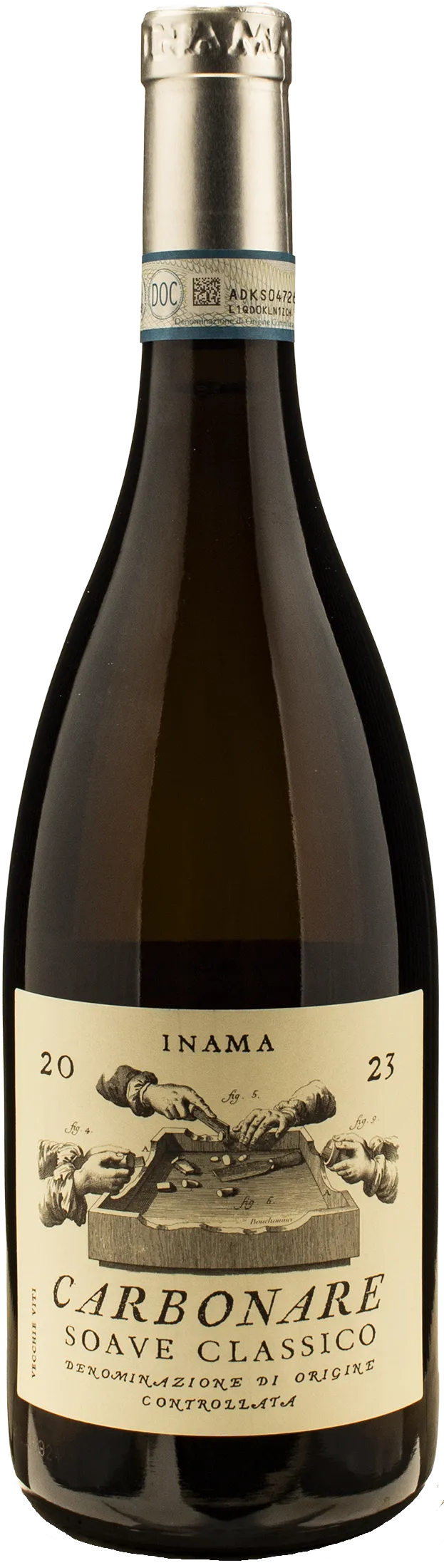
Soave Classico Carbonare 2023
| Denomination | DOC Soave Classico |
|---|---|
| Size | 0,75 l |
| Alcohol content | 12.5% by volume |
| Area | Veneto (Italy) |
| Grape varieties | 100% Garganega |
| Aging | 12 months in stainless steel followed by a further 6 months of maturation in the bottle |
- Vintage and data: 2023, Soave Classico DOC, 100% Garganega, 12.5% vol
- Aromatic profile: notes of citrus, white-fleshed fruit, yellow flowers, herbs and flint
- On the palate: lively acidity, taut structure, pronounced savouriness and a persistent mineral finish
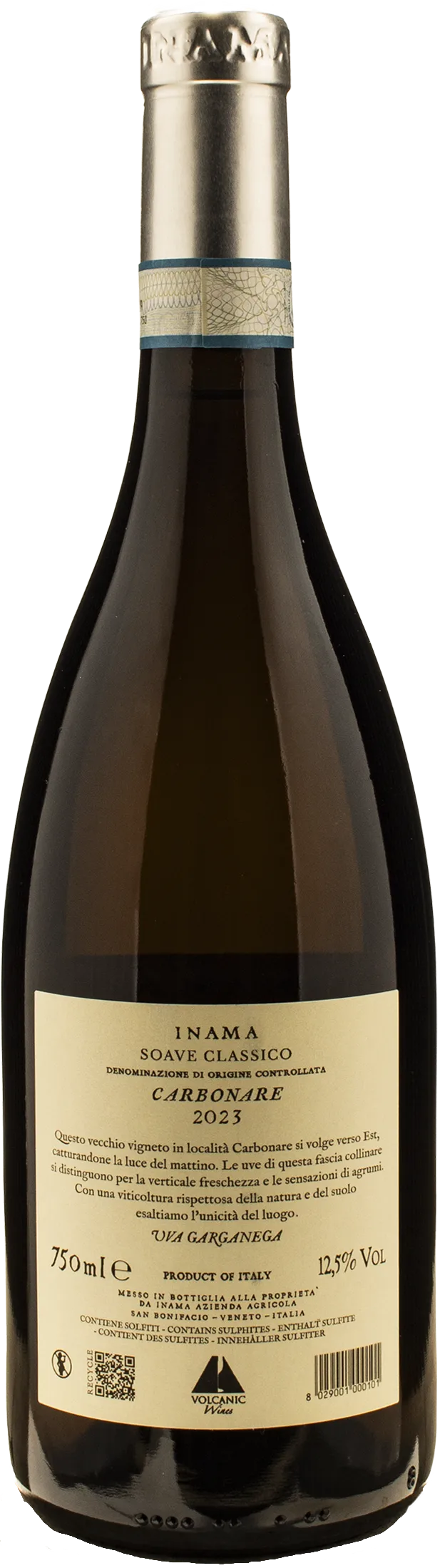
- Vinification: stainless steel, maceration 3–12 hours, aged 12 months on fine lees with bâtonnage
- Serving and pairings: 10–12 °C, decant for 1 hour; seafood crudo, sushi, risottos
Description
What kind of wine it is
Soave Classico Carbonare produced by Inama is an elegant Venetian white wine that precisely expresses the character of Garganega grapes. Distinguished by an intense straw yellow colour, it offers a taut aromatic profile with notes of yellow flowers, peach and characteristic hints of flint. On the palate, it stands out for its pronounced acidity and a deeply savoury, mineral finish. This vibrant structure pairs beautifully with raw seafood, classic risottos and exquisite spicy dishes from Asian cuisine.
Where it comes from
This wine originates from the Carbonare Vineyards, located in the heart of Soave Classico, where the vines are trained on pergolas at around two hundred and fifty metres above sea level. The deep volcanic soils composed of dark basalt give the glass a distinctive mineral imprint. The area benefits from a cool microclimate, tempered by currents from the Alpone valley and the Little Dolomites, which encourages slow and optimal ripening of the grapes. These geographical and atmospheric elements enhance the vibrant aromatic freshness, defining the saline profile typical of the area.
How it is produced
The Garganega grapes, grown according to the principles of organic and sustainable agriculture, are carefully hand-harvested. In the winery, after destemming and a brief skin maceration, gentle pressing follows. Fermentation takes place in stainless steel tanks to preserve the authentic expression of the fruit. Maturation continues for about twelve months on the fine lees through regular bâtonnage, which gives volume and structure to the palate. A further period of bottle ageing perfects the evolution, ensuring rigorous aromatic purity and a clear gustatory tension.
History and Curiosities
Born from the Carbonare vineyard, a plot of 40-year-old vines, this wine stands out for its exclusivity, with production limited to just 10,000 bottles per year. The prestige of Inama is also expressed through its graphic design, enhanced by a historic engraving taken from Diderot and D’Alembert’s Encyclopédie. The excellence of this label is confirmed by major international awards, such as 94 points from James Suckling, 93 from Vinous, and 4 Viti AIS, which attest to its inestimable value.
Awards
-
2023
 94
94/100
James Suckling is an influential American wine critic and journalist who worked at Wine Spectator for 30 years. He left the magazine in 2010 to start his own website and guidebook (JamesSuckling.com). He specialises in Italian and Bordeaux wines.
-
2023
 3
3One of the most prestigious wine guides in Italy.
-
2023
 93
93/100
Vinous is the online guide from Antonio Galloni, one of the world's leading wine connoisseurs.
-
2023
 4
4Italian Sommelier Association (AIS) guide
Tasting notes
Perfume

Color

Taste
Serve at:
10 - 12 °C
Longevity:
03 - 05 years
Decanting time:
1 hour
- Start up year: 1965
- Oenologist: Alessandro Sterchele
- Bottles produced: 700.000
- Hectares: 70


| Name | Inama Soave Classico Carbonare 2023 |
|---|---|
| Type | White green still |
| Denomination | Soave DOC |
| Vintage | 2023 |
| Size | 0,75 l |
| Alcohol content | 12.5% by volume |
| Grape varieties | 100% Garganega |
| Country | Italy |
| Region | Veneto |
| Vendor | Inama |
| Story | History and Curiosities Born from the Carbonare vineyard, a plot of 40-year-old vines, this wine stands out for its exclusivity, with production limited to just 10,000 bottles per year. The prestige of Inama is also expressed through its graphic design, enhanced by a historic engraving taken from Diderot and D’Alembert’s Encyclopédie. The excellence of this label is confirmed by major international awards, such as 94 points from James Suckling, 93 from Vinous, and 4 Viti AIS, which attest to its inestimable value. |
| Origin | Soave (VR), Veneto, Italia |
| Climate | Cool microclimate with cool morning hours and slow ripening, influenced by air currents from the Alpone valley and the Little Dolomites |
| Soil composition | Lava basalt (volcanic) |
| Cultivation system | Pergola |
| Plants per hectare | 2500 |
| Yield per hectare | 70 hl/ha |
| Production technique | Destemming and crushing; short maceration on the skins (3–12 hours); soft pressing; must clarification; fermentation in stainless steel tanks; ageing on fine lees with bâtonnage; bottle ageing |
| Wine making | Destemming and crushing; brief maceration on the skins (approximately 3–12 hours, sometimes specified as 4 hours); gentle pressing; clarification of the must for about 24 hours; fermentation in stainless steel tanks; maturation for about a year on fine lees with regular bâtonnage; further months of ageing in bottle. |
| Aging | 12 months in stainless steel followed by a further 6 months of maturation in the bottle |
| Total acidity | 5.9 gr/L |
| Residual sugar | 0.6 gr/L |
| Year production | 10000 bottles |
| Allergens | Contains sulphites |