


Haras De Pirque (Antinori)
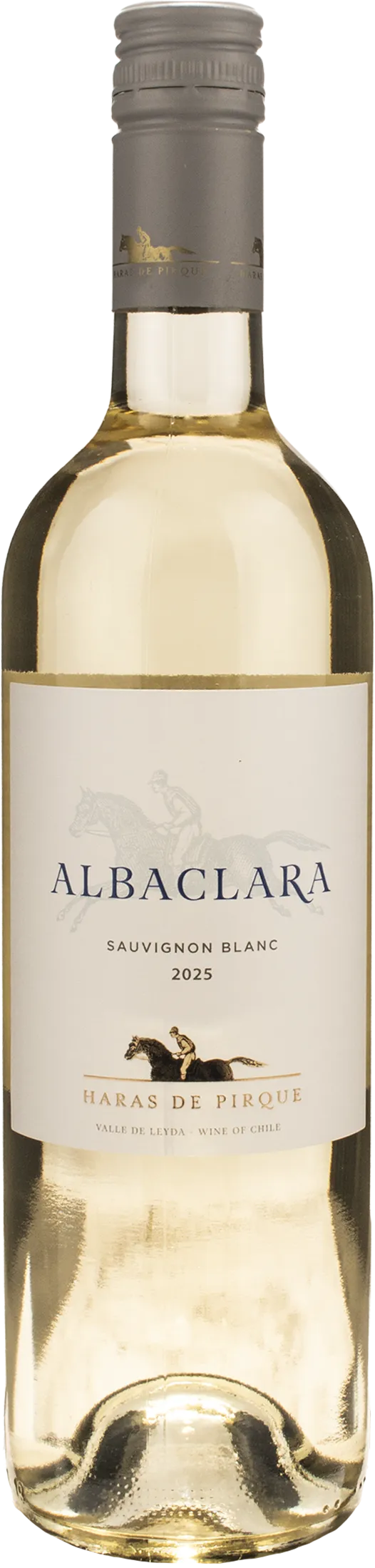
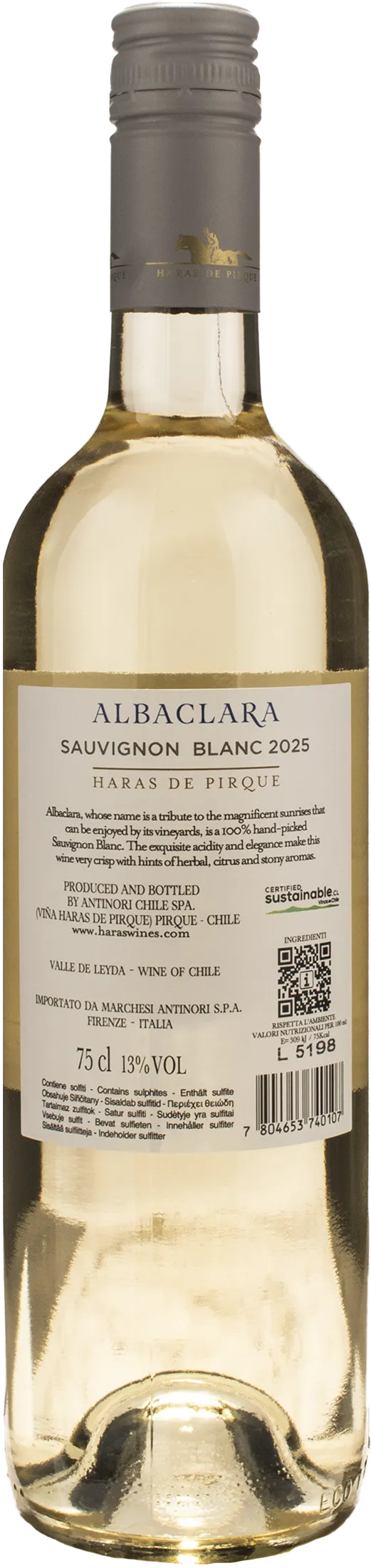
Albaclara Sauvignon Blanc 2025
| Denomination | N/A |
|---|---|
| Size | 0,75 l |
| Alcohol content | 13.0% by volume |
| Area | Leyda Valley (Chile) |
| Grape varieties | 100% Sauvignon |
| Aging | Maturation on its own lees (fine lees), with gentle remontage/stirring every two weeks |
Description
What kind of wine it is
Albaclara by Haras de Pirque is a still white wine with a Designation of Origin, made from Sauvignon Blanc grapes in the Leyda Valley, Chile, with a vibrant profile. On the nose, it reveals a refined aromatic interplay, where scents of white flowers and peach stand out, combined with lively citrus notes and fresh herbal hints of mint. On the palate, it is distinguished by its freshness and marked acidity, balanced by a soft and pleasant texture. The mineral component and the typical saline notes lead to a refreshing and dynamic finish, making this wine ideal to accompany oysters, seafood or grilled fish.
Where it comes from
The Sauvignon Blanc grapes are grown in the Las Brisas de Santo Domingo vineyard, located in the Leyda Valley. This Chilean coastal area enjoys a cool climate, characterised by cold mornings, cloud cover and breezy afternoons. The strong oceanic influence allows the grapes to ripen gradually, preserving a vibrant natural acidity. The sea breezes shape the vineyards, defining the aromatic profile and imparting a pronounced mineral imprint, resulting in a linear, taut and satisfying expression.
How it is produced
Production begins with a rigorous manual harvest of the bunches, cultivated according to organic farming principles. In the winery, the grapes are destemmed and gently pressed. Fermentation takes place at a low temperature in stainless steel vats for about two weeks, in order to preserve the varietal aromas intact. By avoiding malolactic fermentation, the wine retains its natural energy and continues with careful ageing on fine lees. Periodic stirring enriches its volume and complexity, ensuring a clean and persistent sip.
History and Curiosities
The name Albaclara celebrates the bright dawns that caress the vineyards of Las Brisas de Santo Domingo, located in the coastal area of the Leyda Valley. In this exceptional Chilean terroir, organic cultivation brings out the best in Sauvignon Blanc. The wine is the result of a prestigious partnership between Haras de Pirque and the Marchesi Antinori, and is produced from a meticulous manual harvest. The proximity to the ocean imparts a distinctive saline freshness, giving rise to a multi-award-winning label that faithfully reflects the authentic identity of the region.
Tasting notes
Perfume

Color
Taste
Serve at:
10 - 12 °C
Longevity:
03 - 05 years
- Start up year: 1992
- Hectares: 600
The collaboration between Haras de Pirque, a producer of excellence in the area, and Marchesi Antinori stems from the desire to 'explore' the potential of Chile. The wine that has become a symbol of the union between the two wine producers is Albis, the fruit of an international grape, Cabernet Sauvignon, and Carmenere, the Chilean grape par excellence.
Furthermore, the conviction that the Andean wine-growing area of Chile represents a natural habitat for Sauvignon led Marchesi Antinori to start a specific project to produce this extraordinary variety, resulting in the Albaclara wine. Read more


| Name | Haras de Pirque Albaclara Sauvignon Blanc 2025 |
|---|---|
| Type | White still |
| Denomination | N/A |
| Vintage | 2025 |
| Size | 0,75 l |
| Alcohol content | 13.0% by volume |
| Grape varieties | 100% Sauvignon |
| Country | Chile |
| Region | Leyda Valley |
| Vendor | Haras De Pirque (Antinori) |
| Story | History and Curiosities The name Albaclara celebrates the bright dawns that caress the vineyards of Las Brisas de Santo Domingo, located in the coastal area of the Leyda Valley. In this exceptional Chilean terroir, organic cultivation brings out the best in Sauvignon Blanc. The wine is the result of a prestigious partnership between Haras de Pirque and the Marchesi Antinori, and is produced from a meticulous manual harvest. The proximity to the ocean imparts a distinctive saline freshness, giving rise to a multi-award-winning label that faithfully reflects the authentic identity of the region. |
| Origin | Leyda Valley, Chile (Las Brisas de Santo Domingo) |
| Climate | Generally cool coastal climate |
| Harvest | April (varies depending on the vintage) |
| Fermentation | 12–15 days |
| Production technique | Destemming and gentle pressing; low-temperature fermentation in stainless steel tanks (12–15 days); ageing on fine lees with gentle pumping over/stirring every two weeks |
| Wine making | Upon arrival at the winery, the grape bunches were destemmed and gently pressed. Fermentation, which took place at a low temperature to preserve the freshness of the grapes, occurred in stainless steel vats for 12–15 days; afterwards, the wine was aged on fine lees with gentle pump-overs/stirring approximately every two weeks. |
| Aging | Maturation on its own lees (fine lees), with gentle remontage/stirring every two weeks |
| Total acidity | 5.0 gr/L |
| Residual sugar | 1.0 gr/L |
| Allergens | Contains sulphites |