


Giacomo Borgogno e Figli
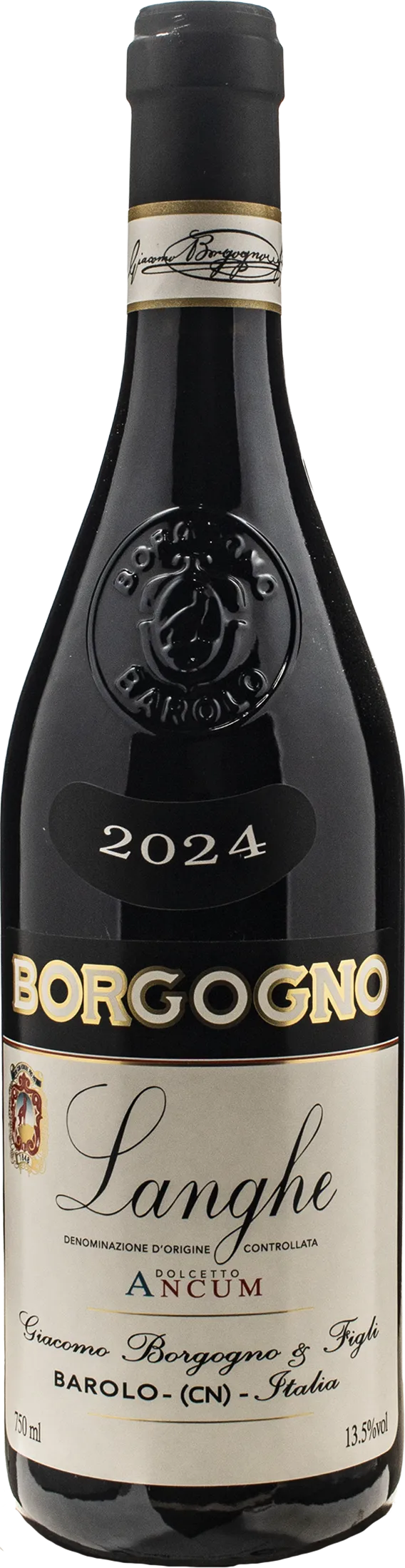
Langhe Dolcetto Ancum 2024
| Denomination | DOC Langhe Dolcetto |
|---|---|
| Size | 0,75 l |
| Alcohol content | 13.5% by volume |
| Area | Piedmont (Italy) |
| Grape varieties | 100% Dolcetto |
| Aging | Aged for 6 months in cement tanks, followed by 3 months of bottle ageing. |
- Origin and designation: Organic Dolcetto Langhe DOC from the Ancum plot, Madonna di Como
- Aroma and colour: ruby red with violet highlights; notes of cherry, strawberry and pronounced spices
- Vinification: spontaneous fermentation with whole berries in concrete, 22-28 °C
- Pairings: ideal with cured ham, anchovies in green sauce and roast rabbit
- Format and serving: 750 ml bottle, 13.5% vol; serve at 18 °C after one hour of decanting
Description
What kind of wine it is
Langhe Ancum by Borgogno is an organic red wine from Piedmont made from Dolcetto grapes. A faithful reflection of the Langhe denomination, it presents a ruby colour enriched with violet hues. On the nose, it expresses notes of cherry and strawberry, accompanied by intense spicy nuances. The palate reveals a full and enveloping body, supported by a compact tannic structure, with mineral sensations and an elegant finish characterised by a slight toastiness.
Where it comes from
The grapes are grown in Madonna di Como, in the single parcel Ancum, an area long renowned for Dolcetto cultivation. The vines thrive at 430 metres above sea level, enjoying excellent south-west exposure. The soils are distinguished by white calcareous earth rich in stones. This soil composition defines the character of the wine, ensuring a dry drink and enhancing a deep and savoury mineral component.
How it is produced
The Dolcetto is harvested by hand in the first ten days of September. In the winery, the grapes are destemmed without pressing, initiating a spontaneous fermentation with whole berries and indigenous yeasts. The process is completed in cement vats over the course of a week. The wine is aged for six months in cement and further matures in the bottle. This method preserves the fruity character, making it ideal to accompany cured ham, roast rabbit and tasty anchovies in green sauce.
Tasting notes

Perfume

Color

Taste
Serve at:
14 -16 °C
Longevity:
05 - 10 years
Decanting time:
1 hour

- Start up year: 1761
- Oenologist: Simone Borsari
- Bottles produced: 250.000
- Hectares: 40
The winery has some interesting records: in 1861, Barolo Borgogno sealed the pact for the birth of Italian unity, and in 1908, it was served to the Tsar of all Russia during a visit to Racconigi.
The turning point came in 1920, when Cesare Borgogno began exporting abroad. However his greatest insight came when he decided to "forget" half of the production of Barolo Riserva in order to sell it 20 years later, realising the great versatility and power of Nebbiolo.
Borgogno is synonymous with slowness: the winery chooses to take its time understanding things and doing them correctly. The vineyards are cared for and attended to with only organic products.
This has resulted in the winery to gain their first Biological harvest.
The decision to plant forest on eight of their 39 hectars is to protect the biodiversity of the Langa fauna from being decimated by the cultivation of vineyards.
Borgogno has a sense of history, tradition, and roots that blend with the innovation of the changing times. Read more


| Name | Giacomo Borgogno Langhe Dolcetto Ancum 2024 |
|---|---|
| Type | Red organic still |
| Denomination | Langhe DOC |
| Vintage | 2024 |
| Size | 0,75 l |
| Alcohol content | 13.5% by volume |
| Grape varieties | 100% Dolcetto |
| Country | Italy |
| Region | Piedmont |
| Vendor | Giacomo Borgogno e Figli |
| Origin | Madonna di Como, Langhe |
| Climate | Altitude: 430 m a.s.l. Exposure: South-West. |
| Soil composition | White and calcareous soils, rich in coarse fragments. |
| Cultivation system | Guyot |
| Plants per hectare | 4000 |
| Harvest | First ten days of September |
| Fermentation temperature | 22-28 °C |
| Fermentation | Approximately a week |
| Production technique | Spontaneous whole-berry fermentation in concrete tanks |
| Wine making | After the manual harvest of Dolcetto grapes from the vineyard, the berries are destemmed without pressing; this is followed by spontaneous fermentation with whole berries in cement tanks for about a week at 22–28 °C. |
| Aging | Aged for 6 months in cement tanks, followed by 3 months of bottle ageing. |
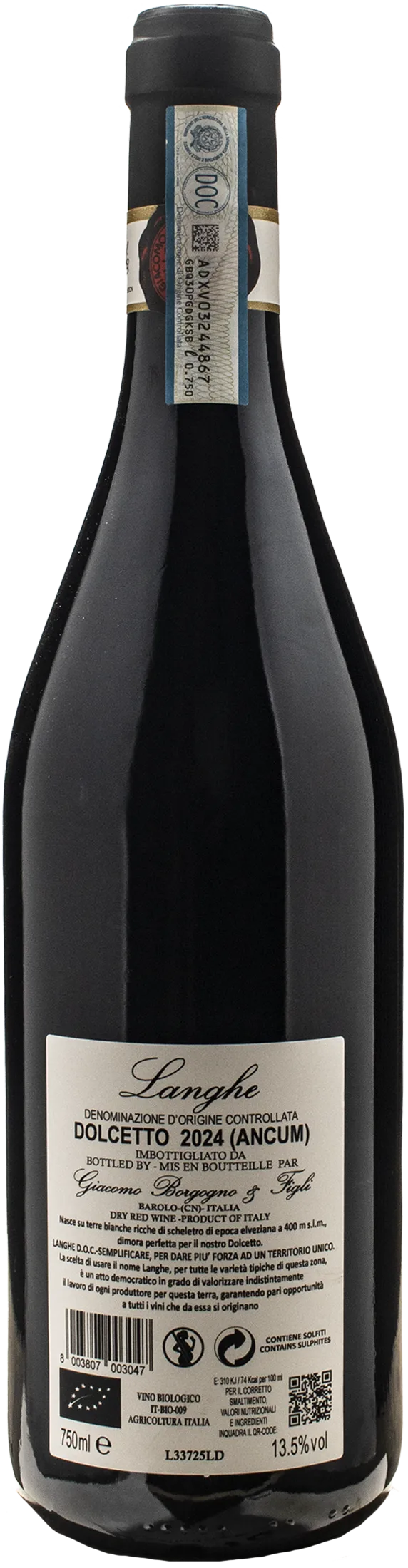
| Allergens | Contains sulphites |