


Fantini
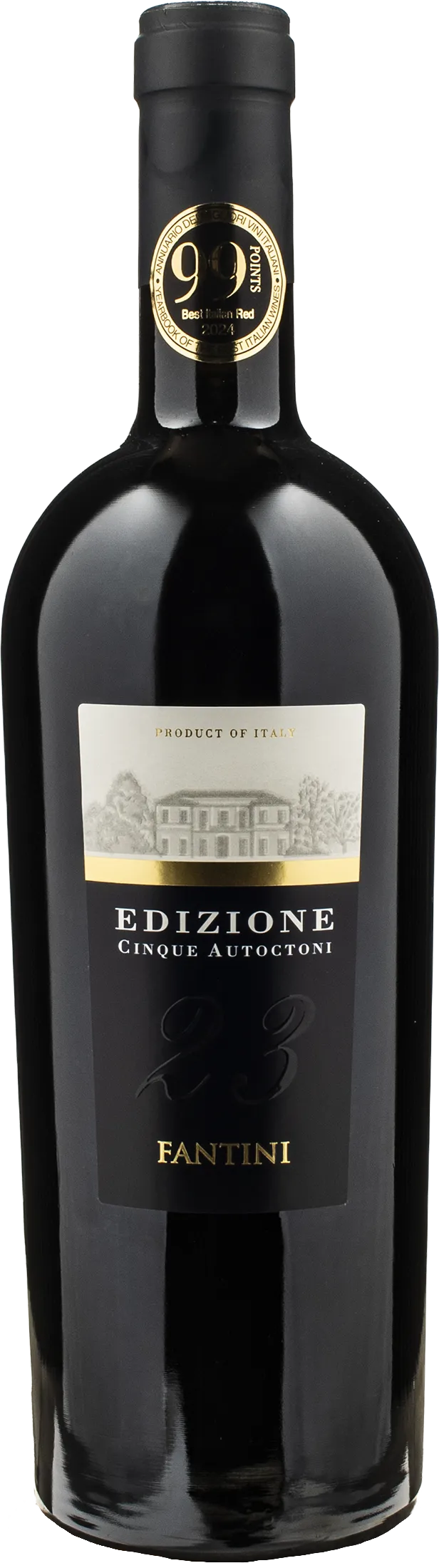
Cinque Autoctoni 23° Edizione
| Denomination | VdT |
|---|---|
| Size | 0,75 l |
| Alcohol content | 14.5% by volume |
| Area | Abruzzo (Italy) |
| Grape varieties | Malvasia Nera, Montepulciano, Negro Amaro, Primitivo, Sangiovese |
| Aging | Aged for 12 months in a special selection of oak chosen by head winemaker Filippo Baccalaro directly in Bordeaux at the Seguin Moreau cooperage; matured for 12–13 months in barriques. |
- Blend and origin: composed of five native varieties selected from Abruzzo and Puglia
- Aromas: scents of cherry, blackcurrant, cocoa, liquorice and refined sweet spices
- Vinification and wood: 25 days maceration followed by 12–13 months in barrique
- Taste: full-bodied structure, balance between warmth and freshness, soft tannins and persistent finish
- Awards and serving: rated 99 points by Luca Maroni; serve at 16–18°C after one hour of decanting
Description
What kind of wine it is
Cinque Autoctoni by Fantini is a still red table wine of great intensity, originating between Abruzzo and Puglia from a refined blend of Montepulciano, Sangiovese, Primitivo, Negroamaro and Malvasia Nera grapes. On the nose, it opens with a deep and complex profile, where aromas of blackberry and blackcurrant intertwine with hints of aromatic herbs, cocoa, liquorice and cloves. On the palate, it stands out for its imposing structure and the balance between warmth and freshness, supported by soft and velvety tannins that lead the drink towards a long, mineral finish, following maturation in barrels.
Where it comes from
Produced by Fantini, this wine celebrates the union between two outstanding Italian regions: Abruzzo and Puglia. The grapes are carefully selected from the vineyards of the Abruzzo hills in Notaresco, Colonnella, Ortona and those in the south of Puglia, in the areas of Sava, Manduria and San Marzano. This geographical synergy defines a wine with a dense and substantial flavour profile.
How it is produced
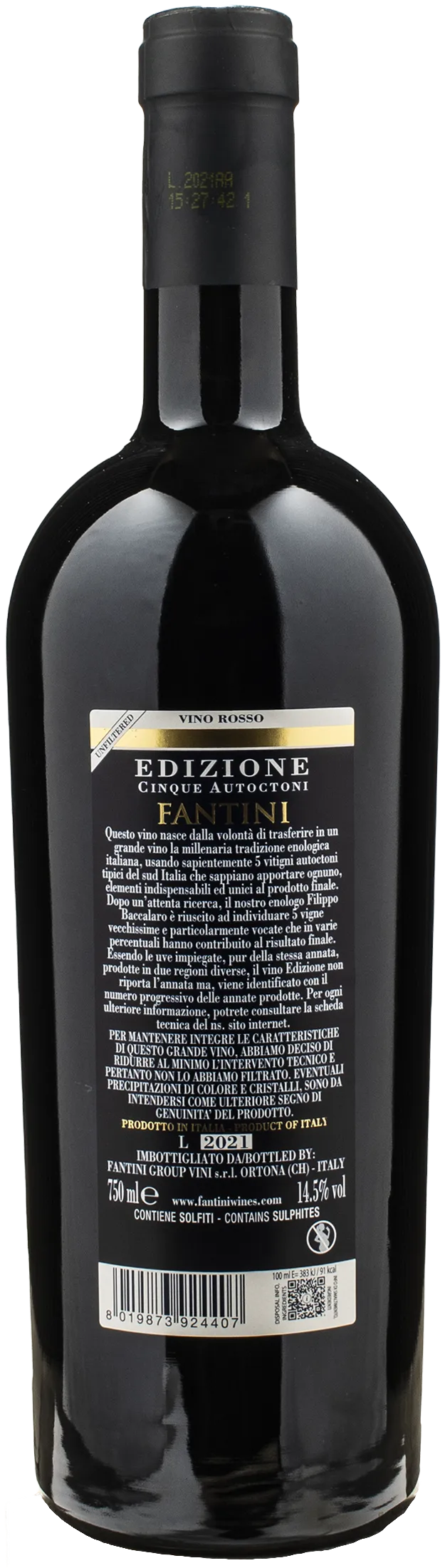
The vinification process begins with destemming and a gentle pressing, followed by maceration and fermentation for twenty-five days to ensure optimal extraction of colour and aromatic complexity. After malolactic fermentation, which softens the taste, the wine undergoes a period of maturation in oak barrels for twelve or thirteen months, integrating refined spicy notes. To preserve the integrity of the fruit and its rich material density, bottling takes place without filtration.
History and Curiosities
Fantini presents the 23rd Edition of Cinque Autoctoni. Among its distinctive features is the meticulous attention of head oenologist Filippo Baccalaro, who personally selects the oak for ageing directly in Bordeaux at the Seguin Moreau cooperage. The wine boasts a history of significant international awards since 2014, culminating in 99 points from Luca Maroni, who described it as a true masterpiece of viticulture and oenology.
Awards
-
 5
5Italian Sommelier Foundation (FIS) guide This has been one of the most prestigious wine guides in Italy for over 10 years.
-
 91
91/100
James Suckling is an influential American wine critic and journalist who worked at Wine Spectator for 30 years. He left the magazine in 2010 to start his own website and guidebook (JamesSuckling.com). He specialises in Italian and Bordeaux wines.
-
 99
99/100
One of the most prestigious wine guides in Italy.
-
 2
2One of the most prestigious wine guides in Italy.
-
 90
90/100
Vinous is the online guide from Antonio Galloni, one of the world's leading wine connoisseurs.
-
 90
90/100
Wine spectator is the most influential wine guide on the internet.
Tasting notes

Perfume

Color

Taste
Serve at:
16 - 18 °C
Longevity:
10 - 15 years
Decanting time:
1 hour

- Start up year: 1994
- Oenologist: Dennis Verdecchia, Francesco De Santis
- Bottles produced: 10.000.000
- Hectares: 16
In the beautiful terroir, our winegrowers have developed production criteria with a low environmental impact, knowing that nature pays back love and respect with gifts of rare quality. This is why the fruits of this land grow well and age even better, Read more


| Name | Fantini Cinque Autoctoni 23° Edizione |
|---|---|
| Type | Red still |
| Denomination | VdT |
| Size | 0,75 l |
| Alcohol content | 14.5% by volume |
| Grape varieties | Malvasia Nera, Montepulciano, Negro Amaro, Primitivo, Sangiovese |
| Country | Italy |
| Region | Abruzzo |
| Vendor | Fantini |
| Story | History and Curiosities Fantini presents the 23rd Edition of Cinque Autoctoni. Among its distinctive features is the meticulous attention of head oenologist Filippo Baccalaro, who personally selects the oak for ageing directly in Bordeaux at the Seguin Moreau cooperage. The wine boasts a history of significant international awards since 2014, culminating in 99 points from Luca Maroni, who described it as a true masterpiece of viticulture and oenology. |
| Origin | Municipalities of Colonnella and Ortona (Abruzzo hills) and of Sava and San Marzano (southern Apulia) |
| Fermentation | 25 days |
| Production technique | Destemming and gentle crushing; maceration and fermentation for 25 days; malolactic fermentation in barrique; ageing for 12–13 months in barrique; no filtration |
| Wine making | Destemming and delicate pressing of the grapes; maceration and fermentation for 25 days (primary fermentation about 25 days); malolactic fermentation in new oak barriques (60% American and the rest French); ageing for 12–13 months in barriques. |
| Aging | Aged for 12 months in a special selection of oak chosen by head winemaker Filippo Baccalaro directly in Bordeaux at the Seguin Moreau cooperage; matured for 12–13 months in barriques. |
| Total acidity | 5.7 gr/L |
| Residual sugar | 4.9 gr/L |
| Allergens | Contains sulphites |