


Enrico Serafino
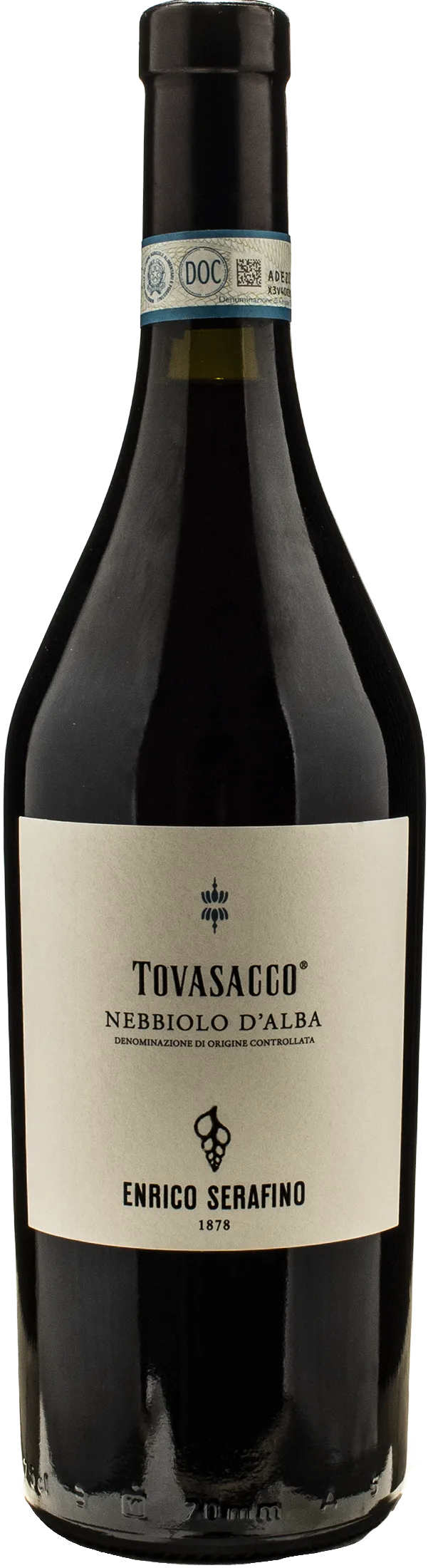
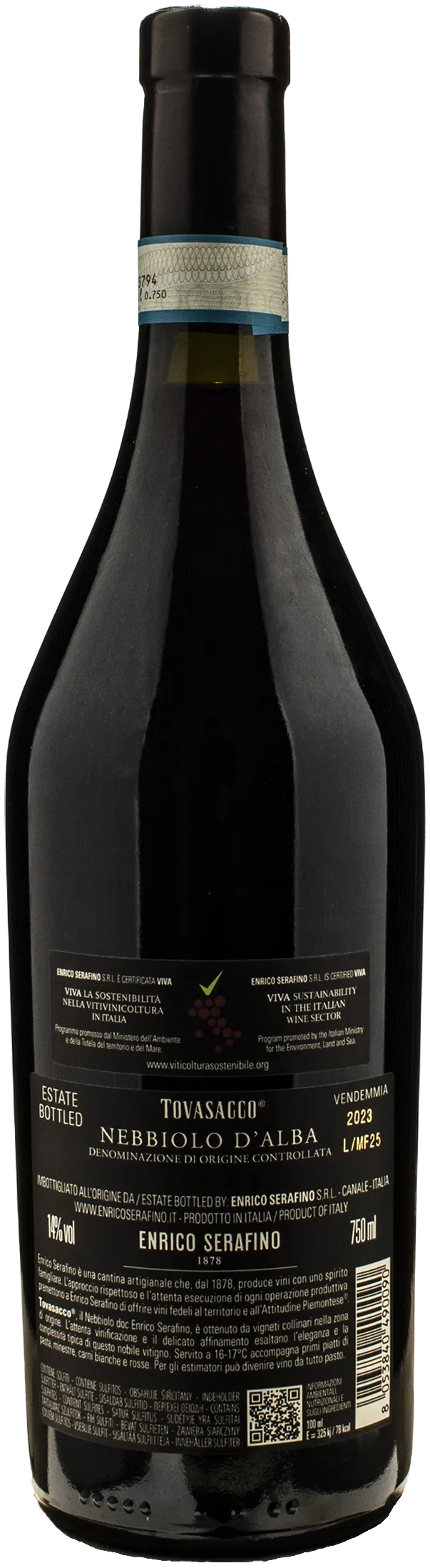
Nebbiolo d'Alba Tovasacco 2023
| Denomination | DOC Nebbiolo d'Alba |
|---|---|
| Size | 0,75 l |
| Alcohol content | 14.0% by volume |
| Area | Piedmont (Italy) |
| Grape varieties | 100% Nebbiolo |
| Aging | In medium-sized oak casks and barriques. |
- Grape variety and designation: 100% Nebbiolo, Nebbiolo d’Alba DOC, 2023 harvest, 14% vol
- Aroma and flavour: red fruits, flowers, spices and coffee; elegant sip, medium body, long finish
- Vinification process: destemming, crushing, partial cold maceration and pump-overs
- Ageing in wood: maturation in medium-sized barrels and barriques for greater aromatic precision
- Serving and storage: decant for 1 hour, serve at 14-16 °C; cellar evolution of 5-10 years
Description
What kind of wine it is
Enrico Serafino Nebbiolo d’Alba Tovasacco is a still red wine made from Nebbiolo grapes, cultivated in Piedmont following a strict organic and sustainable approach. In the glass, it displays a ruby red colour with elegant garnet highlights. The aromatic profile reveals small red fruits and floral notes, intertwined with warm hints of spices and coffee. On the palate, it offers a medium body with a refined and balanced character, finishing long and pleasantly. This Nebbiolo d’Alba delivers a harmonious sip that expresses itself best after about an hour of decanting.
Where it comes from
The grapes are grown in Canale d’Alba, at the crossroads between the renowned Roero and Langhe areas. The vines benefit from a south, south-west and south-east exposure, which encourages balanced ripening of the bunches. The soil composition combines the mixed sandy soils of Roero with the more clay-rich matrices typical of the Langhe, giving the wine an elegant and well-defined character. The Enrico Serafino winery, founded in 1878, manages its vineyards with deep respect for the land, relying on oenologist Paolo Giacosa to enhance the identity of this Piedmontese terroir.
How it is produced
Production begins with careful selection in the vineyard, followed by destemming and crushing of the grapes. Part of the must undergoes an initial cold maceration, then continues with a medium-length vinification and periodic pump-overs, essential for managing extraction and defining structure. Ageing takes place in medium-sized barrels and oak barriques, a choice that consolidates the wine’s aromatic precision. The result is a glass with remarkable ageing potential, capable of evolving beautifully in the cellar for between five and ten years.
History and Curiosities
Founded in 1878 in Canale d’Alba, the Enrico Serafino winery produces the Nebbiolo d’Alba DOC Tovasacco 2023. Under the guidance of oenologist Paolo Giacosa, the estate cultivates sixty hectares of vineyard following a strict organic and sustainable approach. This still red wine embodies the authentic vocation of the Piedmontese territory, offering those who taste it the unrivalled finesse of a historic establishment devoted to excellence.
Tasting notes

Perfume

Color

Taste
Serve at:
14 -16 °C
Longevity:
05 - 10 years
Decanting time:
1 hour

- Start up year: 1878
- Oenologist: Paolo Giacosa
- Bottles produced: 400.000
- Hectares: 60
Founded by Serafino Enrico, an entrepreneur and landowner, the winery soon became one of the most important in Piedmont and among the first to spread the region's classic wines throughout Italy and abroad. In addition to the classic Piedmontese wines of the area, first and foremost Roero, Arneis and Barbera, the company produces great Barolo and Barbaresco from grapes from the nearby Langhe, noble and elegant wines in which the Nebbiolo grape variety expresses its characteristics at its best. But Enrico Serafino's pride and joy is the selection signed 'Cantina Maestra', in which the red wines Pasiunà and Parduné stand out, the highest expression of excellence of the Roero territory, and the Metodo Classico Alta Langa DOC sparkling wines. Read more


| Name | Enrico Serafino Nebbiolo d'Alba Tovasacco 2023 |
|---|---|
| Type | Red green still |
| Denomination | Nebbiolo d'Alba DOC |
| Vintage | 2023 |
| Size | 0,75 l |
| Alcohol content | 14.0% by volume |
| Grape varieties | 100% Nebbiolo |
| Country | Italy |
| Region | Piedmont |
| Vendor | Enrico Serafino |
| Story | History and Curiosities Founded in 1878 in Canale d’Alba, the Enrico Serafino winery produces the Nebbiolo d’Alba DOC Tovasacco 2023. Under the guidance of oenologist Paolo Giacosa, the estate cultivates sixty hectares of vineyard following a strict organic and sustainable approach. This still red wine embodies the authentic vocation of the Piedmontese territory, offering those who taste it the unrivalled finesse of a historic establishment devoted to excellence. |
| Origin | Canale d'Alba (Cuneo) |
| Climate | South, south-west and south-east |
| Soil composition | Mixed sandy soils in the Roero area; more clayey in the Langhe area |
| Cultivation system | Guyot |
| Production technique | Destemming and crushing of the grapes, partial cold maceration and medium-duration maceration with pumping over |
| Wine making | The grapes are selected, then destemmed and pressed. In the initial stage, a portion of the grapes is vinified with cold maceration. The maceration is medium-term and involves pump-overs. |
| Aging | In medium-sized oak casks and barriques. |
| Allergens | Contains sulphites |