


Enrico Serafino
Moscato d'Asti Erianthe 2024
| Denomination | DOCG Moscato d'Asti |
|---|---|
| Size | 0,75 l |
| Alcohol content | 5.5% by volume |
| Area | Piedmont (Italy) |
| Grape varieties | 100% Moscato Bianco/Moscato Reale |
| Aging | It does not require ageing, it is bottled immediately after fermentation. |
- Name: Organic Moscato d’Asti DOCG, aromatic sweet white wine, vintage 2024
- Grape variety: 100% Moscato Bianco from Langhe and Monferrato, Piedmont
- Aroma: notes of rose, geranium, citrus and sage with an intense fragrance
- Vinification: gentle pressing, must kept at low temperature, slow fermentation
- Taste and serving: lively mousse, 5.5% vol; ideal with desserts and cheeses, serve at 10–12 °C
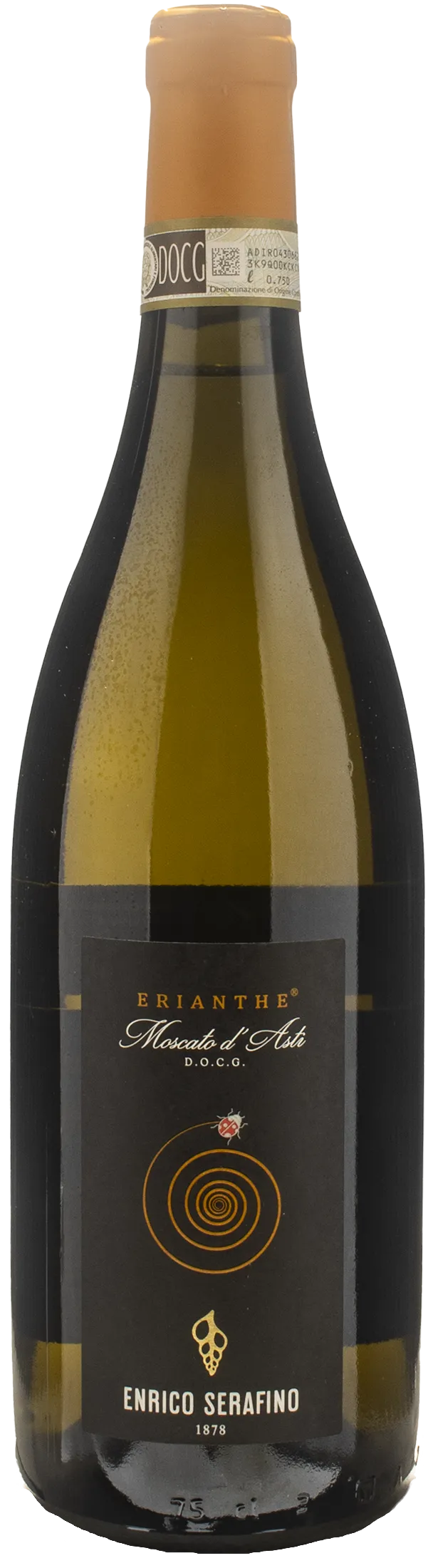
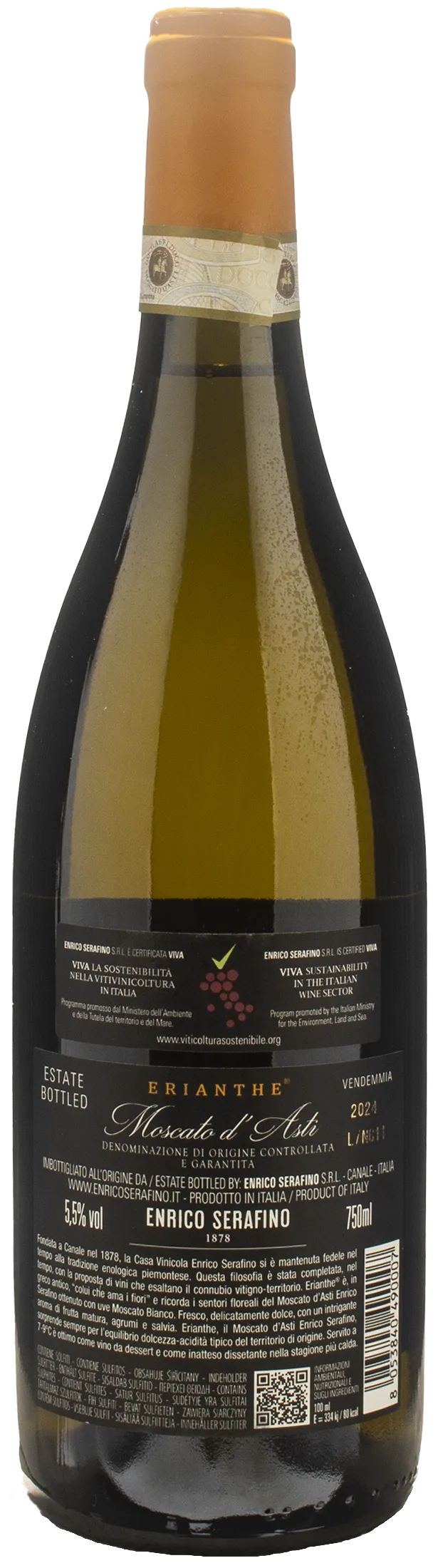
Description
What kind of wine it is
Enrico Serafino Moscato d’Asti Erianthe is a sweet, aromatic white wine. Made from Moscato Bianco grapes, it displays a straw yellow hue with greenish highlights. On the nose, it is intensely fragrant, revealing typical notes of rose, geranium, delicate hints of citrus and a touch of sage. The palate is full and enveloping, supported by a lively mousse that balances the natural aromatic sweetness. It is best enjoyed with pastries and cheeses.
Where it comes from
The grapes are grown on the hills of Langhe and Monferrato, in Piedmont on the border with Liguria. The vineyards are situated at an altitude between 200 and 280 metres. Moscato Bianco is one of the oldest grape varieties cultivated in Italy, its name deriving from the Latin term muscum, referring to the characteristic musky aroma released by the berries during ripening. This specific geographical location allows the grape variety to express an unmistakable aromatic richness, deeply linked to the unique features of the soil.
How it is produced
Harvesting takes place around mid-September. In the winery, the grapes undergo a gentle pressing to delicately extract the must. The sweet juice obtained is kept in special tanks at low temperature, ensuring a slow and strictly controlled fermentation. Afterwards, the secondary fermentation in autoclave gives the wine its natural and delicate effervescence, preserving its fruity integrity. To maximise the freshness and fragrance of the grape variety, the process excludes any prolonged maturation: the wine is bottled without ageing immediately after fermentation is complete.
History and Curiosities
Since 1878, the Enrico Serafino winery has been producing Moscato d’Asti Erianthe 2024, a sweet and aromatic masterpiece born between the Langhe and Monferrato. This elegant wine is made from the prized Moscato Bianco, an ancient variety whose name derives from the Latin muscum, perfectly evoking the unmistakable musky aroma of the grapes. Grown at optimal altitudes, between 200 and 280 metres, the vine expresses the authentic Piedmontese essence. The oenologist Paolo Giacosa ensures its excellence, honouring the value of the Moscato d’Asti DOCG designation.
Tasting notes

Perlage

Perfume

Color

Taste
Serve at:
10 - 12 °C
Longevity:
01 - 02 years

- Start up year: 1878
- Oenologist: Paolo Giacosa
- Bottles produced: 400.000
- Hectares: 60
Founded by Serafino Enrico, an entrepreneur and landowner, the winery soon became one of the most important in Piedmont and among the first to spread the region's classic wines throughout Italy and abroad. In addition to the classic Piedmontese wines of the area, first and foremost Roero, Arneis and Barbera, the company produces great Barolo and Barbaresco from grapes from the nearby Langhe, noble and elegant wines in which the Nebbiolo grape variety expresses its characteristics at its best. But Enrico Serafino's pride and joy is the selection signed 'Cantina Maestra', in which the red wines Pasiunà and Parduné stand out, the highest expression of excellence of the Roero territory, and the Metodo Classico Alta Langa DOC sparkling wines. Read more


| Name | Enrico Serafino Moscato d'Asti Erianthe 2024 |
|---|---|
| Type | White green naturally sweet dessert wine aromatic |
| Denomination | Asti DOCG |
| Vintage | 2024 |
| Size | 0,75 l |
| Alcohol content | 5.5% by volume |
| Grape varieties | 100% Moscato Bianco/Moscato Reale |
| Country | Italy |
| Region | Piedmont |
| Vendor | Enrico Serafino |
| Story | History and Curiosities Since 1878, the Enrico Serafino winery has been producing Moscato d’Asti Erianthe 2024, a sweet and aromatic masterpiece born between the Langhe and Monferrato. This elegant wine is made from the prized Moscato Bianco, an ancient variety whose name derives from the Latin muscum, perfectly evoking the unmistakable musky aroma of the grapes. Grown at optimal altitudes, between 200 and 280 metres, the vine expresses the authentic Piedmontese essence. The oenologist Paolo Giacosa ensures its excellence, honouring the value of the Moscato d’Asti DOCG designation. |
| Origin | Piedmont, Langhe and Monferrato (provinces of Cuneo and Asti) |
| Harvest | Mid-September |
| Production technique | Soft pressing of the grapes; storage of the sweet must in tanks at low temperatures; slow fermentation; secondary fermentation in pressurised tanks |
| Wine making | Soft pressing of the grapes, storage of the sweet must in a tank at low temperature, followed by slow fermentation and sparkling process in an autoclave; does not require ageing and is bottled immediately after fermentation. |
| Aging | It does not require ageing, it is bottled immediately after fermentation. |
| Allergens | Contains sulphites |