


Elio Grasso
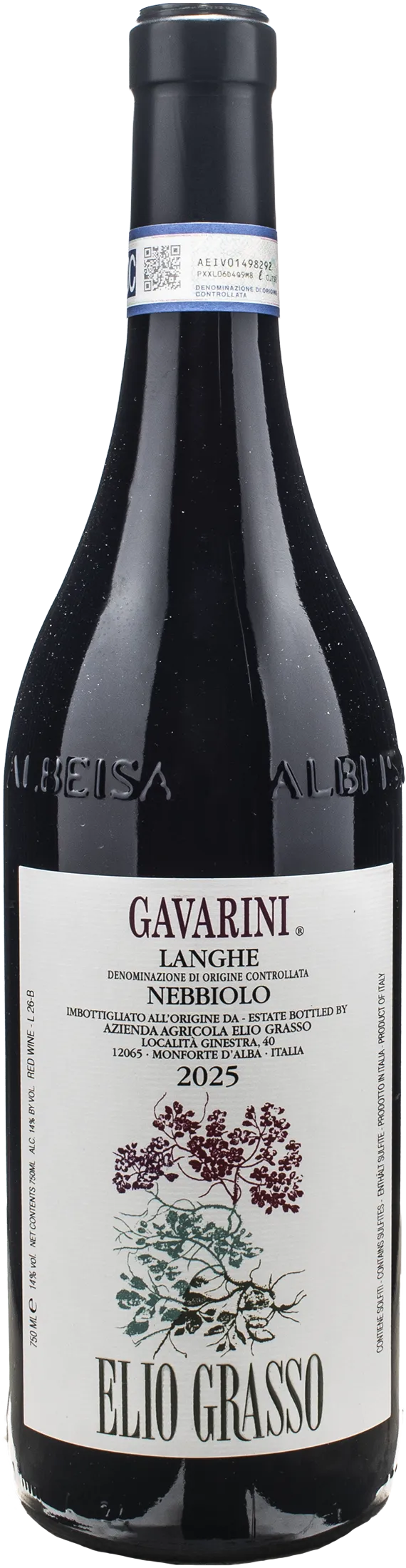
Langhe Nebbiolo Gavarini 2025
| Denomination | DOC Langhe Nebbiolo |
|---|---|
| Size | 0,75 l |
| Alcohol content | 14.0% by volume |
| Area | Piedmont (Italy) |
| Grape varieties | 100% Nebbiolo |
| Aging | After malolactic fermentation, the wine rests in stainless steel and is bottled in the spring (April-May). |
- Grape variety and vintage: 100% Nebbiolo, Langhe, harvested in 2025, 14% vol
- Aromatic profile: crisp red fruit, violet, black pepper and a balsamic note
- Taste: juicy, fresh and clean palate, with a persistent fruity finish
- Vineyard: Monforte d’Alba, south-facing, 350-380 m, medium-textured calcareous soil
- Vinification: in stainless steel at controlled temperature, bottled in spring
Description
What kind of wine it is
Langhe Nebbiolo Gavarini by Elio Grasso is a still red wine with Denomination of Controlled Origin from Piedmont, featuring a ruby red colour enhanced by violet reflections, which best showcases and expresses the Langhe territory. On the nose, it reveals notes of crisp red fruit, hints of violet and black pepper, finishing with a delicate balsamic nuance. The palate is juicy, offering a fresh and clean mouthfeel with a highly enjoyable fruity finish. Vinified and matured in stainless steel, the wine fully expresses the intensity of its bouquet with a one-hour decanting before serving.
Where it comes from
The vines grow in Monforte d’Alba, in the heart of Piedmont. The plots benefit from a southern exposure and are situated at an altitude between 350 and 380 metres, conditions that favour a regular and optimal ripening of the Nebbiolo. The roots sink into a medium-textured calcareous soil, capable of imparting a clear and territorial olfactory and gustatory profile to the glass. This historic grape variety, whose name recalls the characteristic Piedmontese autumn mists or the bloom on the berries, perfectly reflects its ideal hillside habitat.
How it is produced
The Guyot-trained vines are about twenty years old. The manual harvest takes place in the first ten days of October, with careful selection of the bunches in the vineyard. Alcoholic fermentation occurs in stainless steel tanks at a controlled temperature, accompanied by regular daily pump-overs to extract colour and aromas. After the subsequent malolactic fermentation, the wine rests in steel to mature. The production cycle concludes with bottling in spring, designed to preserve the natural and lively fragrance of the fruit.
History and Curiosities
The Langhe Nebbiolo DOC by Elio Grasso has its roots in a winemaking tradition dating back to the late 13th century. Its evocative name recalls the autumn mists of Piedmont that envelop the vineyards during the late harvest, or the thick bloom that covers the grape clusters. Produced in Monforte d’Alba, in the heart of the Langhe, this red wine embodies centuries of oenological history.
Tasting notes

Perfume

Color

Taste
Serve at:
14 -16 °C
Longevity:
05 - 10 years
Decanting time:
1 hour

- Start up year: 1928
- Oenologist: Piero Ballario
- Bottles produced: 90.000
- Hectares: 18
In the early 1980s we decided to go back to our origins as grape growers, well aware that our work did not stop at the end of the row of vines. We had no illusions that we were inventing anything: we merely wanted to comply with the best in the traditions and work of our predecessors, without any preconceived ideas. The first logical consequence was the decision, from 1978, to vinify and bottle separately grapes from our various vineyards. Read more


| Name | Elio Grasso Langhe Nebbiolo Gavarini 2025 |
|---|---|
| Type | Red green still |
| Denomination | Langhe DOC |
| Vintage | 2025 |
| Size | 0,75 l |
| Alcohol content | 14.0% by volume |
| Grape varieties | 100% Nebbiolo |
| Country | Italy |
| Region | Piedmont |
| Vendor | Elio Grasso |
| Story | History and Curiosities The Langhe Nebbiolo DOC by Elio Grasso has its roots in a winemaking tradition dating back to the late 13th century. Its evocative name recalls the autumn mists of Piedmont that envelop the vineyards during the late harvest, or the thick bloom that covers the grape clusters. Produced in Monforte d’Alba, in the heart of the Langhe, this red wine embodies centuries of oenological history. |
| Origin | Monforte d'Alba (CN) |
| Climate | Altitude: 350-380 m a.s.l. Exposure: South. |
| Soil composition | Medium-textured calcareous soil |
| Cultivation system | Guyot |
| Plants per hectare | 4,500 plants per hectare |
| Harvest | First ten days of October |
| Fermentation temperature | At a controlled temperature |
| Production technique | Alcoholic fermentation in temperature-controlled stainless steel tanks with daily pumping over, followed by malolactic fermentation and resting in stainless steel |
| Wine making | Alcoholic fermentation in stainless steel tanks/vats at controlled temperature, with daily pump-overs; followed by malolactic fermentation and resting in steel before bottling in spring (April-May). |
| Aging | After malolactic fermentation, the wine rests in stainless steel and is bottled in the spring (April-May). |
| Allergens | Contains sulphites |