


Elio Grasso
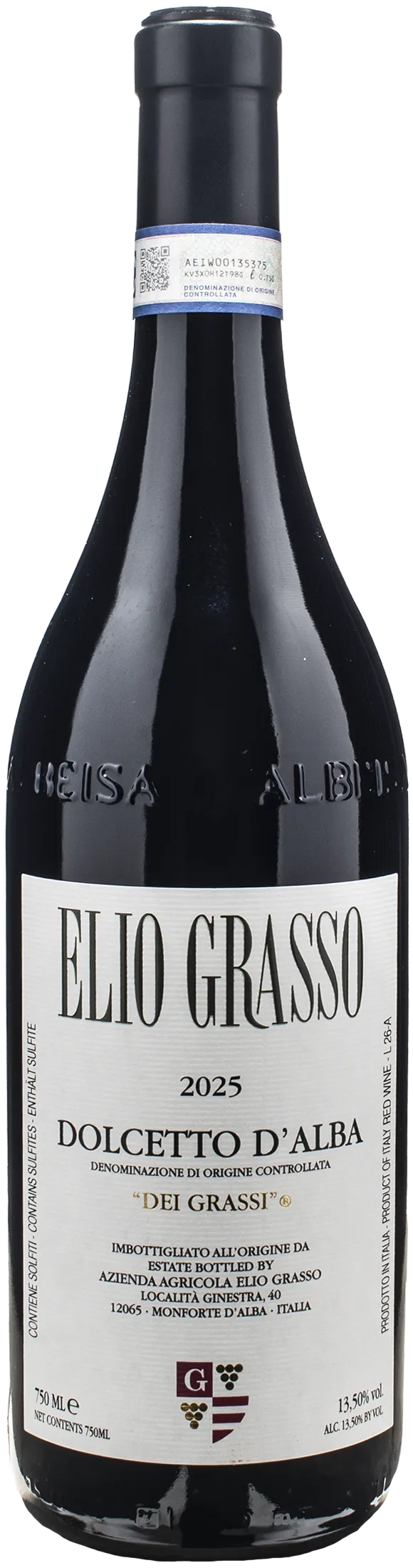
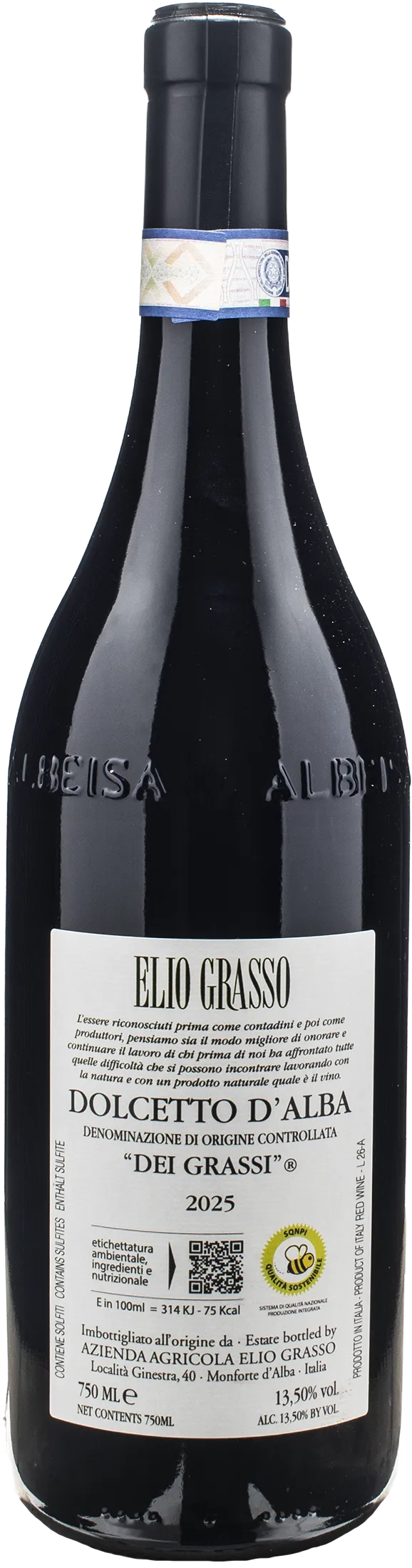
Dolcetto d'Alba dei Grassi 2025
| Denomination | DOC Dolcetto d'Alba |
|---|---|
| Size | 0,75 l |
| Alcohol content | 13.5% by volume |
| Area | Piedmont (Italy) |
| Grape varieties | 100% Dolcetto |
| Aging | After malolactic fermentation, the wine rests in stainless steel for several months and is bottled between April and May. |
- Name: Dolcetto d’Alba DOC 2025, still red wine from the Langhe
- Profile: Notes of red fruits and berries, fresh, juicy and dry taste
- Vineyards: Monforte d’Alba, south-east exposure at 280 metres, 30-year-old vines
- Vinification: In steel at controlled temperature with daily pump-overs
- Ageing and serving: In steel, bottled in April-May, decant for 1 hour
Description
What kind of wine it is
Dolcetto d’Alba by Grassi from Elio Grasso is a still red wine with Denomination of Controlled Origin, produced in the Langhe area from Dolcetto grapes. Vinification in stainless steel at controlled temperature preserves a fresh and clear aromatic profile. On the palate, it is dry, with good body and characterised by easy drinkability, with fragrant fruit supported by well-integrated tannins. Its overall balance and juicy texture make it a highly enjoyable glass, capable of expressing the typical character of the grape variety through a straightforward and sincere sip.
Where it comes from
Dolcetto d’Alba by Grassi is born in Monforte d’Alba, in the heart of the Langhe. Elio Grasso’s vineyards are situated on calcareous-clay soils of medium texture and benefit from a south-east exposure at around 280 metres above sea level. These pedoclimatic conditions ensure optimal ripening of the bunches. The vines, trained using the Guyot system with a density of 4,500 plants per hectare, have an average age of thirty years and provide raw material of excellent quality. The vocation of these plots translates into a juicy and balanced style.
How it is produced
The production process begins with a rigorous manual harvest. In the cellar, the grapes ferment in stainless steel tanks at controlled temperature, with daily pump-overs to optimise extraction. Following malolactic fermentation, the wine undergoes ageing in steel for several months. This period of rest allows the structure to stabilise and preserves the aromatic clarity before bottling, which usually takes place in the spring.
History and Curiosities
Produced since 1980, Elio Grasso's Dolcetto d’Alba DOC combines innovation with the deep-rooted traditions of the Langhe. The Grasso family lovingly cultivates thirty-year-old vines at an altitude of 280 metres, adopting an authentic approach to winemaking. From meticulous hand harvesting to maturation in steel, this red wine expresses an intense and balanced character, offering a juicy and never ordinary daily sip.
Tasting notes

Perfume

Color

Taste
Serve at:
14 -16 °C
Longevity:
05 - 10 years
Decanting time:
1 hour
- Start up year: 1928
- Oenologist: Piero Ballario
- Bottles produced: 90.000
- Hectares: 18
In the early 1980s we decided to go back to our origins as grape growers, well aware that our work did not stop at the end of the row of vines. We had no illusions that we were inventing anything: we merely wanted to comply with the best in the traditions and work of our predecessors, without any preconceived ideas. The first logical consequence was the decision, from 1978, to vinify and bottle separately grapes from our various vineyards. Read more


| Name | Elio Grasso Dolcetto d'Alba dei Grassi 2025 |
|---|---|
| Type | Red green still |
| Denomination | Dolcetto d'Alba DOC |
| Vintage | 2025 |
| Size | 0,75 l |
| Alcohol content | 13.5% by volume |
| Grape varieties | 100% Dolcetto |
| Country | Italy |
| Region | Piedmont |
| Vendor | Elio Grasso |
| Story | History and Curiosities Produced since 1980, Elio Grasso's Dolcetto d’Alba DOC combines innovation with the deep-rooted traditions of the Langhe. The Grasso family lovingly cultivates thirty-year-old vines at an altitude of 280 metres, adopting an authentic approach to winemaking. From meticulous hand harvesting to maturation in steel, this red wine expresses an intense and balanced character, offering a juicy and never ordinary daily sip. |
| Origin | Langhe, Monforte d'Alba (Cuneo), Piedmont, Italy |
| Climate | Altitude: 280 m a.s.l. Exposure: South-East. |
| Soil composition | Medium-textured calcareous-clay |
| Cultivation system | Guyot |
| Plants per hectare | 4,500 plants per hectare |
| Harvest | Second and third ten days of September; manual harvest |
| Production technique | Manual harvesting; alcoholic and malolactic fermentation in stainless steel tanks at controlled temperature with daily pump-overs; ageing in steel |
| Wine making | Manual harvesting; alcoholic and malolactic fermentation in stainless steel tanks at controlled temperature with daily pump-overs; ageing in steel for several months and bottling in April-May. |
| Aging | After malolactic fermentation, the wine rests in stainless steel for several months and is bottled between April and May. |
| Allergens | Contains sulphites |