


De Venoge
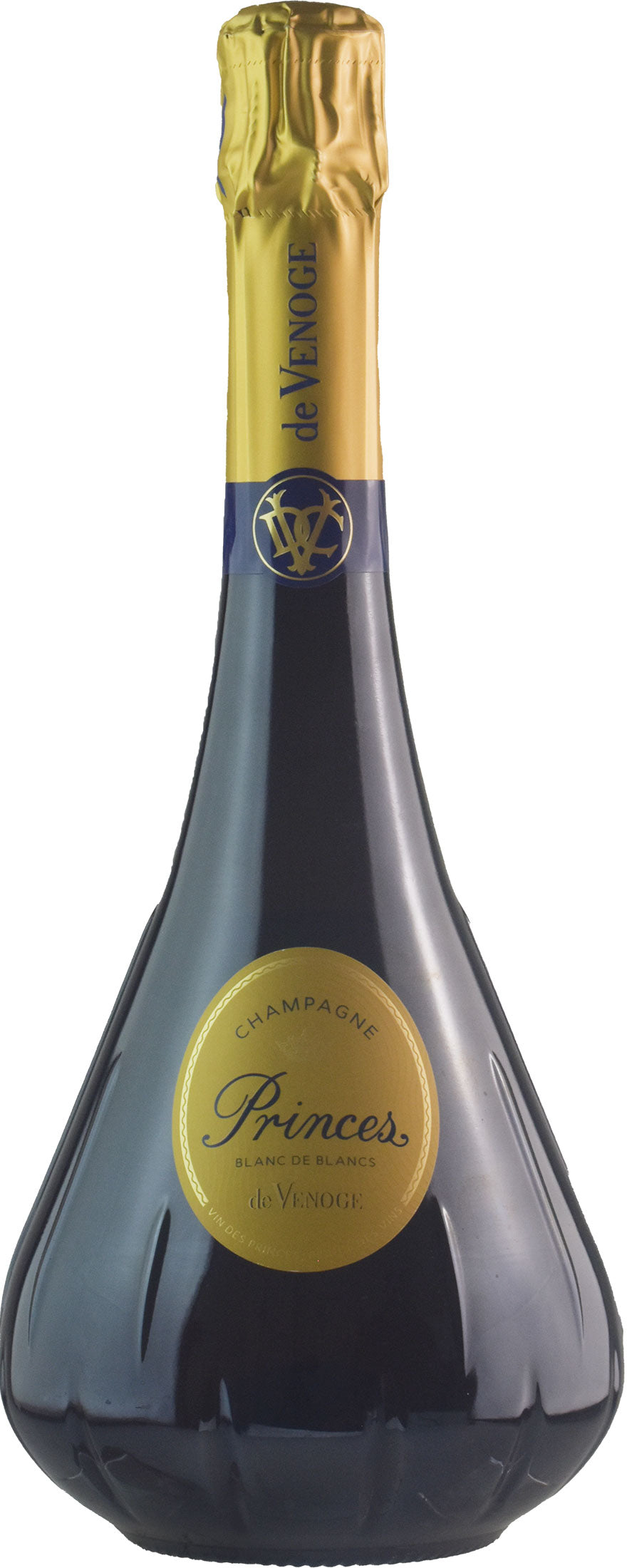
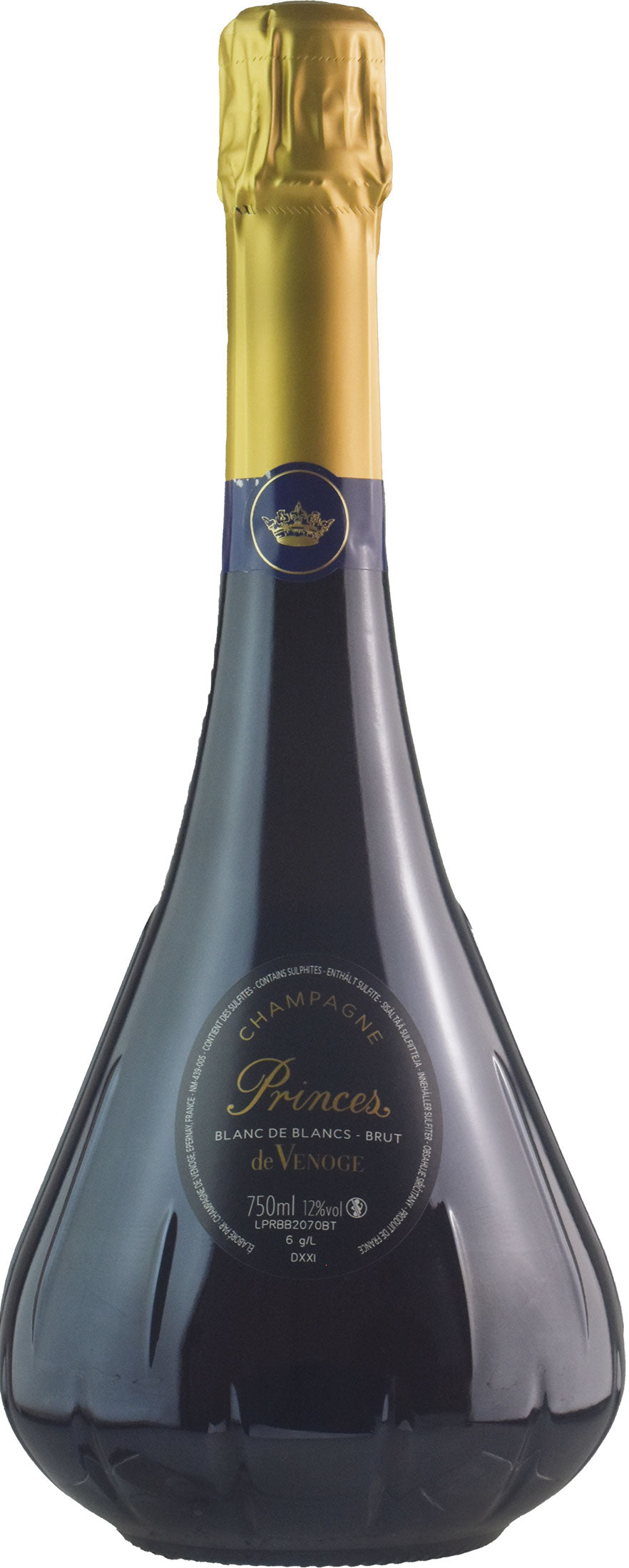
Champagne Princes Blanc de Blancs Brut
| Denomination | AOC Champagne Blanc de Blancs Brut |
|---|---|
| Size | 0,75 l |
| Alcohol content | 12.0% by volume |
| Area | Champagne region (France) |
| Grape varieties | 100% Chardonnay |
- Grapes and style: Blanc de Blancs Brut made exclusively from Chardonnay, Champagne AOC designation
- Method: Bottle refermentation using the Traditional Method, with a fine and persistent perlage
- Aroma: Floral and fruity notes accompanied by hints of honey
- Taste and colour: Golden straw yellow colour; delicate, intense and persistent on the palate
- Pairings and awards: Ideal with fish, shellfish and cheeses; rated 93 by Decanter
Description
What kind of wine is it
The Champagne Princes Blanc de Blancs Brut by De Venoge is a Blanc de Blancs that purely expresses the characteristics of Chardonnay. In the glass, it displays a straw yellow hue with golden reflections, animated by a fine and persistent perlage. The bouquet opens with clear floral and fruity notes, enriched by hints of honey. On the palate, it is delicate yet intense, with a noble persistence that makes it ideal for accompanying fish starters, shellfish, and fresh cheeses.
Where does it come from
This Champagne originates from the vineyards of the eponymous French region. The De Venoge house, founded in 1837 by a family of Swiss origin, built its identity during the nineteenth century through the creation of distinctive cuvées. This wine reflects the essence of the terroir, offering a profile focused on aromatic finesse and palate clarity. The pedoclimatic characteristics of the Champagne region give the grapes a liveliness that translates into great precision and freshness on the palate.
How is it produced
The Champagne Princes Blanc de Blancs Brut by De Venoge is made exclusively from Chardonnay grapes. The sparkling process strictly follows the Traditional Method, which involves secondary fermentation in the bottle to develop the effervescence. This process defines the character of the Brut style, maintaining a perfect balance between the aromatic component and the structure of the wine. The prolonged ageing on the lees imparts excellent palate texture and a persistent finish that enhances the varietal purity.
History and Curiosities
Founded in 1837 by a family of Swiss origin, the De Venoge maison instils an inheritance of absolute elegance into this Champagne Blanc de Blancs. As early as the nineteenth century, the winery was creating special cuvées that cemented its prestige, now evoked by the renowned Princes line. The exclusive bottle, adorned with a crown emblem, contains a refined pure Chardonnay, praised by critics and awarded 93 points by Decanter. This profound vocation gives rise to an excellent classic brut method, capable of uniting ancient tradition with the utmost sophistication.
Awards
-
 93
93/100
Decanter is a wine and lifestyle magazine, published monthly in around 90 countries. The magazine includes industry news, classic guides and advice on wine and spirits.
-
 92
92/100
James Suckling is an influential American wine critic and journalist who worked at Wine Spectator for 30 years. He left the magazine in 2010 to start his own website and guidebook (JamesSuckling.com). He specialises in Italian and Bordeaux wines.
-
 91
91/100
The prestigious international wine guide from the renowned Robert Parker, the world's most experienced and trusted wine taster.
-
 91
91/100
Wine spectator is the most influential wine guide on the internet.
Tasting notes

Perlage

Perfume

Color

Taste
Serve at:
06 - 08 °C
Longevity:
05 - 10 years

- Start up year: 1837
Joseph de Venoge, Henri-Marc’s son and successor, was the true builder and ambassador of the brand. He and his son introduced De Venoge to the United States in the late 1830s and it gained renown in Philadelphia, New York and New Orleans. Joseph created the first "cuvées spéciales" which were to become independent brands that increased the depth of the maison’s already rich portfolio. Cordon Bleu was created in 1851, the Vin des Princes in 1858 and others in the years that followed. Joseph’s successors reaped the fruit of his labor in the U.S. market when de Venoge won the Grand prize at the Philadelphia Universal Exposition in 1876. By 1900, the annual production of de Venoge was surpassing a million bottles.
Today, the Maison is no longer family run, but de Venoge continues to craft wines with the very same passion and dedication to quality that drove three centuries of innovators to create and build one of the finest brands in Champagne. Read more


| Name | De Venoge Champagne Princes Blanc de Blancs Brut |
|---|---|
| Type | White classic method sparkling wine brut |
| Denomination | Champagne AOC |
| Size | 0,75 l |
| Alcohol content | 12.0% by volume |
| Grape varieties | 100% Chardonnay |
| Country | France |
| Region | Champagne region |
| Vendor | De Venoge |
| Story | History and Curiosities Founded in 1837 by a family of Swiss origin, the De Venoge maison instils an inheritance of absolute elegance into this Champagne Blanc de Blancs. As early as the nineteenth century, the winery was creating special cuvées that cemented its prestige, now evoked by the renowned Princes line. The exclusive bottle, adorned with a crown emblem, contains a refined pure Chardonnay, praised by critics and awarded 93 points by Decanter. This profound vocation gives rise to an excellent classic brut method, capable of uniting ancient tradition with the utmost sophistication. |
| Origin | Champagne, France |
| Production technique | Classic method (traditional method) |
| Wine making | Classic method (traditional method) |
| Allergens | Contains sulphites |