


Chateau Clos d'Estournel
Saint Estephe Grand Cru Classe 2023
| Denomination | AOC Saint-Estèphe |
|---|---|
| Size | 0,75 l |
| Alcohol content | 13.0% by volume |
| Area | Bordeaux (France) |
| Grape varieties | 65% Cabernet Sauvignon, 30% Merlot, 5% Cabernet Franc |
| Aging | Ageing in new oak |
| Other years | 2009 , 2021 |
- Origin and style: Dry red wine from the Saint-Estèphe region (Bordeaux), 2023 vintage, 13% vol
- Classic blend: 65% Cabernet Sauvignon, 33% Merlot, 1% Cabernet Franc, 1% Petit Verdot
- Complex aromas: blackcurrant, blackberry and plum, rose, tobacco and liquorice; notes of exotic spices
- Vinification and ageing: uncrushed grapes, 21-day maceration at 26°C
- Serving and longevity: decant for 1–2 hours at 17°C; recommended consumption between 2028 and 2053
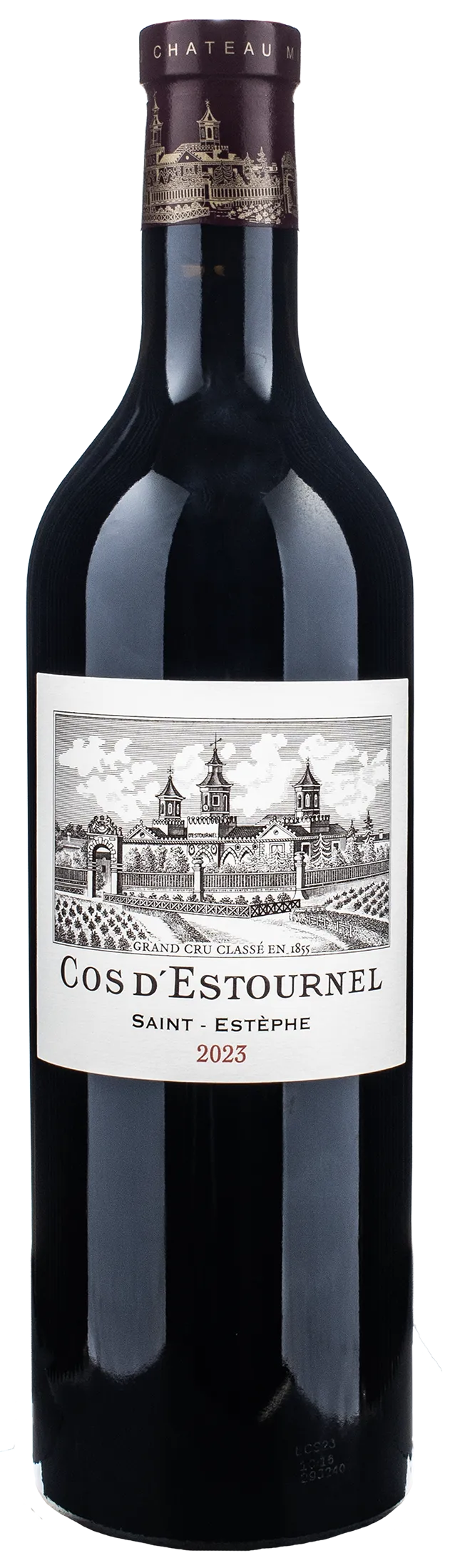
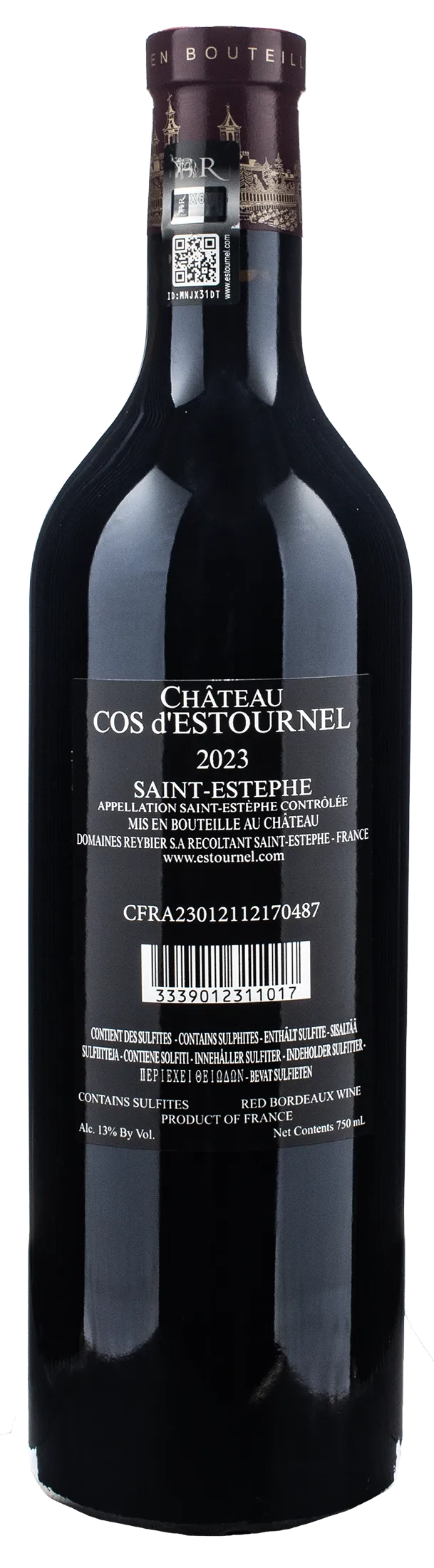
Description
What kind of wine it is
Château Cos d’Estournel Saint-Estèphe Grand Cru Classé is a celebrated red wine from the Saint-Estèphe appellation in Bordeaux, aged in new oak barrels. This elegant blend combines Cabernet Sauvignon, Merlot, Cabernet Franc and Petit Verdot varieties. To the eye, it presents a deep ruby colour, while the bouquet is intense, with notes of dark fruits such as cassis, rose petals, exotic spices and subtle toasted touches. On the palate, it reveals a full and deep structure, enveloping the sip with a silky tannic texture and refined acidity, before closing with a long and ethereal finish with delicate oriental accents.
Where it comes from
The wine originates in the renowned Saint-Estèphe area, where the estate cultivates vines over forty years old on a privileged hillside. The territory is distinguished by gravelly soils and southern exposure, ensuring optimal ripening. The soil-climate balance is supported by the nearby wetlands, essential for mitigating heatwaves and preserving the freshness of the clusters. Each plot is managed with precision to enhance the nuances of the Bordeaux terroir, delivering an authentic expression of the landscape in the glass.
How it is produced
In the cellar, vinification aims to preserve the definition of the fruit. The grapes, whole and uncrushed, undergo a short maceration of twenty-one days and fermentation at low temperatures to gently extract the chromatic and aromatic compounds. Subsequent ageing in barrels of new oak consolidates the tannic texture and enriches the profile with pleasant toasted nuances. The result is a red for ageing of great concentration and composure, excellent paired with haute cuisine dishes, cheeses and red meats.
History and Curiosities
Founded at the beginning of the 19th century by Louis-Gaspard d’Estournel, Château Cos d’Estournel is a famous Second Grand Cru Classé situated on the prestigious hill of Saint-Estèphe, in Bordeaux. The estate, known for its evocative exotic-inspired architecture, produces wines of excellence from historic vines over forty years old. The ideal southern exposure and gravelly soils benefit from the influence of the neighbouring wetlands which, by mitigating late heatwaves, allow the glass to express all the uniqueness of the terroir.
Awards
-
2023
 99
99/100
James Suckling is an influential American wine critic and journalist who worked at Wine Spectator for 30 years. He left the magazine in 2010 to start his own website and guidebook (JamesSuckling.com). He specialises in Italian and Bordeaux wines.
-
2023
 96
96/100
The prestigious international wine guide from the renowned Robert Parker, the world's most experienced and trusted wine taster.
-
2023
 98
98/100
Vinous is the online guide from Antonio Galloni, one of the world's leading wine connoisseurs.
Tasting notes

Perfume

Color

Taste
Serve at:
16 - 18 °C
Longevity:
15 - 25 years
Decanting time:
1 hour



| Name | Chateau Cos d'Estournel Saint Estephe Grand Cru Classe 2023 |
|---|---|
| Type | Red still |
| Denomination | Saint-Estèphe AOC |
| Vintage | 2023 |
| Size | 0,75 l |
| Alcohol content | 13.0% by volume |
| Grape varieties | 65% Cabernet Sauvignon, 30% Merlot, 5% Cabernet Franc |
| Country | France |
| Region | Bordeaux |
| Vendor | Chateau Clos d'Estournel |
| Story | History and Curiosities Founded at the beginning of the 19th century by Louis-Gaspard d’Estournel, Château Cos d’Estournel is a famous Second Grand Cru Classé situated on the prestigious hill of Saint-Estèphe, in Bordeaux. The estate, known for its evocative exotic-inspired architecture, produces wines of excellence from historic vines over forty years old. The ideal southern exposure and gravelly soils benefit from the influence of the neighbouring wetlands which, by mitigating late heatwaves, allow the glass to express all the uniqueness of the terroir. |
| Origin | Saint-Estèphe, Bordeaux, France |
| Soil composition | Gravelly soils |
| Fermentation temperature | About 26°C |
| Production technique | Shorter maceration (21 days), fermentation at low temperatures (approx. 26°C) without crushing the grapes; ageing in new oak. |
| Wine making | A shorter maceration of less than 21 days (compared to the typical 30), fermentation at lower temperatures (approximately 26°C), and no crushing of the grapes. |
| Aging | Ageing in new oak |
| Allergens | Contains sulphites |