


Cavallotto
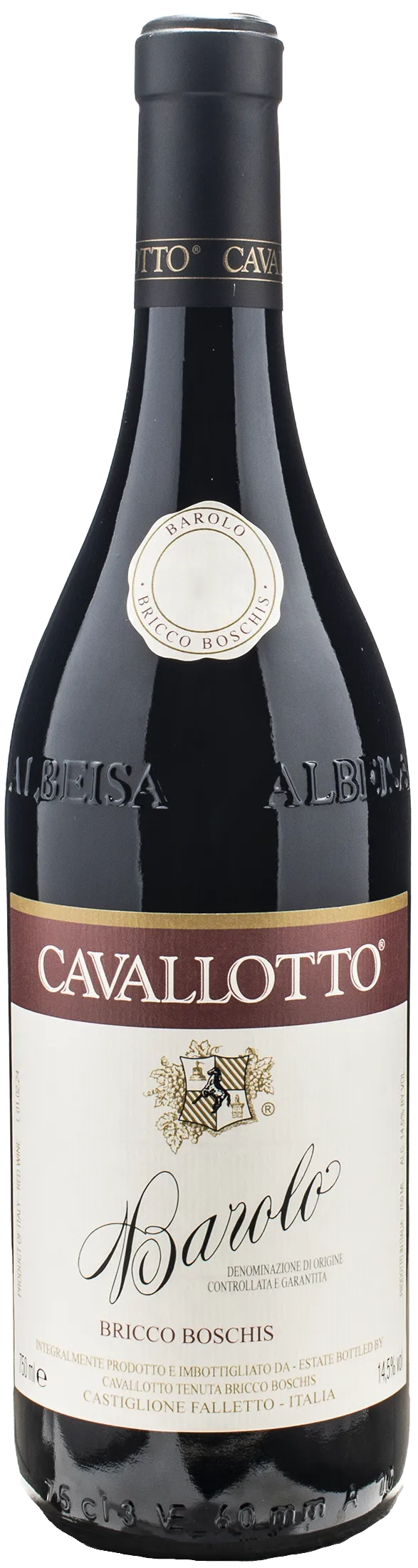
Barolo Bricco Boschis 2020
| Denomination | DOCG Barolo |
|---|---|
| Size | 0,75 l |
| Alcohol content | 14.5% by volume |
| Area | Piedmont (Italy) |
| Grape varieties | 100% Nebbiolo |
| Aging | Aged for a minimum of 36 months in large Slavonian oak barrels (traditional, 3–3.5 years; sometimes up to 4 years), with further refinement in the bottle before release to the market. |
| Other years | 2021 , 2022 |
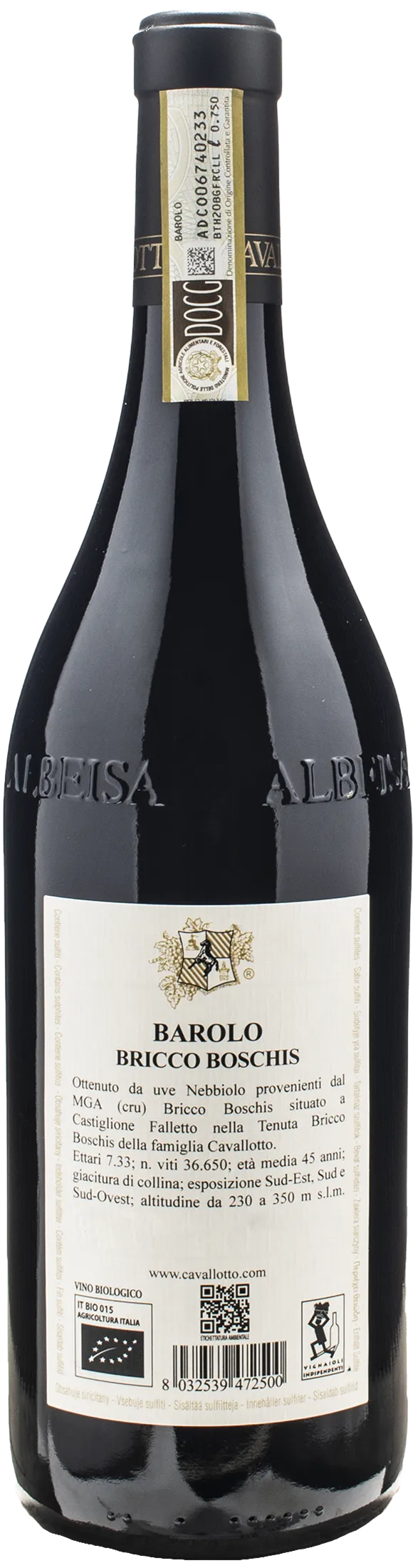
- Vintage and origin: Barolo DOCG 2020 from the Bricco Boschis Cru located in Castiglione Falletto
- Grape variety: 100% organic and vegan Nebbiolo, a still red wine of structure and elegance
- Vinification: Indigenous yeasts, maceration for 18-30 days, malolactic fermentation in cement tanks
- Ageing: At least 36 months in large Slavonian oak barrels, unfiltered wine
- Aromas: Notes of rose, cherry, orange and liquorice, ideal with game and cheeses
Description
What kind of wine it is
Barolo Bricco Boschis by Cavallotto is a still red wine that embodies the essence of Nebbiolo. Produced in the renowned Barolo area, it offers an intense and layered aromatic profile: on the nose, notes of rose, violet and hibiscus emerge, followed by hints of cherry, orange zest, plum and bark. On the palate, it reveals a masterful structure, with fine, well-integrated tannins supported by a clear mineral streak. The finish is long, precise and fresh. This organic and vegan wine pairs perfectly with red meats, game and mature cheeses, offering a refined tasting experience even when matched with chocolate.
Where it comes from
It originates in Piedmont, in the municipality of Castiglione Falletto, within the historic Cru Bricco Boschis. The Cavallotto estate has managed this vineyard as a monopoly since the 1920s. The soils, composed of calcareous marl, are kept rich in biodiversity, resulting in grapes with deep organoleptic precision. The hillside vineyards enjoy excellent south and south-west exposure, ensuring optimal ventilation. The old vines from the 1920s develop an ideal balance between aromatic intensity and structured freshness.
How it is produced
Production begins with manual harvesting and careful selection of the bunches before total destemming. Fermentation starts spontaneously thanks to indigenous yeasts in horizontal tanks at controlled temperature. This is followed by a semi-submerged cap maceration lasting eighteen to thirty days. In spring, malolactic fermentation takes place in cement tanks. The wine then matures for at least thirty-six months in large Slavonian oak casks, with no use of barriques, to encourage an evolution marked by maximum elegance. The process concludes without any filtration, preserving the authenticity and integrity of the sip.
History and Curiosities
The Cavallotto estate exclusively manages the prestigious Bricco Boschis Cru, with vines dating back to the 1920s. A pioneer of sustainability since 1975, it produces an organic Barolo DOCG closely linked to Castiglione Falletto. The 2020 vintage is created using indigenous yeasts, no filtration, and is aged for 36 months in large Slavonian oak barrels. This multi-award-winning wine stands out for its extraordinary elegance, complex structure, and rare longevity.
Awards
-
2020
 4
4Italian Sommelier Foundation (FIS) guide This has been one of the most prestigious wine guides in Italy for over 10 years.
-
2020
 94
94/100
Decanter is a wine and lifestyle magazine, published monthly in around 90 countries. The magazine includes industry news, classic guides and advice on wine and spirits.
-
2020
 2
2This guide is highly respected and offers the most comprehensive review of Italian wines. It has a long tradition and is based on blind tastings carried out by over 100 experts.
-
2020
 94
94/100
The prestigious international wine guide from the renowned Robert Parker, the world's most experienced and trusted wine taster.
-
2020
 3
3One of the most prestigious wine guides in Italy.
-
2020
 93
93/100
Vinous is the online guide from Antonio Galloni, one of the world's leading wine connoisseurs.
-
2020
 4
4Italian Sommelier Association (AIS) guide
-
2020
 94
94/100
Wine spectator is the most influential wine guide on the internet.
Tasting notes

Perfume

Color

Taste
Serve at:
18 - 20 °C
Longevity:
10 - 15 years
Decanting time:
1 hour

- Start up year: 1928
- Oenologist: Alfio e Giuseppe Cavallotto
- Bottles produced: 100.000
- Hectares: 25
Today the children of Olivio – Laura, Giuseppe and Alfio, the 4th generation working the family farm – continue to exclusively vinify the grapes produced in their estate vineyards into DOC and DOCG wines: Barolo, Dolcetto d’Alba, Barbera d’Alba, Langhe Nebbiolo, Langhe Freisa, Langhe "Grign" made from Grignolino grapes, Langhe Chardonnay and "Pinner" made from Pinot Nero grapes. Read more


| Name | Cavallotto Barolo Bricco Boschis 2020 |
|---|---|
| Type | Red organic still |
| Denomination | Barolo DOCG |
| Vintage | 2020 |
| Size | 0,75 l |
| Alcohol content | 14.5% by volume |
| Grape varieties | 100% Nebbiolo |
| Country | Italy |
| Region | Piedmont |
| Vendor | Cavallotto |
| Story | History and Curiosities The Cavallotto estate exclusively manages the prestigious Bricco Boschis Cru, with vines dating back to the 1920s. A pioneer of sustainability since 1975, it produces an organic Barolo DOCG closely linked to Castiglione Falletto. The 2020 vintage is created using indigenous yeasts, no filtration, and is aged for 36 months in large Slavonian oak barrels. This multi-award-winning wine stands out for its extraordinary elegance, complex structure, and rare longevity. |
| Origin | Castiglione Falletto (CN) |
| Soil composition | Calcareous marl, limestone |
| Yield per hectare | 35 hl/ha |
| Fermentation temperature | 29 °C |
| Fermentation | 18–30 days |
| Production technique | Total destemming; fermentation with indigenous yeasts in horizontal tanks at controlled temperature; semi-submerged cap maceration for 18–30 days; malolactic fermentation in cement tanks; maturation for a minimum of 36 months in large Slavonian oak barrels; unfiltered. |
| Wine making | Total destemming; fermentation with indigenous yeasts in horizontal tanks with a maximum controlled temperature of 29°C; traditional vinification with semi-submerged cap maceration for 18–30 days; malolactic fermentation in cement tanks in the spring following the harvest; maturation for a minimum of 36 months in large Slavonian oak casks (no barriques), unfiltered. |
| Aging | Aged for a minimum of 36 months in large Slavonian oak barrels (traditional, 3–3.5 years; sometimes up to 4 years), with further refinement in the bottle before release to the market. |
| Total acidity | 5.23 gr/L |
| Residual sugar | 0.2 gr/L |
| Allergens | Contains sulphites |