


Catena Zapata
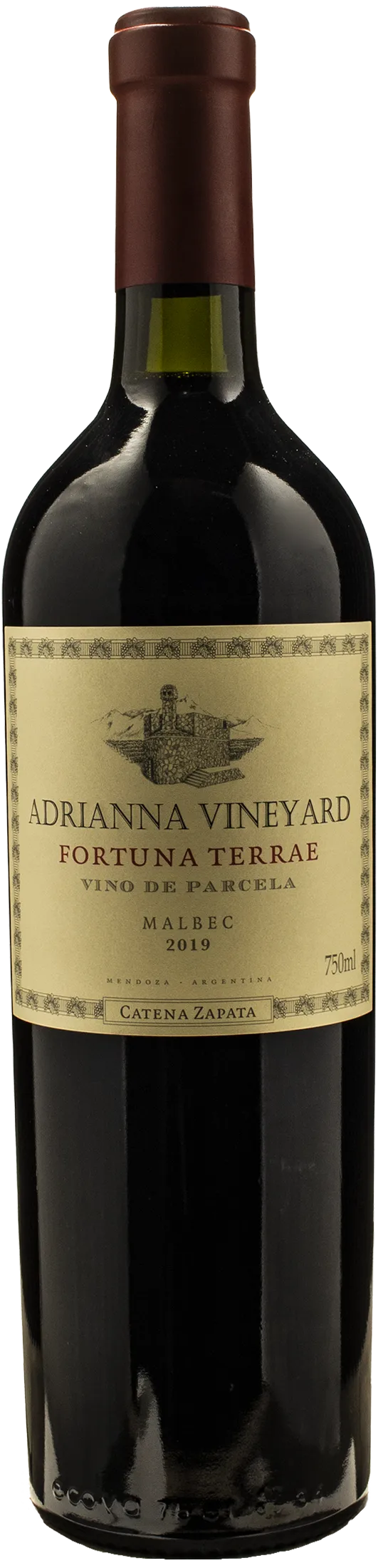
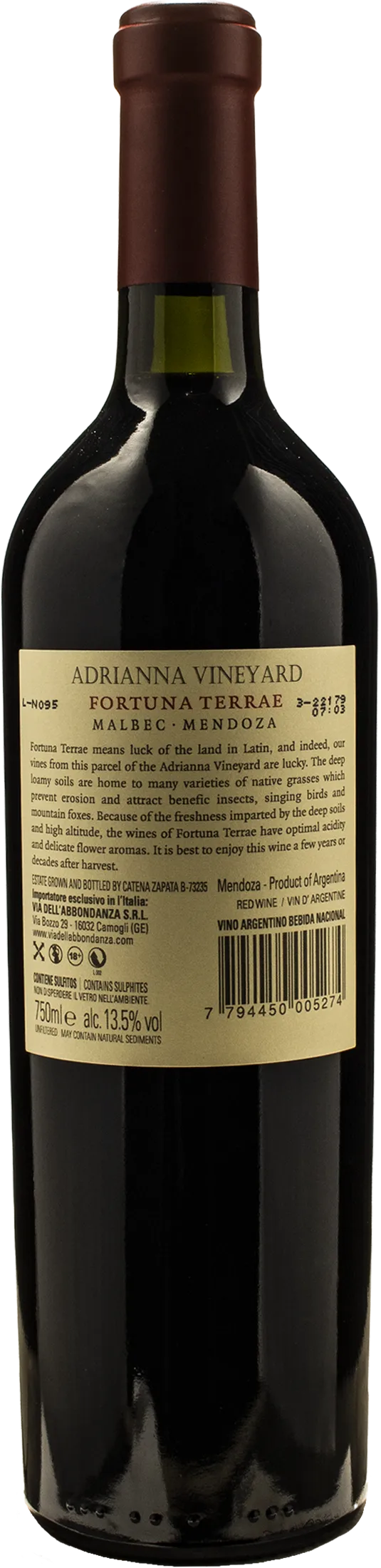
Adrianna Vineyard Fortuna Terrae Malbec 2019
| Denomination | N/A |
|---|---|
| Size | 0,75 l |
| Alcohol content | 13.5% by volume |
| Area | Mendoza (Argentina) |
| Grape varieties | 100% Malbec |
| Aging | Aged for 24 months in French oak barrels |
- Grape variety and style: Still red, 100% Malbec, full-bodied structure, high tension and concentration
- Origin and terroir: Gualtallary, Uco Valley, 1,366 metres; alluvial soils rich in limestone
- Aromatic profile: Notes of blackberry, dried strawberry, green tea, damp earth and dried flowers
- Vinification: Maceration for 8–12 days with indigenous yeasts; aged for 24 months in oak
- Serving and pairings: Decant for 1 hour; serve at 16–18 °C; ideal with beef, lamb, game
Description
What kind of wine it is
Adrianna Vineyard Fortuna Terrae Malbec by Catena Zapata is a still red wine with Mendoza Geographical Indication. Made from Malbec grapes, it stands out for its fermentation with indigenous yeasts and ageing in French oak barrels. On the nose, it offers aromas of blackberry, dried strawberry, green tea and dried flowers. On the palate, it is full-bodied and concentrated, supported by vibrant acidity and fine tannins that lead to a long and elegant finish.
Where it comes from
This wine originates from Gualtallary, in the Uco Valley of Mendoza, from a single plot located at 1,366 metres above sea level. The cool microclimate of this area gives the wine freshness, minerality and a unique depth. The vines grow on deep alluvial soils, composed of clay and white calcareous stones. The rows are surrounded by a layer of native wild herbs that prevents erosion and protects the ecosystem, promoting the natural biodiversity of the vineyard.
How it is produced
Vinification begins with a skin maceration of about eight to twelve days. Fermentation takes place exclusively with indigenous yeasts in oak containers and roll-fermenters, at controlled temperatures. Ageing continues for twenty-four months in French oak barrels, a fundamental step that allows the wine to harmonise its aromatic components and acquire excellent ageing potential.
History and Curiosities
The name Fortuna Terrae, which in Latin means “fortune of the earth”, celebrates a single plot located at 1,366 metres above sea level in the Uco Valley. The deep alluvial limestone soils and native flora create an unspoilt ecosystem, the perfect habitat for this pure Malbec. The wine is aged for 24 months in French oak, acquiring a noble structure designed for decades of evolution. The 2019 vintage boasts prestigious scores, such as 99 points from James Suckling and 98 from Decanter.
Awards
-
2019
 98
98/100
Decanter is a wine and lifestyle magazine, published monthly in around 90 countries. The magazine includes industry news, classic guides and advice on wine and spirits.
-
2019
 99
99/100
James Suckling is an influential American wine critic and journalist who worked at Wine Spectator for 30 years. He left the magazine in 2010 to start his own website and guidebook (JamesSuckling.com). He specialises in Italian and Bordeaux wines.
-
2019
 97
97/100
The prestigious international wine guide from the renowned Robert Parker, the world's most experienced and trusted wine taster.
-
2019
 95
95/100
Vinous is the online guide from Antonio Galloni, one of the world's leading wine connoisseurs.
-
2019
 96
96/100
Wine spectator is the most influential wine guide on the internet.
Tasting notes

Perfume

Color

Taste
Serve at:
16 - 18 °C
Longevity:
15 - 25 years
Decanting time:
1 hour
Nicolás Catena would never use the word about himself - a less boastful spirit, it’s hard to imagine - but he has been the quiet revolutionary in the Catena family history book. He has charted the family’s path to the new frontier of winemaking, drawing on lessons learned from the land and in the classroom, then applying his education to dare to challenge the conventional wisdom.
Taking the reigns of the family vineyards and wineries in the mid 1960s, he concentrated on expanding distribution throughout Argentina during years of turmoil in the 1970s. But in the early 1980s, Nicolás left Argentina to become a visiting professor of economics at the University of California, on the world-renowned campus at Berkeley. The political and economic situation in Argentina was difficult, with a military government that had just declared war on the United Kingdom and inflation rates of more than 1000 per cent per year.
Nicolás set out to develop his own selection of Argentine Malbec clones planting 145 clones in the La Pirámide vineyard. Of these, he selected the best five and began to plant them in different terroirs and altitudes.
Read more


| Name | Catena Zapata Adrianna Vineyard Fortuna Terrae Malbec 2019 |
|---|---|
| Type | Red still |
| Denomination | N/A |
| Vintage | 2019 |
| Size | 0,75 l |
| Alcohol content | 13.5% by volume |
| Grape varieties | 100% Malbec |
| Country | Argentina |
| Region | Mendoza |
| Vendor | Catena Zapata |
| Story | History and Curiosities The name Fortuna Terrae, which in Latin means "fortune of the earth", celebrates a single plot located at 1,366 metres above sea level in the Uco Valley. The deep alluvial limestone soils and native flora create an unspoilt ecosystem, the perfect habitat for this pure Malbec. The wine is aged for 24 months in French oak, acquiring a noble structure designed for decades of evolution. The 2019 vintage boasts prestigious scores, such as 99 points from James Suckling and 98 from Decanter. |
| Origin | Gualtallary (Valle dell’Uco), Mendoza, Argentina |
| Climate | Microclima freddo |
| Soil composition | Alluvial origin; deep topsoil with white stones covered in limestone (calcareous and clay soils) |
| Fermentation temperature | Up to 25–30 °C |
| Fermentation | 16 days |
| Production technique | Maceration for 8–12 days; fermentation for 16 days with indigenous yeasts in 225-litre oak barrels and in 500-litre French oak roll-fermenters (up to 25–30 °C); ageing for 24 months in French oak barrels |
| Wine making | Maceration for 8–12 days; fermentation for 16 days with indigenous yeasts in 225-litre oak barrels and 500-litre French oak roll-fermenters (temperature up to 25–30 °C); ageing for 24 months in French oak barrels. |
| Aging | Aged for 24 months in French oak barrels |
| Total acidity | 7.0 gr/L |
| PH | 3.63 |
| Allergens | Contains sulphites |