


Castello Pomino - Frescobaldi
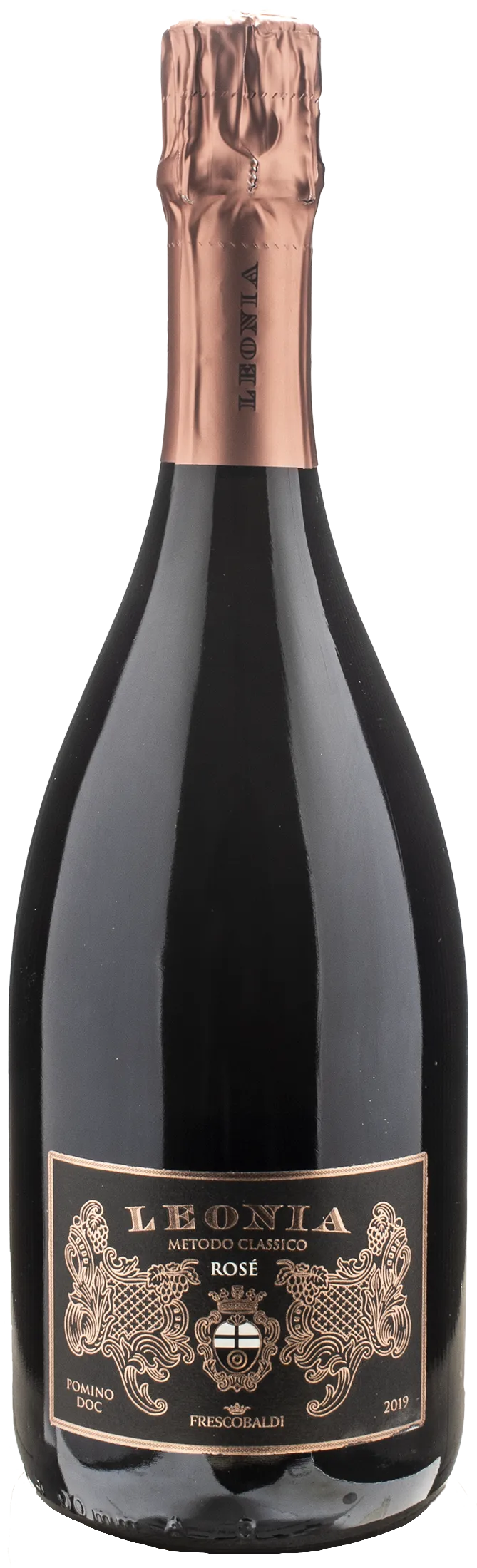
Leonia Metodo Classico Brut Rosé Millesimato 2019
Other years:
2017| Denomination | DOC Pomino Spumante Rosato |
|---|---|
| Size | 0,75 l |
| Alcohol content | 12.0% by volume |
| Area | Tuscany (Italy) |
| Grape varieties | 100% Pinot Nero |
| Aging | Aged on the lees for at least 36 months with riddling and disgorgement; followed by several months of bottle ageing before release onto the market. |
| Other years | 2017 |
- Type and origin: Brut Rosé Sparkling Wine, Classic Method, Pomino DOC Tuscany designation
- Grapes and vintage: 100% Pinot Noir, 2019 harvest, alcohol content 12%
- Ageing: Matured for at least 36 months on the lees, followed by riddling and disgorgement
- Aromatic profile: Notes of red fruits, pink grapefruit, hawthorn and bread crust
- Taste and perlage: Dry and creamy flavour, very fine perlage, hints of almond and a cherry finish
Description
What kind of wine is it
Leonia Metodo Classico Brut Rosé is a sparkling rosé wine made from Pinot Noir grapes by the Frescobaldi winery. This Metodo Classico stands out for its onion skin pink colour and a fine and persistent perlage. On the nose, it reveals aromas of red fruits, pink grapefruit and hawthorn flowers, intertwined with hints of bread crust and spices. The palate entry is dry and creamy, supported by pronounced acidity. The sip offers sweet nuances of almond and lingering notes of cherry.
Where does it come from
This sparkling wine originates in Pomino, in the hilly region of Tuscany. Within the Pomino area, the vineyards stretch up to seven hundred metres above sea level. This elevation ensures optimal exposure, imparting brightness and minerality to the glass. The estate, linked to the Frescobaldi family since the fifteenth century, benefits from a cool microclimate. Such conditions allow the Pinot Noir to express its excellence, fully reflecting the identity of the place.
How is it produced
The winemaking process begins with manual harvesting during the coolest hours. The grapes undergo a gentle pressing to extract a clear must with a delicate hue. After cold clarification, fermentation takes place in steel tanks, while a portion ferments in barrels. In March, the blend is created, followed by the prise de mousse. The wine undergoes ageing on the lees for thirty-six months, a key stage of the Metodo Classico, before proceeding with riddling, disgorgement and an appropriate rest in the bottle.
History and Curiosities
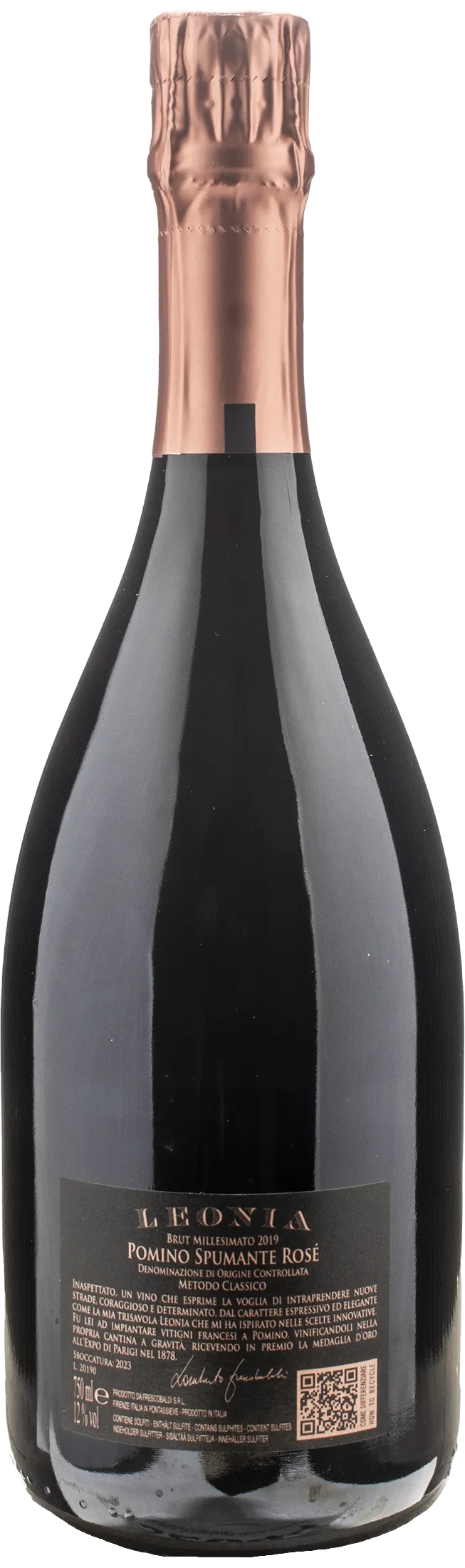
The Leonia Metodo Classico pays tribute to the great-great-grandmother who, by vinifying French grape varieties using gravity, won the gold medal in Paris in 1878. Produced on the historic Frescobaldi estate, whose origins date back to the 1400s, this sparkling wine made from pure Pinot Noir grapes matures for at least 36 months on the lees. The 2019 vintage stands out for its persistent perlage and a sip of rare elegance, making it a perfect emblem of the meeting between innovation and Tuscan tradition.
Awards
-
2019
 93
93/100
James Suckling is an influential American wine critic and journalist who worked at Wine Spectator for 30 years. He left the magazine in 2010 to start his own website and guidebook (JamesSuckling.com). He specialises in Italian and Bordeaux wines.
Tasting notes

Perlage

Perfume

Color

Taste
Serve at:
06 - 08 °C
Longevity:
05 - 10 years

- Start up year: 1400
- Oenologist: Nicolò D'Afflitto
- Bottles produced: 650.000
- Hectares: 108
The castle dates back to the 1500s and is well-known for its excellent location. However, the most significant testimony dates back to 1716, when Grand Duke Cosimo III de' Medici identified the four most suitable territories in Tuscany for producing Quality Wines.
The document, considered the forerunner of modern DOCs, lists the Pomino land along with Chianti, Carmignano and Val d'Arno di Sopra.
Since that date, the wines of Castello Pomino have won many awards: they were awarded in 1873 at the Universal Exhibition in Vienna and in 1878 won the Gold Medal at the Paris Expo, the highest international recognition at the time.
Today, Castello Pomino still stands for Tuscan winemaking tradition, combined with a desire to innovate and expert know-how. Brightness and minerality for a signature Tuscan wine. Read more


| Name | Castello di Pomino Leonia Metodo Classico Brut Rosè 2019 |
|---|---|
| Type | Rosé classic method sparkling wine brut |
| Denomination | Pomino DOC |
| Vintage | 2019 |
| Size | 0,75 l |
| Alcohol content | 12.0% by volume |
| Grape varieties | 100% Pinot Nero |
| Country | Italy |
| Region | Tuscany |
| Vendor | Castello Pomino - Frescobaldi |
| Story | History and Curiosities The Leonia Metodo Classico pays tribute to the great-great-grandmother who, by vinifying French grape varieties using gravity, won the gold medal in Paris in 1878. Produced on the historic Frescobaldi estate, whose origins date back to the 1400s, this sparkling wine made from pure Pinot Noir grapes matures for at least 36 months on the lees. The 2019 vintage stands out for its persistent perlage and a sip of rare elegance, making it a perfect emblem of the meeting between innovation and Tuscan tradition. |
| Origin | Località Pomino, Rufina (Firenze) |
| Production technique | Traditional method |
| Wine making | Manual harvest; gentle pressing to obtain a clear must with a slight anthocyanin content; cold clarification for 12 hours; fermentation in stainless steel tanks at controlled temperature with a portion fermented in wood; blending of the different cuvées in March; tirage with the addition of the liqueur de tirage; ageing on the lees for at least 36 months with remuage and disgorgement, followed by several months of bottle ageing. |
| Aging | Aged on the lees for at least 36 months with riddling and disgorgement; followed by several months of bottle ageing before release onto the market. |
| Allergens | Contains sulphites |