


Castello della Sala (Antinori)
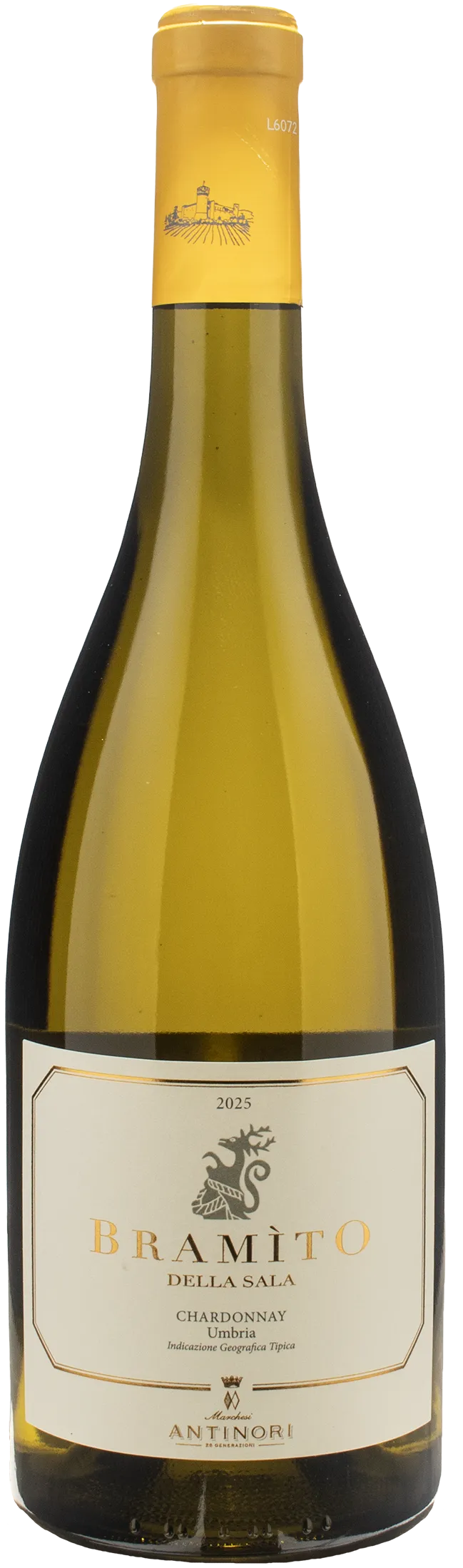
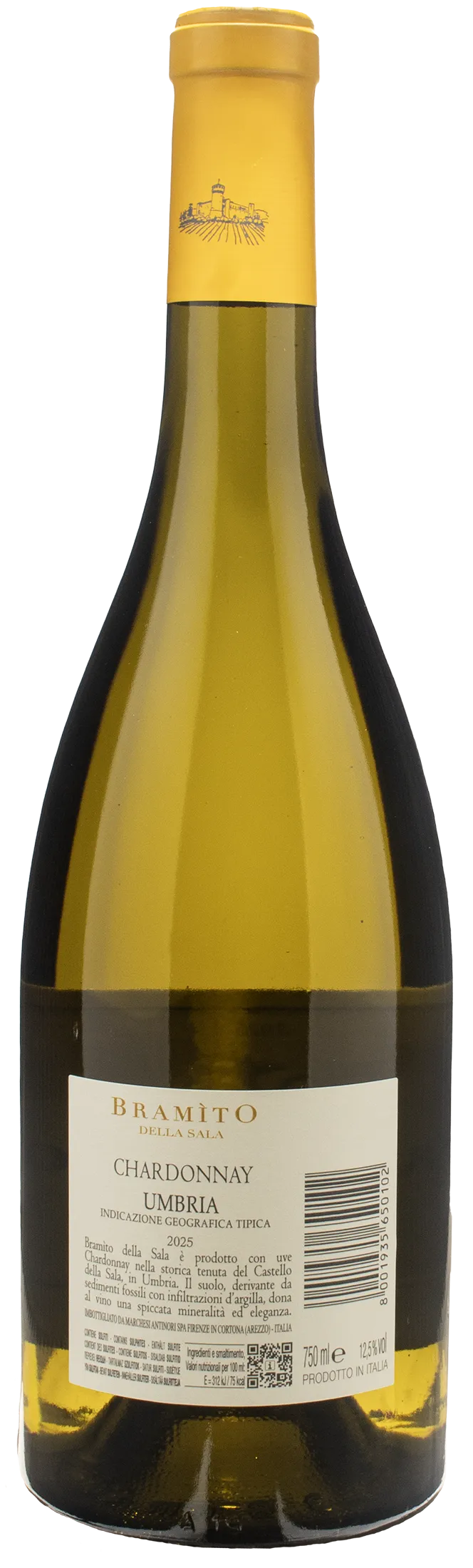
Bramito della Sala Chardonnay 2025
| Denomination | IGT Umbria |
|---|---|
| Size | 0,75 l |
| Alcohol content | 12.5% by volume |
| Area | Umbria (Italy) |
| Grape varieties | 100% Chardonnay |
- Grape variety and style: 100% Chardonnay, still white wine with an elegant and mineral profile
- Region and soils: Castello della Sala in Umbria, clay-limestone soils with the presence of marine fossils
- Vinification: Cold maceration for 2-4 hours, fermentation in wood and steel at 16-18°C
- Aroma and taste: Notes of yellow apple and citrus, pronounced savouriness and a finish of salted almond
- Pairings and details: Pairs well with sushi and shellfish, 12.5% vol, 0.75 l bottle
Description
What kind of wine is it
Bramìto della Sala is an elegant still white wine, a true expression of the Umbrian region. Made from Chardonnay grapes, it appears straw yellow with golden highlights. The bouquet reveals aromas of yellow apple, broom and citrus fruits, with subtle hints of pastry and hazelnut butter. On the palate, it displays a marked minerality and a fluid dynamic, supported by a savouriness reminiscent of salted almond. This balance makes it perfect with shellfish and sushi, and it also enhances vegetarian dishes and soft cheeses.
Where does it come from
The grapes come from the vineyards of Castello della Sala, an Umbrian estate owned by Antinori located near Orvieto. The hillside soils benefit from excellent exposure and constant ventilation. The clay-limestone soil, rich in fossilised marine sediments, gives the wine its typical savoury character. The altitude ensures a significant temperature range, ideal for concentrating the aromas. The temperate climate allows the Chardonnay to ripen slowly, maximising the fruit's expressive freshness.
How is it produced
The harvest selects bunches with the best aromatic potential. After gentle pressing, the must undergoes a cold maceration on the skins to optimise aromatic extraction. Alcoholic fermentation takes place separately: part in wooden barrels, where malolactic fermentation also occurs, and the other part in stainless steel to preserve the fruity character. Finally, the different batches are combined in a harmonious blend, achieving perfect balance and ideal stability for tasting.
History and Curiosities
Originating from the lands of the ancient stronghold of Castello della Sala, built in 1350 near Orvieto, this captivating wine expresses a centuries-old heritage. Since 1940, the Antinori family has cared for the restored estate, enhancing a terroir of 170 hectares dedicated almost exclusively to great white grape varieties. In this evocative place, where modern winemaking respects the historic underground cellars of the sixteenth century, the first vintage was produced in 1994, bringing all the magnificence of a noble tradition to the glass.
Tasting notes
Perfume
Color
Taste
Serve at:
08 - 10 °C
Longevity:
03 - 05 years
- Start up year: 1940
- Oenologist: Massimiliano Pasquini
- Bottles produced: 866.586
- Hectares: 229
The estate’s 229 hectares (566 acres) of vineyards are located at an altitude of 220 - 470 meters above sea level (722-1542 feet) and are planted with traditional varieties such as Procanico and Grechetto but also with Chardonnay, Sauvignon Blanc, Sèmillon, Pinot Blanc, Viognier and a small quantity of Traminer and Riesling.
The region is exceptional for producing white varieties with one exception, Pinot Noir, that has found ideal conditions in this terroir to best express its full potential. The vines grow in clay and calcareous based soils, rich in fossil shells, and they are well exposed to the rising of the sun with an excellent difference of temperature between day and night. Read more


| Name | Castello della Sala Bramito della Sala Chardonnay 2025 |
|---|---|
| Type | White still |
| Denomination | Umbria IGT |
| Vintage | 2025 |
| Size | 0,75 l |
| Alcohol content | 12.5% by volume |
| Grape varieties | 100% Chardonnay |
| Country | Italy |
| Region | Umbria |
| Vendor | Castello della Sala (Antinori) |
| Story | History and Curiosities Originating from the lands of the ancient stronghold of Castello della Sala, built in 1350 near Orvieto, this captivating wine expresses a centuries-old heritage. Since 1940, the Antinori family has cared for the restored estate, enhancing a terroir of 170 hectares dedicated almost exclusively to great white grape varieties. In this evocative place, where modern winemaking respects the historic underground cellars of the sixteenth century, the first vintage was produced in 1994, bringing all the magnificence of a noble tradition to the glass. |
| Origin | Località La Sala, Ficulle (TR), near Orvieto, Umbria |
| Climate | Temperate climate |
| Soil composition | Marine fossil sediments with clay infiltrations; clayey-calcareous soil rich in fossil shells |
| Harvest | From the second half of August until the first week of September |
| Fermentation temperature | 16 8 °C |
| Production technique | Alcoholic fermentation partly in wood and partly in stainless steel; short cold maceration on the skins; malolactic fermentation only for the part in wood |
| Wine making | Upon arrival at the winery, the grape bunches were destemmed and gently crushed. The must, together with its skins, was cooled to 10°C and transferred to stainless steel tanks for a brief maceration of about 2-4 hours. Alcoholic fermentation took place partly in wood and partly in stainless steel at a controlled temperature of 16 8°C; only the portion in wood underwent malolactic fermentation. Before bottling, the different batches were blended. |
| Allergens | Contains sulphites |