


Castello di Albola
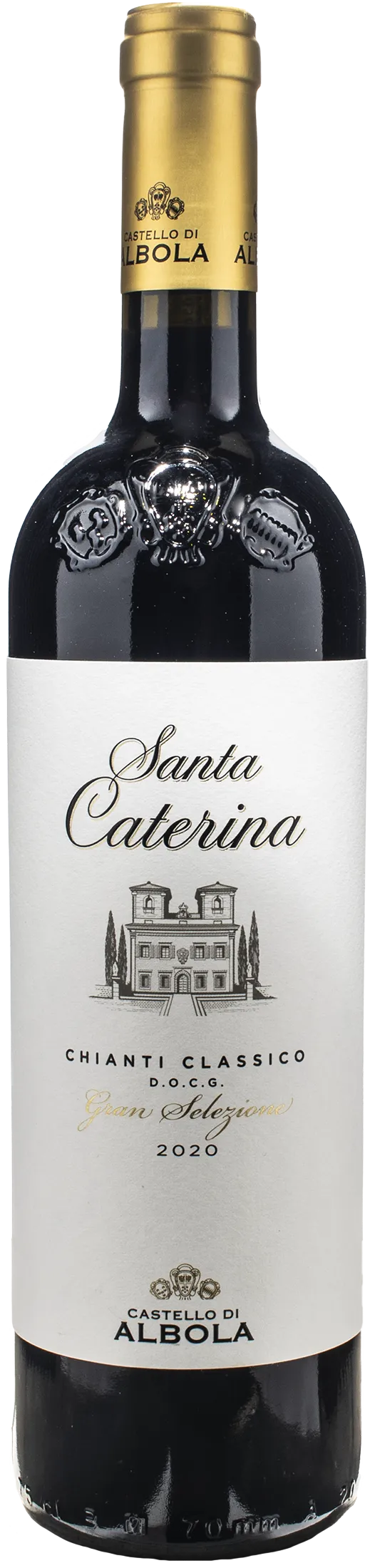
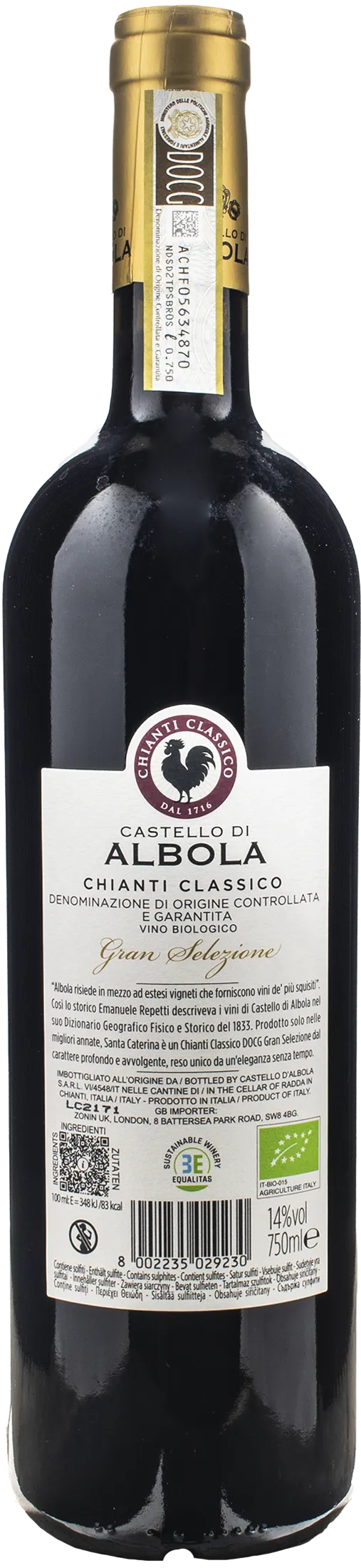
Chianti Classico Gran Selezione Santa Caterina 2020
| Denomination | DOCG Chianti Classico Gran Selezione |
|---|---|
| Size | 0,75 l |
| Alcohol content | 14.0% by volume |
| Area | Tuscany (Italy) |
| Grape varieties | 100% Sangiovese |
| Aging | After malolactic fermentation, 50% of the wine matures in barriques and the other half in large Slavonian oak casks for 14 months, followed by approximately one and a half years of bottle ageing. |
- Appellation and grape variety: Chianti Classico DOCG Gran Selezione, 100% Sangiovese
- Origin: Santa Caterina in Radda in Chianti, south-facing, altitude 550 metres
- Winemaking: manual harvest, fermentation in stainless steel and 3–4 weeks maceration
- Maturation: 14 months in French and Slavonian oak barrels plus approximately 18 months in the bottle
- Profile and awards: notes of red fruits; 94 pts James Suckling, 92 Decanter, 90 Wine Spectator
Description
What type of wine is it
Chianti Classico Gran Selezione Santa Caterina from Castello di Albola is a refined Tuscan red wine made from Sangiovese grapes. This interpretation of Chianti Classico Gran Selezione, fermented in steel and aged in oak, reveals aromas of ripe red fruit, violets, spices and tobacco. On the palate, it is rich and structured, supported by silky tannins that define its elegance. The persistent finish confirms its distinct potential for long ageing.
Where it comes from
The grapes come from the Santa Caterina vineyard, located in Radda in Chianti with a southern exposure at an altitude of approximately five hundred and fifty metres. The vines grow on stony and well-draining soils, rich in galestro and calcareous-clay marl. This specific geological composition, combined with a breezy climate and excellent temperature fluctuations, promotes regular ripening and gives the wine a strong territorial identity.
How it is produced
The manual harvest allows for the selection of the best clusters in the first ten days of October. Fermentation takes place in temperature-controlled steel tanks, with prolonged maceration on the skins to ensure optimal aromatic extraction. After malolactic fermentation, maturation continues for approximately fourteen months, divided between French barriques and large Slavonian oak casks. Subsequent ageing in the bottle perfects its overall balance.
History and curiosities
The first vintage of this wine dates back to 2015. The Chianti Classico Gran Selezione Santa Caterina takes its name from the single vineyard of the same name, measuring just over five hectares, in Radda in Chianti. This artisanal excellence boasts a limited production of only 10,000 bottles per year. The wine has also received prestigious international accolades, including 94 points from James Suckling, 92 points from Decanter, and 90 points from Wine Spectator.
Awards
-
2020
 4
4Italian Sommelier Foundation (FIS) guide This has been one of the most prestigious wine guides in Italy for over 10 years.
-
2020
 92
92/100
Decanter is a wine and lifestyle magazine, published monthly in around 90 countries. The magazine includes industry news, classic guides and advice on wine and spirits.
-
2020
 94
94/100
James Suckling is an influential American wine critic and journalist who worked at Wine Spectator for 30 years. He left the magazine in 2010 to start his own website and guidebook (JamesSuckling.com). He specialises in Italian and Bordeaux wines.
-
2020
 3
3One of the most prestigious wine guides in Italy.
-
2020
 3
3Italian Sommelier Association (AIS) guide
-
2020
 90
90/100
Wine spectator is the most influential wine guide on the internet.
Tasting notes

Perfume

Color

Taste
Serve at:
18 - 20 °C
Longevity:
10 - 15 years
Decanting time:
1 hour

- Start up year: 1979
- Oenologist: Alessandro Gallo
- Bottles produced: 750.000
- Hectares: 125
This is demonstrated by the interest of the Samminiati who, at the beginning of the 17th century when the male line of the Acciaiuoli had become extinct, took possession of Pian d’Albola thanks to the marriage between Ascanio Samminiati and Caterina Acciaiuoli. When Samminiati died, the property one again passed through a marital alliance to the Pazzis, one of the most noble and ancient Florentine families, who in fact kept it until the middle of the 19th century.
For the next hundred years Pian d’Abola, which in the general census of Chianti in 1832 was declared as one of the very few self-sufficient estates anywhere in the area, passed through several hands until 1940, when it was acquired by Prince Giovanni Ginori Conti. Forty years later it became the property of the Zonin Family, which initiated its second Renaissance. Read more


| Name | Castello Albola Chianti Classico Gran Selezione Santa Caterina 2020 |
|---|---|
| Type | Red organic still |
| Denomination | Chianti Classico DOCG |
| Vintage | 2020 |
| Size | 0,75 l |
| Alcohol content | 14.0% by volume |
| Grape varieties | 100% Sangiovese |
| Country | Italy |
| Region | Tuscany |
| Vendor | Castello di Albola |
| Story | History and curiosities The first vintage of this wine dates back to 2015. The Chianti Classico Gran Selezione Santa Caterina takes its name from the single vineyard of the same name, measuring just over five hectares, in Radda in Chianti. This artisanal excellence boasts a limited production of only 10,000 bottles per year. The wine has also received prestigious international accolades, including 94 points from James Suckling, 92 points from Decanter, and 90 points from Wine Spectator. |
| Origin | Radda in Chianti (Siena) |
| Climate | Cool spring followed by a long hot summer, with a good temperature range between day and night. |
| Soil composition | Rich in galestro (schist/calcareous-clay marl), stony and well-drained |
| Cultivation system | Spurred Cordon |
| Plants per hectare | 5,000 vines per hectare |
| Yield per hectare | 50 quintals per hectare |
| Harvest | First ten days of October |
| Fermentation | 3–4 weeks |
| Production technique | Manual harvest; fermentation in temperature-controlled stainless steel tanks with skin maceration for 3–4 weeks; malolactic fermentation in steel; ageing in French oak barriques/tonneaux and in large Slavonian oak casks, then bottle ageing. |
| Wine making | Hand-selected grapes; fermentation in temperature-controlled stainless steel tanks, with maceration on the skins for 3–4 weeks and constant monitoring of extraction; malolactic fermentation in steel. Subsequent ageing for approximately 14 months: 50% in French oak barriques/tonneaux and 50% in large Slavonian oak casks, followed by approximately 18 months of bottle ageing. |
| Aging | After malolactic fermentation, 50% of the wine matures in barriques and the other half in large Slavonian oak casks for 14 months, followed by approximately one and a half years of bottle ageing. |
| Year production | 10000 bottles |
| Allergens | Contains sulphites |