


Caparzo
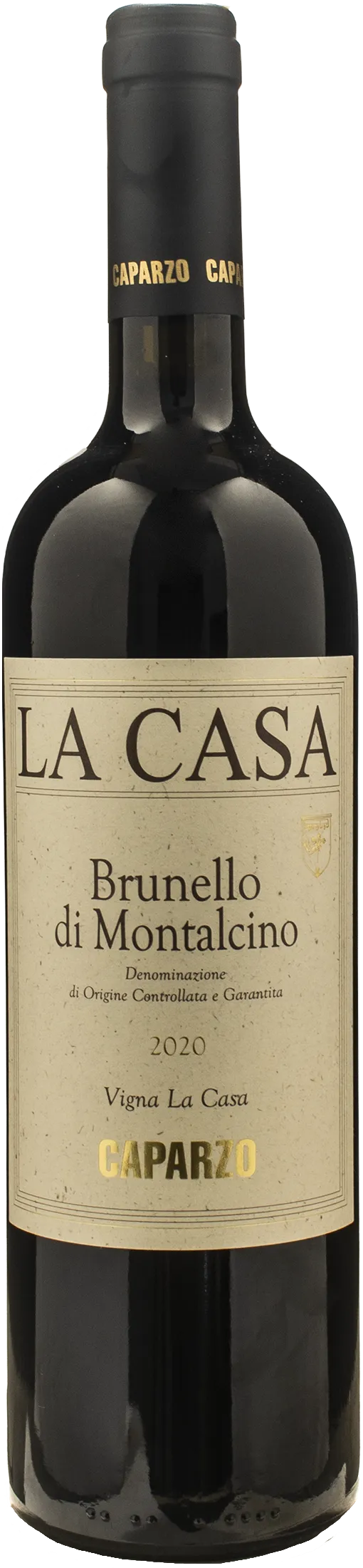
Brunello di Montalcino Vigna La Casa 2020
| Denomination | DOCG Brunello di Montalcino |
|---|---|
| Size | 0,75 l |
| Alcohol content | 14.5% by volume |
| Area | Tuscany (Italy) |
| Grape varieties | 100% Sangiovese |
| Aging | In wood: minimum 2 years (12 months in French barriques, then 24 months in 30 hl French casks); in bottle: minimum 4 months. |
- Brunello di Montalcino DOCG 2020: Vigna La Casa, Tuscany, 14.5% vol
- Vineyard: 5 hectares in Monsindoli, 275 metres, well-drained galestro soils, north-facing exposure
- Vinification: 7 days at 28–30 °C, délestage and pumping over; skins for 10–15 days
- Ageing: 12 months in barrique plus 24 months in 30 hl French oak casks; 0% new wood
- Profile and pairings: cherry and blackberry, spices; ideal with braised meats, game, mature cheeses

Description
What kind of wine it is
The Caparzo Brunello di Montalcino Vigna La Casa is a still red wine with an elegant and structured profile, made from Sangiovese grapes. To the eye, it displays a ruby red colour that, over time, develops deep garnet reflections. On the nose, it reveals a complex bouquet of blackberry and cherry, enriched with notes of spices, vanilla, cloves, liquorice and a delicate hint of undergrowth. On the palate, it is dry, warm and enveloping, with an exceptional aptitude for ageing. The mature, velvety tannins blend with vibrant freshness and a long mineral persistence, making it the ideal companion for roasts, game and aged cheeses.
Where it comes from
The vines grow on the hill of Monsindoli, in a north-facing plot situated at around 275 metres above sea level. The soil is characterised by an abundant presence of galestro, a formation of schist and marl clays that ensures excellent drainage. This particular soil composition gives the wine marked freshness, a defined acidic backbone and a tannic structure of great finesse. The name derives from an ancient farmhouse and the first vinification as a single vineyard dates back to the late 1970s, testifying to the vocation of this terroir.
How it is produced
Production begins with a careful manual harvest, followed by alcoholic fermentation at a controlled temperature, with the use of délestage and pumping over. To extract every aromatic and structural nuance, the must remains in prolonged contact with the skins, then undergoes spontaneous malolactic fermentation. Ageing initially takes place in small barrels and then continues in large French oak casks, concluding with a necessary period of bottle ageing. The final blend is distinguished by the absence of new wood, a choice aimed at enhancing the purity of the fruit and the overall balance of the wine.
History and Curiosities
Born in 1977 as one of the first crus of the area, this renowned Brunello comes to life from the galestro soils of the Monsindoli hill. Produced with Sangiovese grapes only in exceptional vintages, it stands out for its pioneering use of French barriques, historically chosen by the estate to give the wine a more elegant and aristocratic profile. The exclusive five-hectare vineyard yields a wine of extraordinary depth that combines power, vibrant acidity and finesse, confirming itself as a true benchmark for great admirers of Tuscan wines.
Awards
-
2020
 5
5Italian Sommelier Foundation (FIS) guide This has been one of the most prestigious wine guides in Italy for over 10 years.
-
2020
 93
93/100
Decanter is a wine and lifestyle magazine, published monthly in around 90 countries. The magazine includes industry news, classic guides and advice on wine and spirits.
-
2020
 2
2This guide is highly respected and offers the most comprehensive review of Italian wines. It has a long tradition and is based on blind tastings carried out by over 100 experts.
-
2020
 97
97/100
James Suckling is an influential American wine critic and journalist who worked at Wine Spectator for 30 years. He left the magazine in 2010 to start his own website and guidebook (JamesSuckling.com). He specialises in Italian and Bordeaux wines.
-
2020
 94
94/100
The prestigious international wine guide from the renowned Robert Parker, the world's most experienced and trusted wine taster.
-
2020
 94
94/100
Vinous is the online guide from Antonio Galloni, one of the world's leading wine connoisseurs.
-
2020
 95
95/100
Wine spectator is the most influential wine guide on the internet.
Tasting notes

Perfume

Color

Taste
Serve at:
18 - 20 °C
Longevity:
10 - 15 years
Decanting time:
1 hour
- Start up year: 1970
- Oenologist: Massimo Bracalente
- Bottles produced: 900.000
- Hectares: 200
Series of hills flee everywhere without visible interruptions, shaped in different ways by streams and gulleys that reforge together in the grey clay. The colours and perfumes of seasons in Val d’Orcia are unique: from barren clays to golden tuffs, from the dark vegetation of woods to the bright vegetation of vineyards, from the blue of watercourses to the silvery foliage of olive trees. You can find all this in a glass of wine. Montalcino is the land of Brunello, made only with Sangiovese grapes. In no other place this vine is able to transmit at best the distinctive features of its terroir. With Caparzo I had the chance to test myself with a great Tuscan wine and become acquainted with the pride of an ancient agriculture. It is a constant commitment that fills me with pride. Following the vines every day, seeing them grow, sprout and finally harvesting the fruit. You are aware of having worked hard, without neglecting any detail, but at the end the land will be the one to decide. And every year, every vintage time, you hope that the wine is the best one you have ever made. Read more


| Name | Caparzo Brunello di Montalcino Vigna La Casa 2020 |
|---|---|
| Type | Red still |
| Denomination | Brunello di Montalcino DOCG |
| Vintage | 2020 |
| Size | 0,75 l |
| Alcohol content | 14.5% by volume |
| Grape varieties | 100% Sangiovese |
| Country | Italy |
| Region | Tuscany |
| Vendor | Caparzo |
| Story | History and Curiosities Born in 1977 as one of the first crus of the area, this renowned Brunello comes to life from the galestro soils of the Monsindoli hill. Produced with Sangiovese grapes only in exceptional vintages, it stands out for its pioneering use of French barriques, historically chosen by the estate to give the wine a more elegant and aristocratic profile. The exclusive five-hectare vineyard yields a wine of extraordinary depth that combines power, vibrant acidity and finesse, confirming itself as a true benchmark for great admirers of Tuscan wines. |
| Origin | Montalcino (SI), Monsindoli hill |
| Soil composition | Galestro (schist-clay formation) with good drainage |
| Fermentation temperature | Alcoholic fermentation at 28-30 °C; malolactic fermentation at 20-24 °C |
| Fermentation | 7 days |
| Production technique | Alcoholic fermentation at a controlled temperature with délestage and pumping over and prolonged maceration; spontaneous malolactic fermentation; ageing in French oak barriques and barrels. |
| Wine making | Alcoholic fermentation for 7 days at a controlled temperature between 28 and 30 °C, with délestage and pumping over; extended maceration/skin contact for a further 10–15 days. Spontaneous malolactic fermentation at a controlled temperature between 20 and 24 °C immediately after racking. Ageing: 12 months in French barriques, then 24 months in 30 hl French casks; minimum 4 months in bottle. |
| Aging | In wood: minimum 2 years (12 months in French barriques, then 24 months in 30 hl French casks); in bottle: minimum 4 months. |
| Total acidity | 5.3 gr/L |
| Residual sugar | 1.0 gr/L |
| Allergens | Contains sulphites |