


Tenuta Campo di Sasso (Biserno)
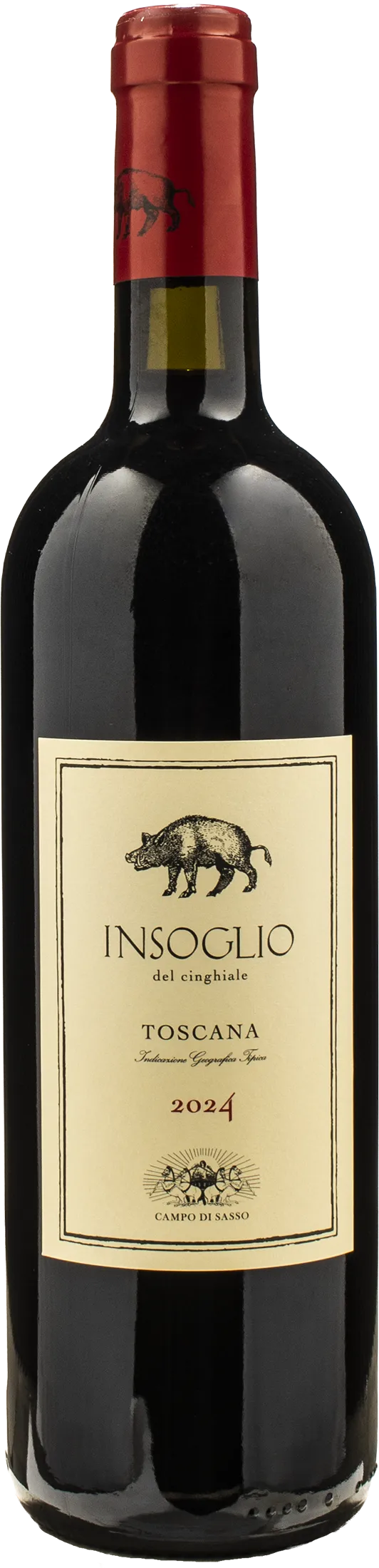
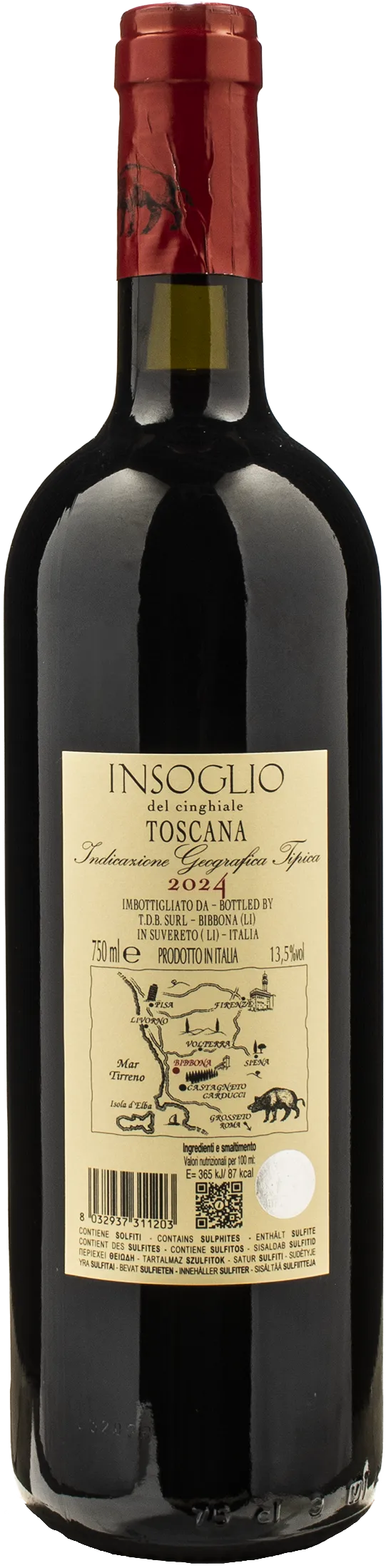
Insoglio del Cinghiale 2024
| Denomination | IGT Toscana |
|---|---|
| Size | 0,75 l |
| Alcohol content | 13.5% by volume |
| Area | Tuscany (Italy) |
| Grape varieties | Cabernet Franc, Cabernet Sauvignon, Merlot, Petit Verdot, Syrah |
| Aging | 40% of the wine was aged for 4 months in used French oak barriques. |
- Origin: Toscana IGT 2024, still red wine from Bibbona, 0.75 l bottle
- Grape varieties: Composed of Cabernet Franc 43%, Syrah 30%, Merlot 25%, Petit Verdot 2%
- Aromas: Floral notes, cherry and blackberry; ruby colour with violet highlights
- Palate: Medium-bodied, silky tannins, fine and linear texture with pleasant freshness
- Vinification: Fermentation 14–21 days; 40% aged 4 months in barrique
Description
What kind of wine it is
Insoglio del Cinghiale is a still red wine that represents an authentic expression of Tuscany, crafted by Tenuta Campo di Sasso. This harmonious blend combines Cabernet Franc, Syrah, Merlot and Petit Verdot, presenting a ruby colour enriched with violet highlights. On the nose, it offers vibrant floral notes and fruity hints of cherry and blackberry. The palate is medium-bodied and well-structured, guided by silky tannins that create a fine and linear texture, resulting in a fresh and pleasant drink.
Where it comes from
This wine originates from the Bibbona area, in a coastal setting influenced by its proximity to the Tyrrhenian Sea. The constant sea breezes play a key role, reducing humidity and moderating summer temperatures to promote optimal grape ripening. The terroir is characterised by a predominantly sandy soil, combined with clay fractions and the typical Bolgheri conglomerate, with warm soils particularly suited to Syrah. The rows of vines stretch towards the coast, benefiting from an ideal microclimate.
How it is produced
Vinification begins with a careful selection of the grapes on a vibrating belt, followed by destemming and gentle pressing. The must ferments at a controlled temperature for several weeks. Malolactic fermentation takes place partly in oak barrels and the rest in stainless steel tanks, preserving aromatic precision. Finally, a portion of the wine matures for four months in used French oak barrels, a choice that allows the fruity character and freshness of the palate to remain intact.
History and Curiosities
Insoglio del Cinghiale is the signature wine that marked the birth of Tenuta Campo di Sasso in Bibbona. It originates from a unique sandy terroir, refreshed by breezes from the Tyrrhenian Sea which ensure perfect ripening of the grapes. The meticulous care in the cellar continues with partial ageing in used French barriques for four months, which imparts a rare harmony and elegance to the palate. This authentic Tuscan expression promises great emotions, with an ideal potential for evolution over the next 5-10 years.
Tasting notes

Perfume

Color

Taste
Serve at:
16 - 18 °C
Longevity:
05 - 10 years
Decanting time:
1 hour
- Hectares: 56
The terroir is predominantly sandy, and the microclimate is influenced by proximi- ty to the Tyrrhenian Sea: at Campo di Sasso, sea breezes blow constantly, reducing humidity and softening the hot summer temperatures in the vineyard, resulting in perfect grape ripening. In addition to Syrah—a historic variety for Campo di Sasso—Merlot, Sangiovese, and Petit Verdot are grown for red wines, and Vermentino for white wines.
The wines of Campo di Sasso express the territory with elegance and immediacy. Read more



| Name | Campo di Sasso Insoglio del Cinghiale 2024 |
|---|---|
| Type | Red still |
| Denomination | Toscana IGT |
| Vintage | 2024 |
| Size | 0,75 l |
| Alcohol content | 13.5% by volume |
| Grape varieties | Cabernet Franc, Cabernet Sauvignon, Merlot, Petit Verdot, Syrah |
| Country | Italy |
| Region | Tuscany |
| Vendor | Tenuta Campo di Sasso (Biserno) |
| Story | History and Curiosities Insoglio del Cinghiale is the signature wine that marked the birth of Tenuta Campo di Sasso in Bibbona. It originates from a unique sandy terroir, refreshed by breezes from the Tyrrhenian Sea which ensure perfect ripening of the grapes. The meticulous care in the cellar continues with partial ageing in used French barriques for four months, which imparts a rare harmony and elegance to the palate. This authentic Tuscan expression promises great emotions, with an ideal potential for evolution over the next 5 0 years. |
| Origin | Bibbona (LI), Tuscany, Italy |
| Climate | Coastal Mediterranean climate |
| Soil composition | In parte argilloso, in parte conglomerato di Bolgheri e terreni sabbiosi più caldi per il Syrah |
| Cultivation system | Spur cordon |
| Plants per hectare | 6500 |
| Harvest | From 10 September to 9 October |
| Fermentation temperature | 25–28 °C |
| Fermentation | 14–21 days |
| Production technique | Selection of grapes on a vibrating belt, destemming and gentle pressing; fermentation for 14–21 days at 25–28 °C; malolactic fermentation (10%) in oak barrels and the remainder in stainless steel; ageing (40%) for 4 months in used French oak barriques. |
| Wine making | The grapes were carefully selected on a vibrating sorting table in the winery, then destemmed and gently crushed. Fermentation lasted for 14–21 days at 25–28 °C. Ten percent underwent malolactic fermentation in oak barrels, while the remainder was fermented in stainless steel. |
| Aging | 40% of the wine was aged for 4 months in used French oak barriques. |
| Total acidity | 4.6 gr/L |
| PH | 3.7 |
| Allergens | Contains sulphites |