


Campanelli
Verdicchio dei Castelli di Jesi Classico Superiore San Michele 2023
| Denomination | DOC Verdicchio dei Castelli di Jesi Classico Superiore |
|---|---|
| Size | 0,75 l |
| Alcohol content | 13.5% by volume |
| Area | Marche (Italy) |
| Grape varieties | 100% Verdicchio Bianco |
| Aging | Ageing on the lees in cement with frequent bâtonnage for 7 months, followed by at least 9 months of bottle ageing. |
- Organic and origin: San Michele vineyard in Cupramontana, Marche, altitude between 290 and 320 metres
- Grape and designation: 100% Verdicchio, Verdicchio dei Castelli di Jesi Classico Superiore
- Vinification: gentle pressing of whole bunches and fermentation with indigenous yeasts
- Ageing: 7 months in cement tanks on the lees with bâtonnage, followed by 9 months in bottle
- Style and pairings: crisp and savoury wine, ideal with lean fish and delicate cheeses, 13.5% vol
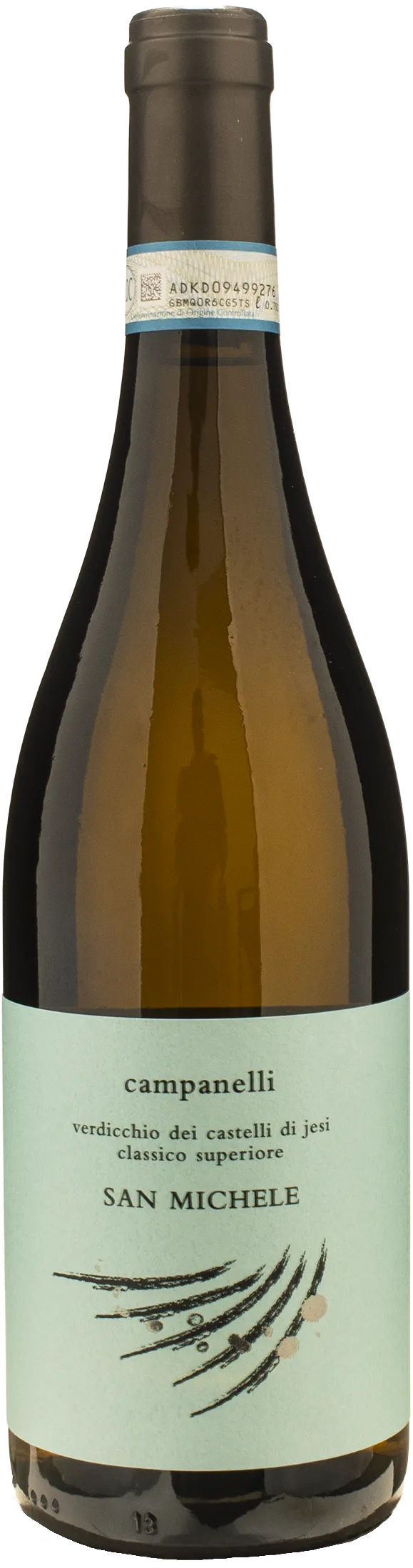
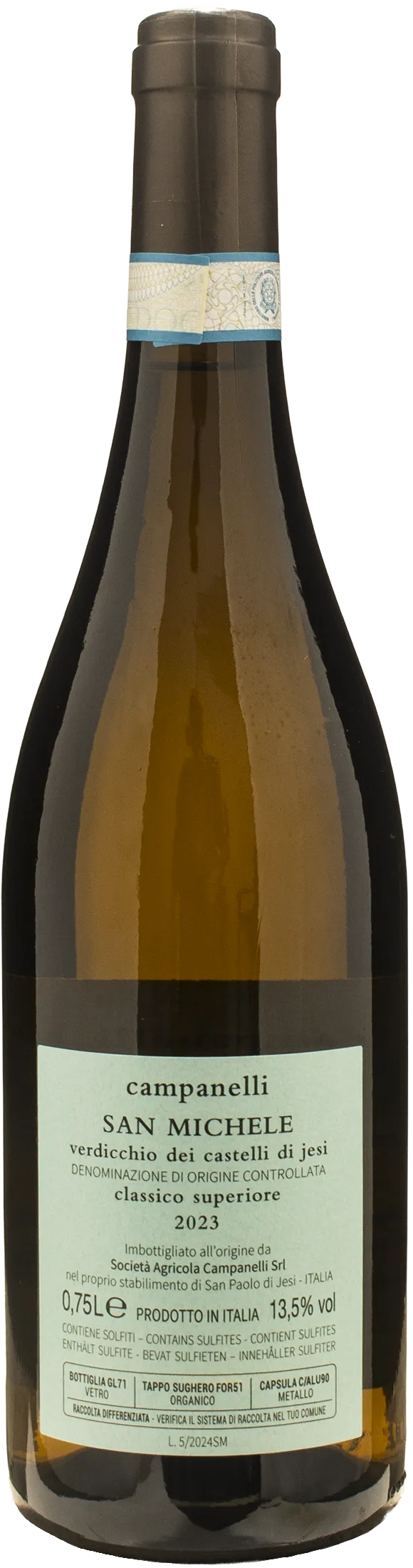
Description
What kind of wine is it
Campanelli Verdicchio dei Castelli di Jesi Classico Superiore San Michele is a still white wine with an elegant and vibrant profile, faithfully reflecting the soul of the Marche region. Made exclusively from Verdicchio grapes, this artisanal wine impresses with its lively and savoury sip, supported by a significant structure. Belonging to the Verdicchio dei Castelli di Jesi Classico Superiore area, it expresses its territorial identity at its best. It pairs beautifully with lean fish dishes and delicate cheeses, offering a harmonious and persistent balance.
Where does it come from
This white originates from the San Michele vineyard, located in Cupramontana, the historic heart of production. The vineyards are situated at an altitude between 290 and 320 metres above sea level. The terroir, characterised by medium-textured soils with a strong presence of clay and limestone on layers of marl and sandstone, gives the wine a pronounced mineral tension. The Campanelli winery follows the principles of organic farming, committed to preserving the integrity of the environment and the authenticity of the grape variety.
How is it produced
Production begins with meticulous manual harvesting, followed by gentle whole-bunch pressing to extract only the finest free-run must. Fermentation occurs spontaneously thanks to indigenous yeasts, preserving the purity of the fruit. To develop volume and complexity without altering the varietal characteristics, the wine matures for seven months in cement tanks, where it rests on its own lees with regular bâtonnage. The process concludes with a further maturation in bottle for at least nine months, allowing the wine to achieve extraordinary depth of flavour.
History and Curiosities
Founded in 2021 in the heart of the Marche region, the Campanelli project embodies a deep artisan and sustainable vocation. San Michele takes its name from the vineyard of the same name in Cupramontana, cultivated organically on soils rich in clay and limestone. Thanks to the use of indigenous yeasts, oenologist Marco Gozzi oversees a meticulous seven-month maturation in concrete, enhanced by frequent bâtonnage and completed with a period of rest in the bottle. This authentic territorial expression has been awarded the prestigious 4 Vines AIS recognition.
Awards
-
2023
 4
4Italian Sommelier Association (AIS) guide
Tasting notes

Color

Taste
Serve at:
12 - 14 °C
Longevity:
03 - 05 years

- Start up year: 2021
- Oenologist: Marco Gozzi
- Bottles produced: 25.000
- Hectares: 9
This vision guides us in the challenge of connecting the symbolic grape variety of the Castelli di Jesi with its place of origin, exploring the nuances that distinguish one village from another and one district from the next within a complex, layered area that requires an in‑depth reading capable of enhancing its specific characteristics. Read more


| Name | Campanelli Verdicchio dei Castelli di Jesi Classico Superiore San Michele 2023 |
|---|---|
| Type | White green still |
| Denomination | Verdicchio dei Castelli di Jesi DOC |
| Vintage | 2023 |
| Size | 0,75 l |
| Alcohol content | 13.5% by volume |
| Grape varieties | 100% Verdicchio Bianco |
| Country | Italy |
| Region | Marche |
| Vendor | Campanelli |
| Story | History and Curiosities Founded in 2021 in the heart of the Marche region, the Campanelli project embodies a deep artisan and sustainable vocation. San Michele takes its name from the vineyard of the same name in Cupramontana, cultivated organically on soils rich in clay and limestone. Thanks to the use of indigenous yeasts, oenologist Marco Gozzi oversees a meticulous seven-month maturation in concrete, enhanced by frequent bâtonnage and completed with a period of rest in the bottle. This authentic territorial expression has been awarded the prestigious 4 Vines AIS recognition. |
| Origin | Vineyard of San Michele, in the municipality of Cupramontana (Marche, Italy) |
| Climate | Altitude between 290 and 320 metres above sea level |
| Soil composition | Medium-textured soils with a prevalence of clay and limestone, on a subsoil of marl and sandstone. |
| Production technique | Whole bunch soft pressing, fermentation with indigenous yeasts, ageing on the lees in concrete with frequent bâtonnage |
| Wine making | Gentle pressing of whole bunches with extraction of only the free-run must, static settling, fermentation with indigenous yeasts. |
| Aging | Ageing on the lees in cement with frequent bâtonnage for 7 months, followed by at least 9 months of bottle ageing. |
| Allergens | Contains sulphites |