


Bibi Graetz
Testamatta Rosso 2021
Other years:
2022| Denomination | IGT Toscana |
|---|---|
| Size | 0,75 l |
| Alcohol content | 13.5% by volume |
| Area | Tuscany (Italy) |
| Grape varieties | 100% Sangiovese |
| Aging | Aged in French oak barriques (10% new) for 24 months and refined in bottle for 6 months. |
| Other years | 2022 |
- Identity: Rosso Toscana IGT 2021, 100% Sangiovese, 13.5% vol
- Vineyards: Florentine hills between 250 and 600 metres, clay and galestro soils rich in stones
- Fermentation: In barriques with indigenous yeasts and 6–8 manual punch-downs daily
- Ageing: 24 months in French barriques (10% new) and 6 months in bottle
- Tasting and pairings: Notes of cherry and plum, savoury finish; ideal with lamb and truffle
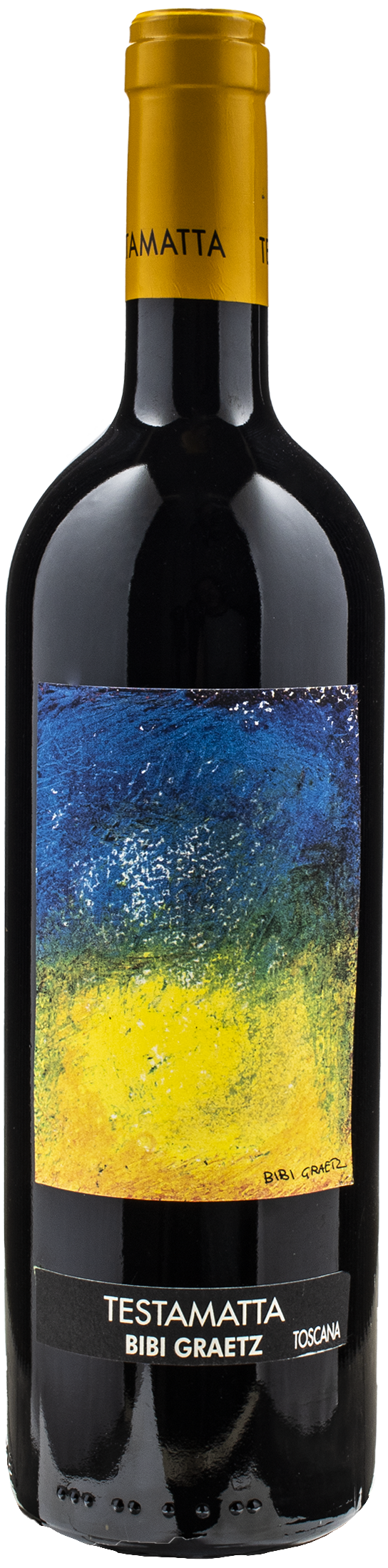
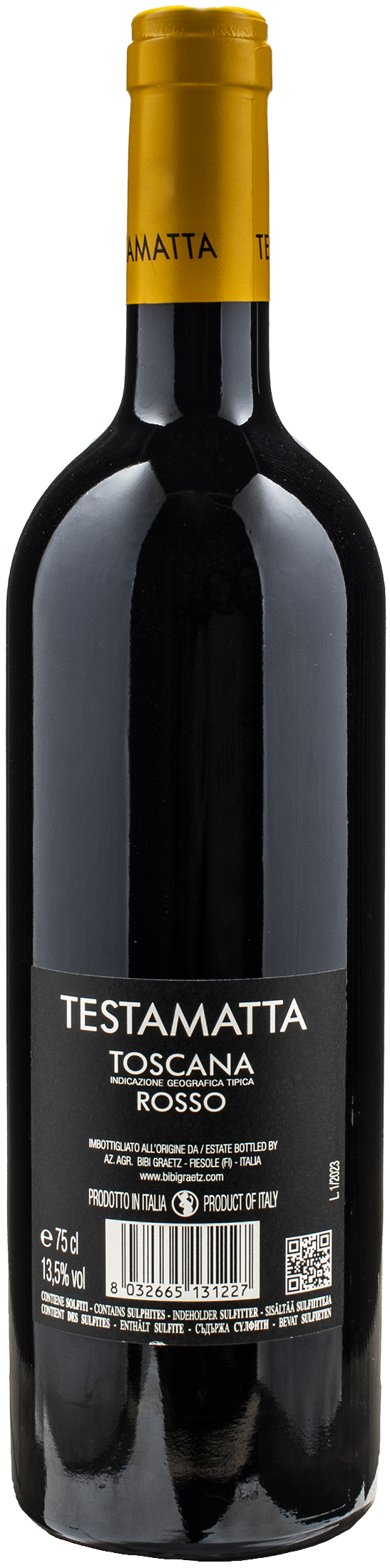
Description
What kind of wine it is
Testamatta Rosso by Bibi Graetz is a profound expression of Sangiovese, rooted in the winemaking excellence of Tuscany. This red wine stands out for its juicy core of dark cherry, plum, and floral notes of violet, enhanced by hints of tobacco and sweet spices. On the palate, the structure is supported by a vibrant acidity and chalky tannins that define an elegant texture. The finish is long and savoury with mineral nuances, making it ideal to accompany roast lamb, truffle risotto, and mature cheeses.
Where it comes from
The grapes are grown on hillside slopes between 250 and 600 metres above sea level, stretching from Fiesole to historic sites such as Lamole and Montefili. This terroir is characterised by stony soils, where clay alternates with galestro, a schistous marl that imparts a pleasant saline note to the wine. The vines benefit from optimal exposure, ensuring even ripening. The separate management of each individual plot preserves the identity of every microzone, culminating in a harmonious blend that reflects the freshness and precision of the region.
How it is produced
Production involves manual harvesting and double sorting to select only the best bunches. After gentle pressing, the must ferments spontaneously thanks to indigenous yeasts, with frequent manual punch-downs for delicate extraction. The wine undergoes malolactic fermentation and rests in French oak barrels, where the parcels mature separately for twenty-four months. After this period, the final blending takes place, followed by a further six months of ageing to achieve perfect organoleptic balance.
History and Curiosities
Born in 2000 on the hills of Fiesole, Testamatta reflects the creative and passionate spirit of Bibi Graetz, whose nickname gives its name to this pure and unmistakable expression of Sangiovese. Grown outside the traditional Chianti areas, the grapes come from historic vineyards and are vinified in separate parcels before the masterful final blending. A true icon of world oenology, its exceptional 2021 vintage was celebrated with the prestigious 98 points from James Suckling and 97 points from Decanter, confirming a rare and fascinating excellence.
Awards
-
2021
 95
95/100
Decanter is a wine and lifestyle magazine, published monthly in around 90 countries. The magazine includes industry news, classic guides and advice on wine and spirits.
-
2021
 98
98/100
James Suckling is an influential American wine critic and journalist who worked at Wine Spectator for 30 years. He left the magazine in 2010 to start his own website and guidebook (JamesSuckling.com). He specialises in Italian and Bordeaux wines.
-
2021
 96
96/100
The prestigious international wine guide from the renowned Robert Parker, the world's most experienced and trusted wine taster.
-
2021
 94
94/100
Wine spectator is the most influential wine guide on the internet.
Tasting notes

Perfume

Color

Taste
Serve at:
16 - 18 °C
Longevity:
15 - 25 years
Decanting time:
1 hour

- Start up year: 2000
- Oenologist: Bibi Graetz
- Bottles produced: 400.000
- Hectares: 70
Red grapes are cultivated on the hillsides above Florence and sourced from prime sites in the Chianti Classico region, such as Montefili and Lamole. His whites from the island of Giglio are also an inspiration, proving that Tuscany can make great white wine, as well as red. You have an opportunity to experience an amazing place where art, beauty and a unique winery become a setting for one of the best wine productions on the Tuscan and global scene. Read more


| Name | Bibi Graetz Testamatta Rosso 2021 |
|---|---|
| Type | Red still |
| Denomination | Toscana IGT |
| Vintage | 2021 |
| Size | 0,75 l |
| Alcohol content | 13.5% by volume |
| Grape varieties | 100% Sangiovese |
| Country | Italy |
| Region | Tuscany |
| Vendor | Bibi Graetz |
| Story | History and Curiosities Born in 2000 on the hills of Fiesole, Testamatta reflects the creative and passionate spirit of Bibi Graetz, whose nickname gives its name to this pure and unmistakable expression of Sangiovese. Grown outside the traditional Chianti areas, the grapes come from historic vineyards and are vinified in separate parcels before the masterful final blending. A true icon of world oenology, its exceptional 2021 vintage was celebrated with the prestigious 98 points from James Suckling and 97 points from Decanter, confirming a rare and fascinating excellence. |
| Origin | Fiesole (Firenze) |
| Soil composition | Argilla e galestro (marna scistosa), suolo ricco di scheletro |
| Cultivation system | Guyot and spur-pruned cordon, bush vine |
| Production technique | Fermentation in barriques with 6–8 manual punch downs per day (indigenous yeasts) |
| Wine making | Fermentation in barriques with 6–8 manual punch-downs per day at regular intervals, using indigenous yeasts; after fermentation, transfer to barriques and wooden casks for malolactic fermentation and maturation; maturation in French oak barriques (10% new) for 24 months followed by further ageing in bottle for 6 months. |
| Aging | Aged in French oak barriques (10% new) for 24 months and refined in bottle for 6 months. |
| Allergens | Contains sulphites |