


Bereche
Champagne Brut Reserve Magnum
| Denomination | AOC Champagne Reserve Brut |
|---|---|
| Size | 1,50 l |
| Alcohol content | 12.5% by volume |
| Area | Champagne region (France) |
| Grape varieties | 35% Chardonnay, 35% Pinot Meunier, 30% Pinot Nero |
| Aging | On the lees, from 24 to 36 months on the laths. |
- Magnum Format: 1.5-litre bottle suitable for toasts and more gradual maturation
- Balanced Blend: 35% Chardonnay, 35% Pinot Meunier, 30% Pinot Noir
- Vinification: Traditional method with slow fermentation in barrels and small containers
- Ageing on the lees: 24-36 months to enhance complexity and creaminess
- Profile and accolades: notes of orange zest and bread crust; rated up to 93 points
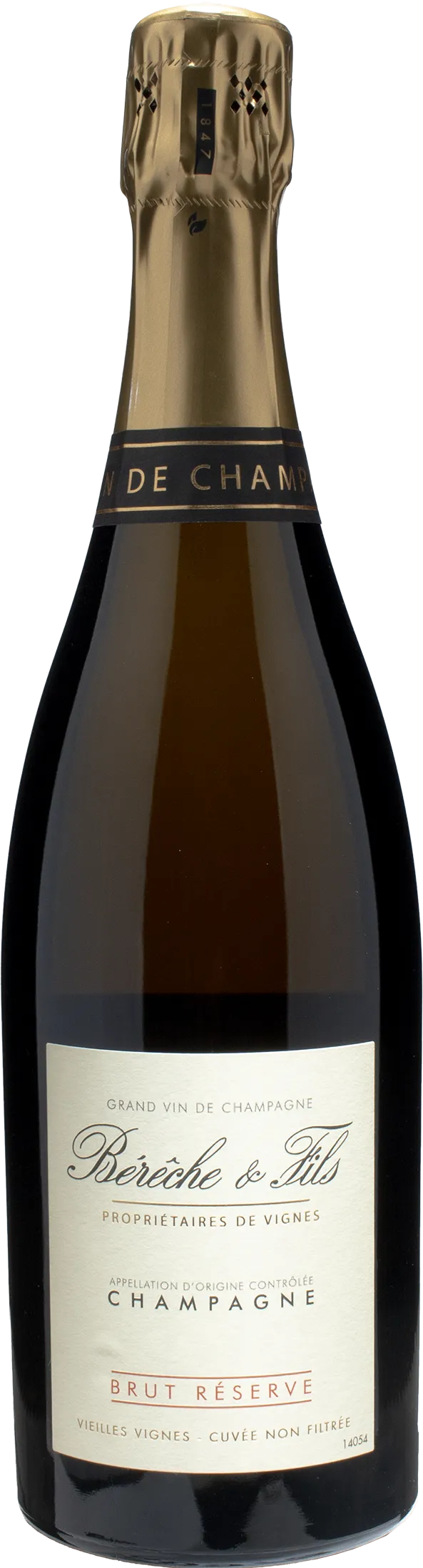
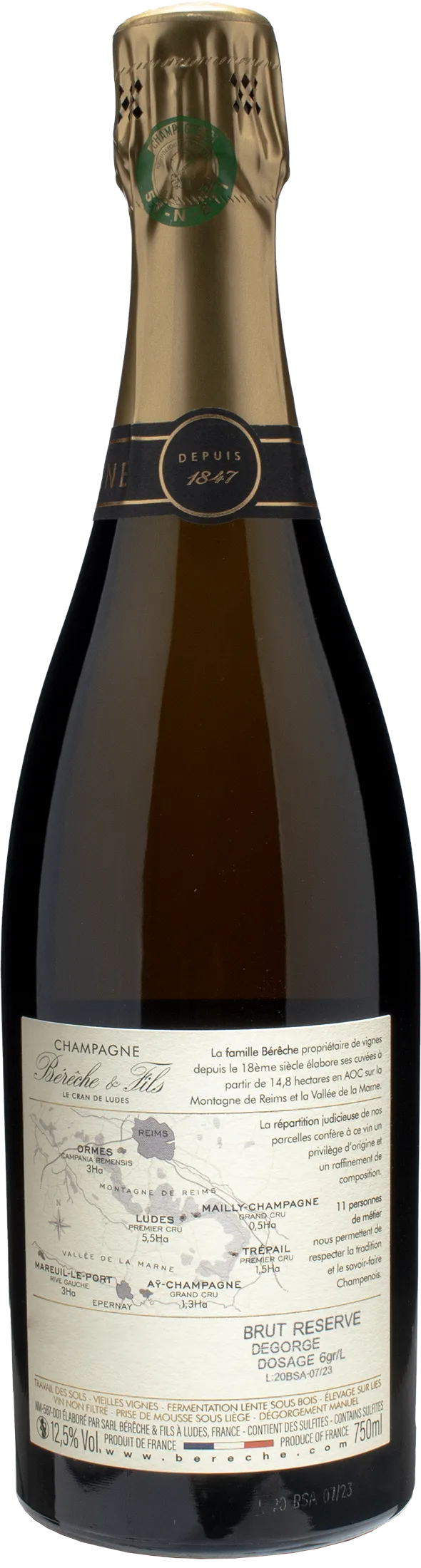
Description
What kind of wine it is
Bereche Champagne Brut Reserve is a sparkling wine produced using the Traditional Method. It is created from a balanced blend that combines the characteristics of Chardonnay, Pinot Meunier and Pinot Noir. The aromatic profile opens with clear notes of orange zest and fresh fruit, enriched by hints of bread crust. On the palate, it presents a medium-full body, revealing a fleshy and enveloping structure. The sip is soft and persistent, offering a solid and well-defined tasting experience.
Where it comes from
This wine originates in France, in the Champagne region, between the Montagne de Reims and the Vallée de la Marne. The Bereche winery operates as a récoltant-manipulant, managing the vineyards with the utmost respect for the land. The grapes come from old vines over forty years old, an essential agronomic element for achieving great material concentration. The identity of the terroir is kept intact in the glass thanks to the complete absence of filtration, preserving a pure and consistent expression.
How it is produced
The production follows a technical approach based on slowness and precision. Fermentation takes place slowly in barrels and small vats, a practice that enriches the blend, giving it greater depth. This is followed by a prolonged ageing on the lees lasting between 24 and 36 months, a crucial period for integrating the soft texture and consolidating the aromas. The process concludes with a Brut dosage, which supports the wine's consistency, ensuring a balanced and long-lasting finish.
History and Curiosities
Since 1847, Bérèche & Fils has been producing this Champagne Brut Réserve, an expression of authentic tradition between the Montagne de Reims and the Marne Valley. Born from old vines over forty years old, cultivated with the utmost respect for the land, this wine maintains a pure identity thanks to the absence of filtration. The elegance of this multi-award-winning traditional method comes from slow fermentation in barrels and careful ageing on the lees for between 24 and 36 months. Presented in the prestigious Magnum format, it offers a full and fleshy sip that celebrates winemaking excellence.
Awards
-
 92
92/100
James Suckling is an influential American wine critic and journalist who worked at Wine Spectator for 30 years. He left the magazine in 2010 to start his own website and guidebook (JamesSuckling.com). He specialises in Italian and Bordeaux wines.
-
 92
92/100
The prestigious international wine guide from the renowned Robert Parker, the world's most experienced and trusted wine taster.
-
 93
93/100
Vinous is the online guide from Antonio Galloni, one of the world's leading wine connoisseurs.
-
 92
92/100
Wine spectator is the most influential wine guide on the internet.
Tasting notes
Perfume

Color
Taste
Serve at:
06 - 08 °C
Longevity:
10 - 15 years
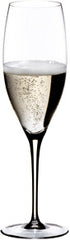
- Start up year: 1847
- Bottles produced: 85.000
- Hectares: 10
Every action has been adequately thought out. Of course our land is plowed and we also use weed control to limit disease. This vegetation cover avoids herbicides, insecticides and anti-rots. Everything begins with the soil. The fertilization is organic. We feed wildlife which in turn feeds flora and thus the soil is working. As a result the House Bérêche has one of the lowest treatment frequency index in the Champagne region. It is also among the first to be certified High Environmental Quality (level 3). Read more


| Name | Bereche Champagne Brut Reserve Magnum |
|---|---|
| Type | White green classic method sparkling wine brut |
| Denomination | Champagne AOC |
| Size | 1,50 l |
| Alcohol content | 12.5% by volume |
| Grape varieties | 35% Chardonnay, 35% Pinot Meunier, 30% Pinot Nero |
| Country | France |
| Region | Champagne region |
| Vendor | Bereche |
| Story | History and Curiosities Since 1847, Bérèche & Fils has been producing this Champagne Brut Réserve, an expression of authentic tradition between the Montagne de Reims and the Marne Valley. Born from old vines over forty years old, cultivated with the utmost respect for the land, this wine maintains a pure identity thanks to the absence of filtration. The elegance of this multi-award-winning traditional method comes from slow fermentation in barrels and careful ageing on the lees for between 24 and 36 months. Presented in the prestigious Magnum format, it offers a full and fleshy sip that celebrates winemaking excellence. |
| Origin | Montagne de Reims and Marne Valley (Champagne, France) |
| Production technique | Traditional method |
| Wine making | Traditional method; slow fermentation in barrels and small vats; ageing on the lees for 24-36 months; unfiltered. |
| Aging | On the lees, from 24 to 36 months on the laths. |
| Residual sugar | 6.0 gr/L |
| Allergens | Contains sulphites |