


Avignonesi
Desiderio Merlot Magnum 2020
| Denomination | IGT Toscana |
|---|---|
| Size | 1,50 l |
| Alcohol content | 14.5% by volume |
| Area | Tuscany (Italy) |
| Grape varieties | 92% Merlot, 8% Cabernet Sauvignon |
| Aging | 20 months in 225-litre oak barrels (15% new). |
- Magnum Format 1.5 L: 2020 harvest, Tuscany Indicazione Geografica Tipica
- Grape variety: 100% Merlot from biodynamic agriculture in Montepulciano and Cortona
- Vinification: fermentation in steel with indigenous yeasts and malolactic fermentation in wood
- Ageing: 20 months in 225-litre oak barrels for dense and elegant tannins
- Sensory profile: blackberry, cherry, liquorice and black tea; ideal with beef
Description
What kind of wine it is
Desiderio is a still red wine made from Merlot grapes, reflecting Avignonesi's biodynamic vision in Tuscany. On the palate, it stands out for its substantial character, supported by elegant tannins that lead to a deep finish. The bouquet is broad and complex: notes of blackberry and cherry jam intertwine with hints of liquorice and black tea, complemented by clear nuances of mint, coffee, and balsamic undertones. This expression of Merlot shows a marked aptitude for long ageing, evolving with balance over the years.
Where it comes from
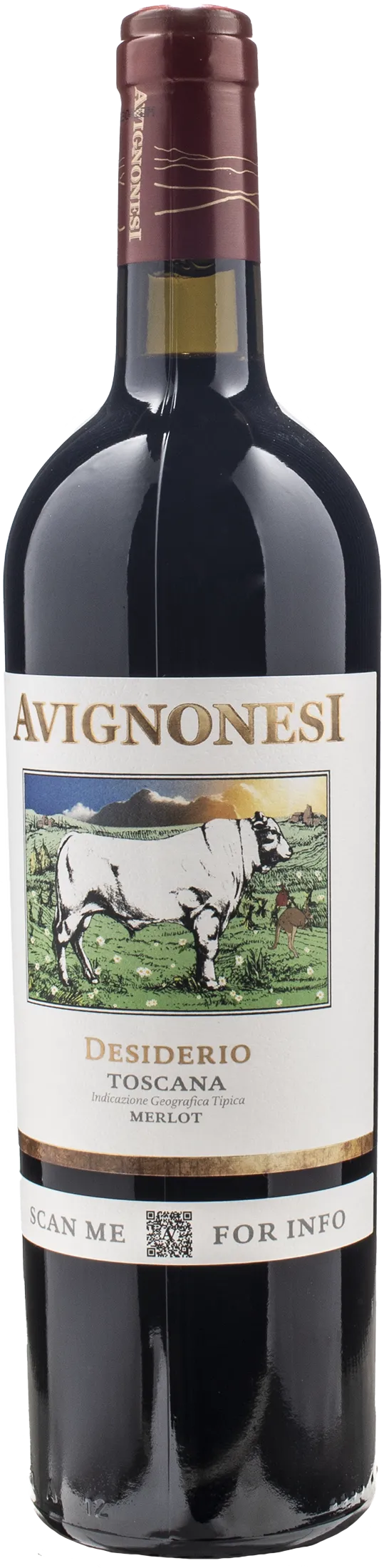
The grapes for this red wine are grown in Tuscany, in vineyards located between the areas of Montepulciano and Cortona. The vines sink their roots into diverse soils that define its character: fluvial sediments and Pleistocene clays alternate with Pliocene matrices of medium depth. This combination gives the wine a pronounced substantial character and a compact tannic structure. The name is a tribute to Desiderio, the imposing Chianina bull who lived on the estate's historic farm, becoming a symbol of the agricultural identity of this region.
How it is produced
The harvest is carried out with care to preserve the integrity of the bunches until they reach the winery. Vinification takes place in separate batches with temperature-controlled fermentation in stainless steel vats. Maceration on the skins lasts several weeks, triggered exclusively by indigenous yeasts, while malolactic fermentation takes place in wood. Once the blend is created, the wine matures for twenty months in oak barrels. This meticulous process enhances the fruit's concentration and ensures the persistence that characterises every sip.
History and Curiosities
Avignonesi's single-varietal Merlot pays tribute to Desiderio, the imposing Chianina bull that lived on the Le Capezzine estate over a century ago. This majestic animal, a symbol of the renowned Florentine steak, embodies the authentic Tuscan identity of the winery, which is now a benchmark for biodynamic viticulture. In the prized soils between Montepulciano and Cortona, the grapes are cultivated with full respect for the land, vinified with indigenous yeasts and matured for twenty months in oak barrels, resulting in a bold structure and an explosion of flavour.
Awards
-
2020
 93
93/100
James Suckling is an influential American wine critic and journalist who worked at Wine Spectator for 30 years. He left the magazine in 2010 to start his own website and guidebook (JamesSuckling.com). He specialises in Italian and Bordeaux wines.
-
2020
 92
92/100
Vinous is the online guide from Antonio Galloni, one of the world's leading wine connoisseurs.
Tasting notes

Perfume

Color

Taste
Serve at:
18 - 20 °C
Longevity:
10 - 15 years
Decanting time:
1 hour

- Start up year: 1974
- Oenologist: Matteo Giustiniani
- Bottles produced: 600.000
- Hectares: 170
The company’s mission is to assume leadership in the context of the "good wine industry". An ecosystem built on organic and biodynamic agriculture, sustainable distribution systems and consumer education. We work transparently and by innovating, driven by a very long-term view. The development of Avignonesi, founded on the production of wine, also extends to our Hospitality. Read more


| Name | Avignonesi Desiderio Merlot Magnum 2020 |
|---|---|
| Type | Red biodynamic still |
| Denomination | Toscana IGT |
| Vintage | 2020 |
| Size | 1,50 l |
| Alcohol content | 14.5% by volume |
| Grape varieties | 92% Merlot, 8% Cabernet Sauvignon |
| Country | Italy |
| Region | Tuscany |
| Vendor | Avignonesi |
| Story | History and Curiosities Avignonesi's single-varietal Merlot pays tribute to Desiderio, the imposing Chianina bull that lived on the Le Capezzine estate over a century ago. This majestic animal, a symbol of the renowned Florentine steak, embodies the authentic Tuscan identity of the winery, which is now a benchmark for biodynamic viticulture. In the prized soils between Montepulciano and Cortona, the grapes are cultivated with full respect for the land, vinified with indigenous yeasts and matured for twenty months in oak barrels, resulting in a bold structure and an explosion of flavour. |
| Origin | Valiano di Montepulciano (SI) |
| Soil composition | Fluvial and clayey sediment (of Pleistocene origin) in Cortona; moderately deep, clayey and silty (of Pliocene origin) in Montepulciano. |
| Harvest | Between 8 and 14 September |
| Fermentation | 4 weeks |
| Production technique | Fermentation at controlled temperature in stainless steel vats with maceration on the skins and indigenous yeasts; malolactic fermentation in wood; ageing for 20 months in 225-litre oak barrels. |
| Wine making | 4 weeks of temperature-controlled fermentation and skin maceration in stainless steel vats using indigenous yeasts. Malolactic fermentation took place in wood. |
| Aging | 20 months in 225-litre oak barrels (15% new). |
| Allergens | Contains sulphites |