


Avignonesi
Desiderio Merlot 2021
| Denomination | IGT Toscana |
|---|---|
| Size | 0,75 l |
| Alcohol content | 14.0% by volume |
| Area | Tuscany (Italy) |
| Grape varieties | 92% Merlot, 8% Cabernet Sauvignon |
| Aging | 20 months in 225-litre oak barrels (15% new) |
- Grape varieties and vintage: 92% Merlot, 8% Cabernet Sauvignon; Toscana IGT, 2021 harvest
- Viticulture: Avignonesi organic and biodynamic practices; vineyards between Montepulciano and Cortona
- Vinification: steel with maceration and indigenous yeasts; malolactic fermentation in wood
- Ageing: 20 months in 225-litre oak barrels (15% new) for greater structure
- Aromas and serving: blackberry and cherry, liquorice; soft tannins; 16–18 °C, decant for 1 hour

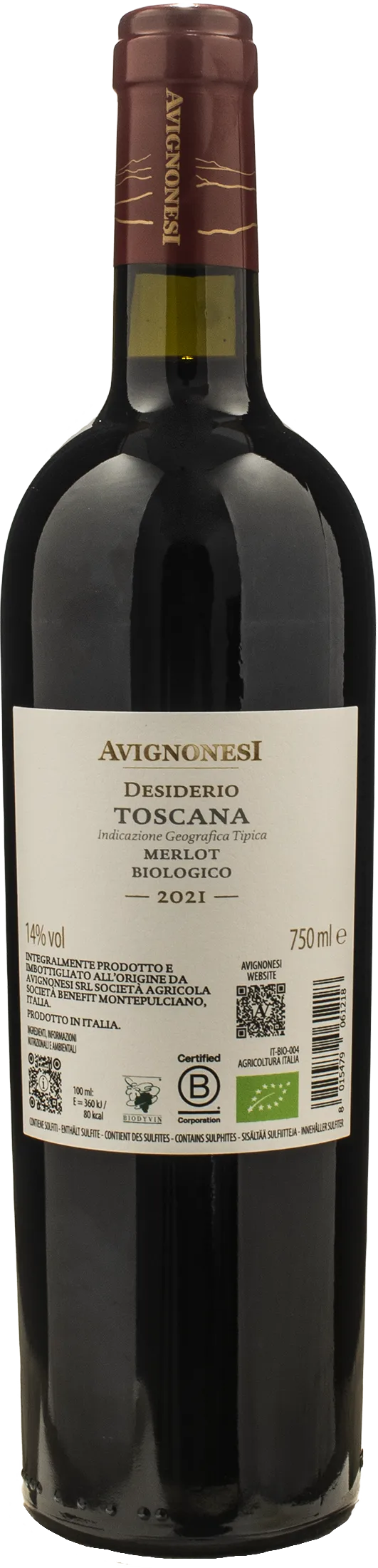
Description
What kind of wine it is
Desiderio is a Tuscan red wine by Avignonesi, made from a blend of Merlot and Cabernet Sauvignon grown according to organic and biodynamic principles. Extended ageing in oak barrels, some of which are new, shapes its structured and profound style. On the nose, it reveals intense aromas of blackberries, cherries and liquorice, enriched by notes of dark chocolate and mint. On the palate, the entry is enveloping, supported by dense and velvety tannins that lead to a long and persistent finish, where the spicy component from the wood is perfectly integrated.
Where it comes from
This wine originates from selected plots between the Montepulciano area and the Cortona region, enhancing the specific geological characteristics of the land. In Cortona, the vines sink their roots into clay soils with fluvial sediments, while in Montepulciano, clay and silt-based soils prevail. To preserve the identity of each origin, Avignonesi carries out separate vinifications for each plot. This meticulous attention results in an authentic expression of the Tuscan terroir, giving the wine marked aromatic complexity and a harmonious, balanced sip.
How it is produced
Production begins with a harvest carried out at different times to respect the ripening periods of each variety. After destemming and crushing, each batch ferments separately at controlled temperature in stainless steel vats, thanks to the action of indigenous yeasts during maceration on the skins. Subsequently, the wine undergoes malolactic fermentation in wood. Once the final blend is defined, the wine matures for twenty months in barrels, a process that enriches its aromatic profile and consolidates its deep flavour structure, ensuring an optimal balance between fruit and evolution in oak.
History and Curiosities
Founded in Montepulciano in 1974, the Avignonesi estate is a flagship of biodynamic viticulture. This fine Merlot pays homage to its Tuscan roots, taking its name from Desiderio, an imposing bull that lived at the end of the nineteenth century at the Le Capezzine farm. Considered the largest specimen of its time, he helped define the excellence of the Chianina breed. The animal's vigour is revived in every glass, while the label immortalises him beneath a sky whose shades change to reflect the characteristics of each vintage and the climate.
Awards
-
2021
 93
93/100
James Suckling is an influential American wine critic and journalist who worked at Wine Spectator for 30 years. He left the magazine in 2010 to start his own website and guidebook (JamesSuckling.com). He specialises in Italian and Bordeaux wines.
-
2021
 93
93/100
Vinous is the online guide from Antonio Galloni, one of the world's leading wine connoisseurs.
-
2021
 4
4Italian Sommelier Association (AIS) guide
-
2021
 92
92/100
Wine spectator is the most influential wine guide on the internet.
Tasting notes

Perfume

Color

Taste
Serve at:
18 - 20 °C
Longevity:
10 - 15 years
Decanting time:
1 hour

- Start up year: 1974
- Oenologist: Matteo Giustiniani
- Bottles produced: 600.000
- Hectares: 170
The company’s mission is to assume leadership in the context of the "good wine industry". An ecosystem built on organic and biodynamic agriculture, sustainable distribution systems and consumer education. We work transparently and by innovating, driven by a very long-term view. The development of Avignonesi, founded on the production of wine, also extends to our Hospitality. Read more


| Name | Avignonesi Desiderio Merlot 2021 |
|---|---|
| Type | Red biodynamic still |
| Denomination | Toscana IGT |
| Vintage | 2021 |
| Size | 0,75 l |
| Alcohol content | 14.0% by volume |
| Grape varieties | 92% Merlot, 8% Cabernet Sauvignon |
| Country | Italy |
| Region | Tuscany |
| Vendor | Avignonesi |
| Story | History and Curiosities Founded in Montepulciano in 1974, the Avignonesi estate is a flagship of biodynamic viticulture. This fine Merlot pays homage to its Tuscan roots, taking its name from Desiderio, an imposing bull that lived at the end of the nineteenth century at the Le Capezzine farm. Considered the largest specimen of its time, he helped define the excellence of the Chianina breed. The animal's vigour is revived in every glass, while the label immortalises him beneath a sky whose shades change to reflect the characteristics of each vintage and the climate. |
| Origin | Montepulciano and Cortona (Tuscany, Italy) |
| Soil composition | Fluvial and clayey sediment, of Pleistocene origin, in Cortona; moderately deep, clayey and silty, of Pliocene origin, in Montepulciano. |
| Harvest | Between the end of August and the beginning of October |
| Fermentation | 2-4 weeks |
| Production technique | Mechanical harvest; temperature-controlled fermentation in stainless steel vats with maceration on the skins and indigenous yeasts; malolactic fermentation in wood; ageing for 20 months in 225-litre oak barriques/barrels |
| Wine making | Each batch is fermented and matured separately; fermentation lasts for 4 weeks at controlled temperature in stainless steel vats with skin maceration and the use of indigenous yeasts; malolactic fermentation takes place in wood; ageing for 20 months in 225-litre oak barrels (15% new). |
| Aging | 20 months in 225-litre oak barrels (15% new) |
| Allergens | Contains sulphites |