


Astoria
Casa Vittorino Valdobbiadene Brut Millesimato 2025
| Denomination | DOCG Conegliano Valdobbiadene Spumante |
|---|---|
| Size | 0,75 l |
| Alcohol content | 11.5% by volume |
| Area | Veneto (Italy) |
| Grape varieties | 100% Glera |
| Aging | Ageing on the lees for 2–3 weeks and for several weeks after secondary fermentation; then resting in the bottle for at least 1–2 months. |
- Denomination and grape: Valdobbiadene Spumante Superiore DOCG, 100% Glera grapes
- Size and alcohol content: 0.75-litre bottle, 11.5% alcohol, 2025 harvest
- Vinification: fermentation in steel and secondary fermentation using the Martinotti/Charmat method in an autoclave for 20–25 days
- Aromatic profile: hints of white flowers, apple, pear and citrus; intense and clear bouquet
- Flavour and bubbles: Dry and savoury Brut; fine, elegant and persistent bubbles
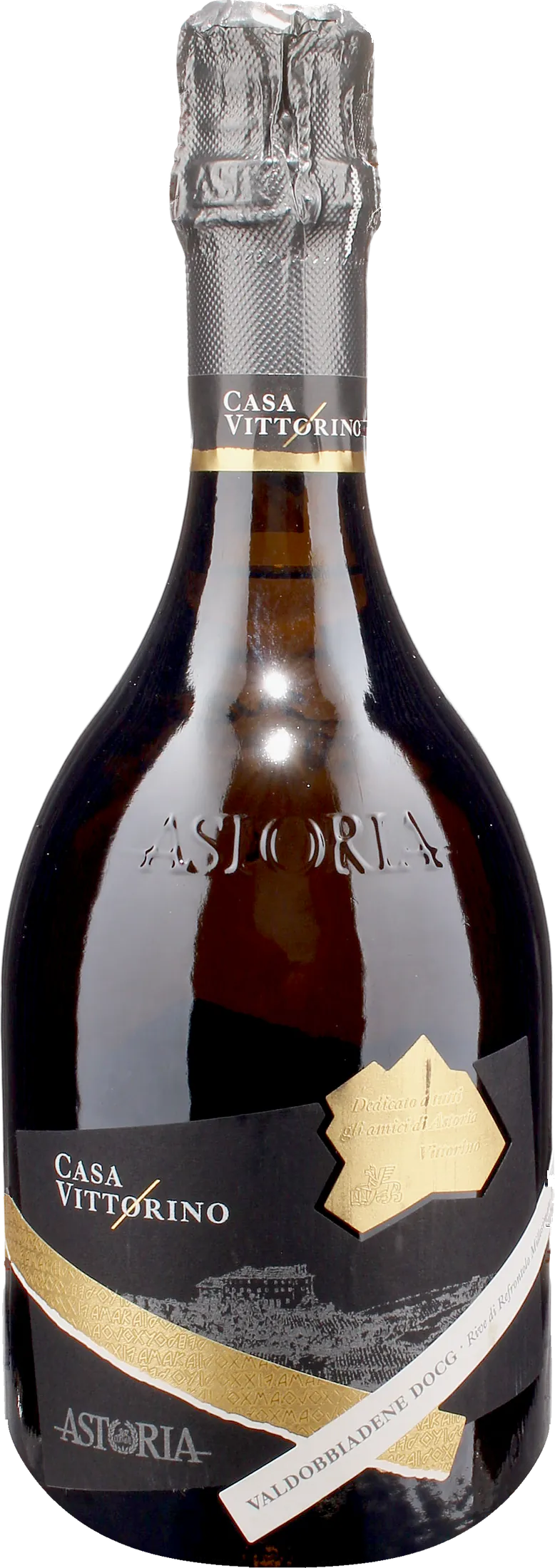
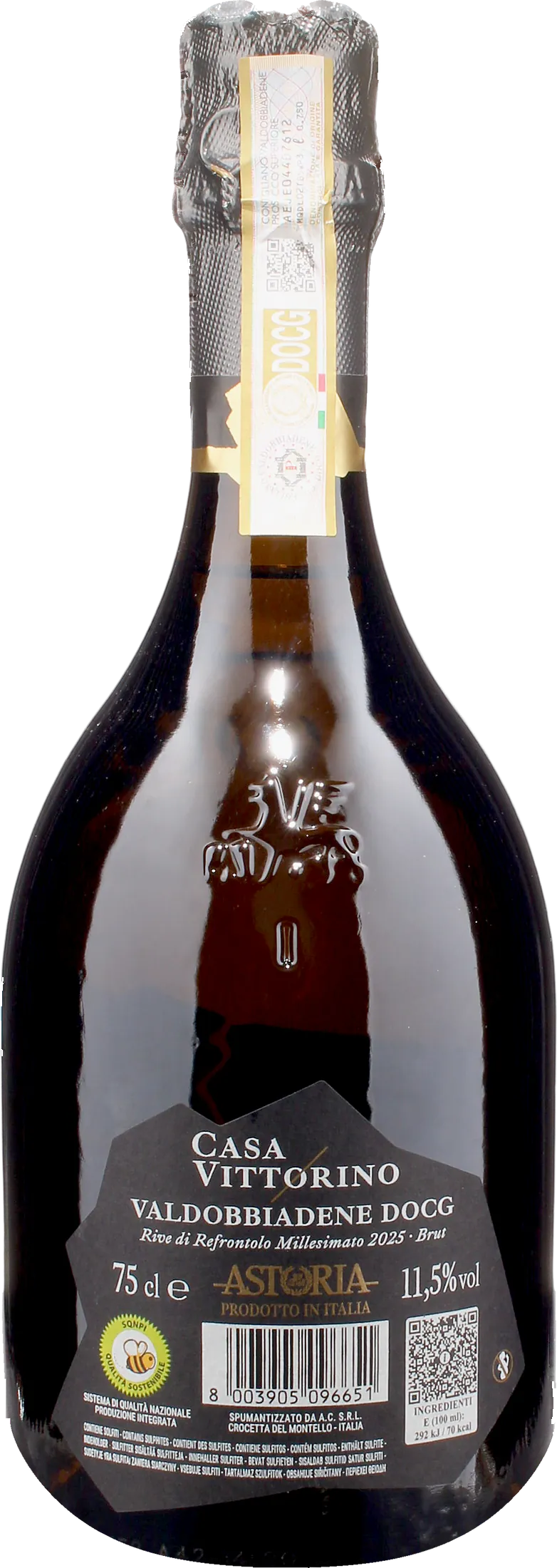
Description
What type of wine it is
The Casa Vittorino Valdobbiadene Brut by Astoria is a Prosecco Superiore sparkling wine from Veneto that fully enhances the character of Glera grapes, vinified in steel using the Martinotti Method. The Brut style offers a dry and full palate, harmonised by a lively acidity. The glass reveals a fine and elegant perlage that accompanies a fruity and clean bouquet, with hints of apple, pear, white flowers and delicate citrus notes. The structure is harmonious, characterised by a fresh and savoury texture, ideal for accompanying seafood-based dishes and light aperitifs.
Where it comes from
This sparkling wine originates in Veneto, in the hills of Valdobbiadene Prosecco Superiore. The vineyards, located at an altitude of approximately one hundred and fifty metres, enjoy an optimal east-west exposure that promotes balanced ripening, preserving the fruit's natural freshness. This environment allows for the development of clear and vibrant aromas. Astoria rigorously manages the vines to enhance the soil's identity, offering an authentic, savoury and highly pleasant expression of the territory.
How it is produced
Production begins in September with the manual harvesting of the best clusters. In the cellar, after destemming, a rapid cold cryomaceration is carried out in an oxygen-protected environment to safeguard the primary aromas. After soft pressing, the must ferments in steel at a controlled temperature. The secondary fermentation takes place in an autoclave following the Martinotti method for about twenty days. Targeted ageing on the lees enriches the wine's body, which matures exclusively in steel to keep the original purity intact.
History and curiosities
Casa Vittorino embodies the winemaking passion of the Pollegato family, founders of Astoria in 1987. Today the leading private winemaker in the Conegliano-Valdobbiadene DOCG area, the winery is renowned for its production of award-winning wines.
Tasting notes

Perlage

Perfume

Color

Taste
Serve at:
06 - 08 °C
Longevity:
03 - 05 years

- Start up year: 1987
- Oenologist: Roberto Sandrin
- Bottles produced: 2.000.000
- Hectares: 40
With Astoria bottles, the eye is aesthetically drawn to the long labels which are colourful, contemporary and fresh, elegantly covering thousands of convincing, substantial bottles of wine.
The winery is inThe Val de Brun Estate with vineyards spanning 40 hectares of the picturesque Prosecco Hills, whose unique landscape was added to the UNESCO World Heritage List in 2019. At the helm of the estate are Giorgio and Paolo Polegato, both hailing from a historic family of Treviso wine growers who know perfectly how to 'read' the climate and soils of this lucky area. Read more


| Name | Astoria Casa Vittorino Valdobbiadene Brut 2025 |
|---|---|
| Type | White green charmat method sparkling wine brut |
| Denomination | Conegliano Valdobbiadene Prosecco DOCG |
| Vintage | 2025 |
| Size | 0,75 l |
| Alcohol content | 11.5% by volume |
| Grape varieties | 100% Glera |
| Country | Italy |
| Region | Veneto |
| Vendor | Astoria |
| Story | History and curiosities Casa Vittorino embodies the winemaking passion of the Pollegato family, founders of Astoria in 1987. Today the leading private winemaker in the Conegliano-Valdobbiadene DOCG area, the winery is renowned for its production of award-winning wines. |
| Origin | Valdobbiadene (Conegliano-Valdobbiadene area), Veneto, Italy |
| Climate | Altitude: 150 m above sea level; exposure: East-West |
| Cultivation system | Sylvoz |
| Plants per hectare | Four thousand |
| Yield per hectare | 110–120 quintals per hectare |
| Harvest | Manual harvesting in September |
| Fermentation temperature | 16 degrees Celsius |
| Fermentation | 20–25 days |
| Production technique | Martinotti Method (Charmat method / secondary fermentation in an autoclave) |
| Wine making | After destemming, maceration is carried out at 8–10 °C for several hours (cryomaceration) directly in the press in a hyper-reductive environment; this is followed by soft pressing and static decantation of the must. Primary fermentation takes place in stainless steel tanks at 16 °C with selected indigenous yeasts. The new wine, separated from the coarser lees, is kept with residual sugar and left on the lees for 2–3 weeks; clarified and transferred to an autoclave, it undergoes secondary fermentation at 16 °C for approximately 20–25 days (Martinotti/Charmat method), followed by further ageing on the lees for a few weeks. |
| Aging | Ageing on the lees for 2–3 weeks and for several weeks after secondary fermentation; then resting in the bottle for at least 1–2 months. |
| Allergens | Contains sulphites |