


Argiano
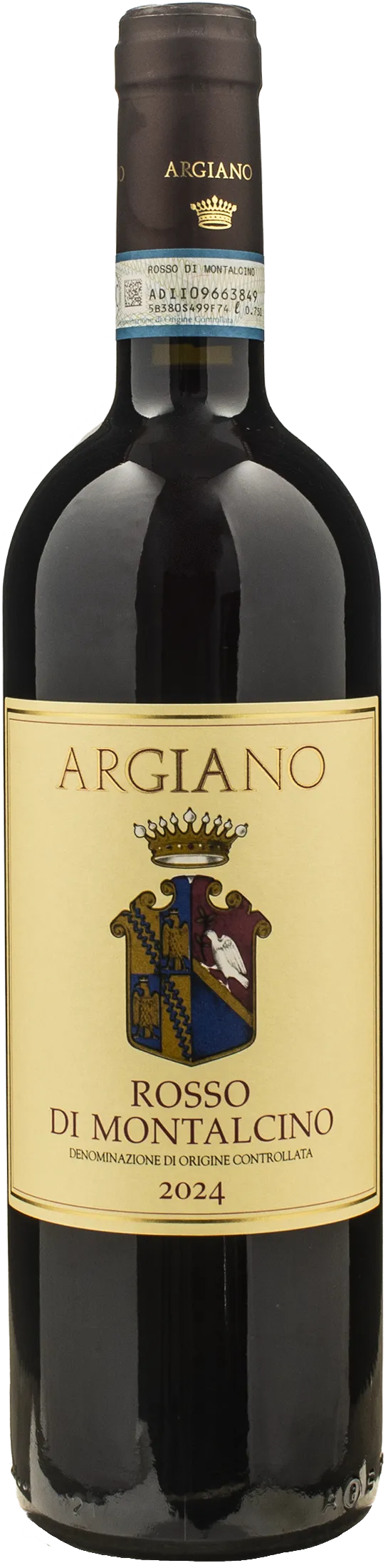
Rosso di Montalcino 2024
| Denomination | DOC Rosso di Montalcino |
|---|---|
| Size | 0,75 l |
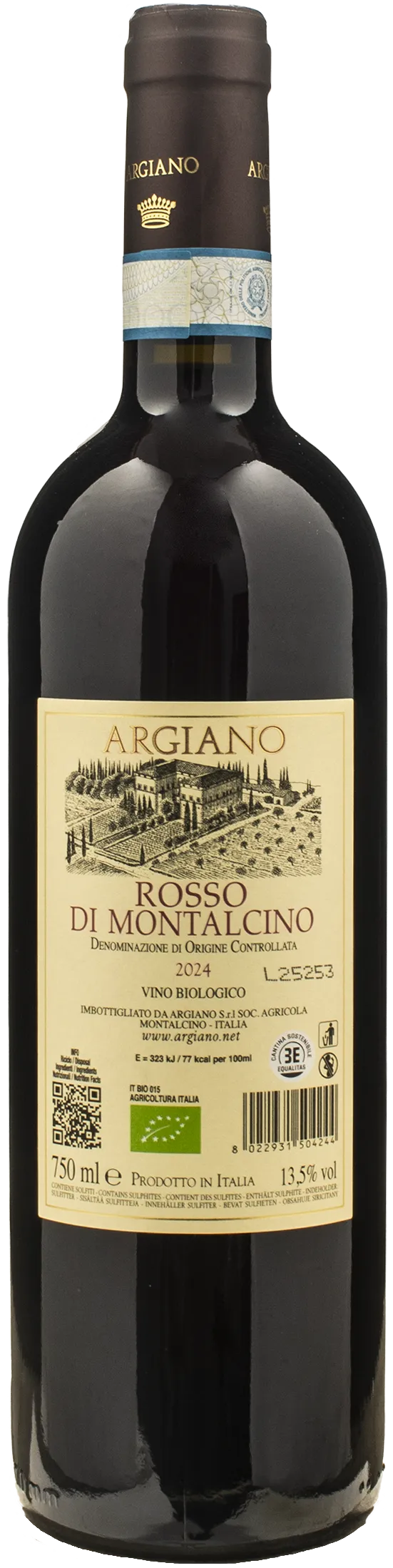
| Alcohol content | 13.5% by volume |
| Area | Tuscany (Italy) |
| Grape varieties | 100% Sangiovese |
| Aging | Aged for 6–9 months in second-use French oak barriques and Slavonian oak casks (10–15 hl); bottled the following autumn and matured for several months in the cellar before sale. |
- Origin and variety: 100% organic Sangiovese from Sant’Angelo in Colle, Montalcino
- Aromatic profile: notes of violet, cherry, red fruits, herbal spices and a hint of menthol
- Tasting characteristics: freshness and vibrancy, medium body, fine tannins and a savoury finish
- Vinification: hand harvesting, cold maceration, spontaneous fermentation with indigenous yeasts
- Ageing and serving: matured for 6-9 months in oak, serve at 16-20°C, decant for 1 hour
Description
What kind of wine it is
Argiano Rosso di Montalcino is an organic red wine that expresses the authentic character of Sangiovese. With an intense ruby colour, it offers aromas of violet, cherry, and a delicate hint of herbal spice. On the palate, it is fresh and vibrant, with a medium body supported by fine-grained tannins. The harmonious acidic structure perfectly balances the fruit, finishing with a savoury and mineral aftertaste. Its balanced profile makes it ideal for pairing with Tuscan cured meat starters, game ragù, and mature cheeses.
Where it comes from
It originates in the Montalcino area, among the vineyards of Sant’Angelo in Colle. The vines grow on alluvial soils with the presence of calcareous marl, a geological base that gives the grapes a distinct aromatic clarity. The Monte Amiata massif provides essential natural protection to maintain a constant and regular microclimate. The ageing takes place in the historic sixteenth-century cellars located beneath the Argiano estate, an underground environment perfect for ensuring stable temperatures during the wine’s development.
How it is produced
After manual harvesting, the grapes undergo a cold pre-fermentation maceration to preserve their aromatic integrity. Spontaneous fermentation uses indigenous yeasts and is followed by a period on the skins in steel tanks, where the malolactic phase is also completed. The maturation is divided between second-use French barriques and classic Slavonian oak barrels. The wine is then left to rest for adequate bottle ageing before being ready for tasting.
History and Curiosities
Argiano embodies the soul of Montalcino thanks to its vineyards, protected by Mount Amiata, and the historic 16th-century cellars located beneath the villa. In this ideal microclimate, oenologist Bernardino Sani continues the prestigious technical legacy established by Giacomo Tachis. The careful selection of woods for ageing enhances a rigorous organic and sustainable project, deeply connected to the land. This elegant wine is acclaimed by critics with a score of 92/100.
Awards
-
2024
 93
93/100
James Suckling is an influential American wine critic and journalist who worked at Wine Spectator for 30 years. He left the magazine in 2010 to start his own website and guidebook (JamesSuckling.com). He specialises in Italian and Bordeaux wines.
Tasting notes

Perfume

Color

Taste
Serve at:
16 - 18 °C
Longevity:
05 - 10 years
Decanting time:
1 hour

- Start up year: 1980
- Oenologist: Bernardino Sani
- Bottles produced: 350.000
- Hectares: 60
With deep roots that connect it to its origins, Argiano combines traditional knowledge with a forward-looking vision. Today, guided by a passionate and expert team, we embrace a bold project rooted in identity, innovation and sustainability. Read more


| Name | Argiano Rosso di Montalcino 2024 |
|---|---|
| Type | Red organic still |
| Denomination | Rosso di Montalcino DOC |
| Vintage | 2024 |
| Size | 0,75 l |
| Alcohol content | 13.5% by volume |
| Grape varieties | 100% Sangiovese |
| Country | Italy |
| Region | Tuscany |
| Vendor | Argiano |
| Story | History and Curiosities Argiano embodies the soul of Montalcino thanks to its vineyards, protected by Mount Amiata, and the historic 16th-century cellars located beneath the villa. In this ideal microclimate, oenologist Bernardino Sani continues the prestigious technical legacy established by Giacomo Tachis. The careful selection of woods for ageing enhances a rigorous organic and sustainable project, deeply connected to the land. This elegant wine is acclaimed by critics with a score of 92/100. |
| Origin | Sant'Angelo in Colle, Montalcino (SI), Tuscany, Italy |
| Soil composition | More alluvial soils with traces of calcareous marl |
| Harvest | Mid-September |
| Fermentation | Approximately 20 days |
| Production technique | Manual harvest; cold pre-fermentation maceration (cryo-maceration); spontaneous fermentation with indigenous yeasts; maceration on the skins for about 20 days in stainless steel tanks at controlled temperature; alcoholic and malolactic fermentation in steel; ageing for 6–9 months in second-use French oak barriques and Slavonian oak casks; bottled the following autumn and matured for several months in the cellar. |
| Wine making | Manual harvest; pre-fermentation cold maceration (cryo-maceration); spontaneous fermentation with indigenous yeasts; maceration on the skins for about 20 days in stainless steel tanks at controlled temperature; alcoholic and malolactic fermentation in steel; ageing for 6–9 months in second-use French oak barriques and Slavonian oak casks, then bottled the following autumn and matured for several months in the cellar. |
| Aging | Aged for 6–9 months in second-use French oak barriques and Slavonian oak casks (10–15 hl); bottled the following autumn and matured for several months in the cellar before sale. |
| Year production | 350000 bottles |
| Allergens | Contains sulphites |