


Abbazia di Novacella
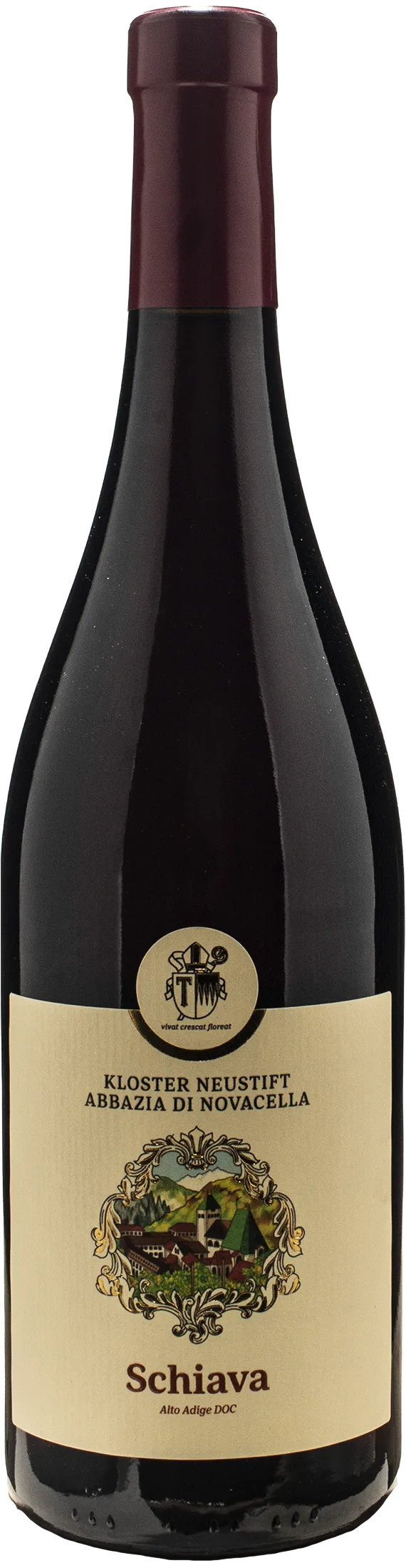
Schiava 2025
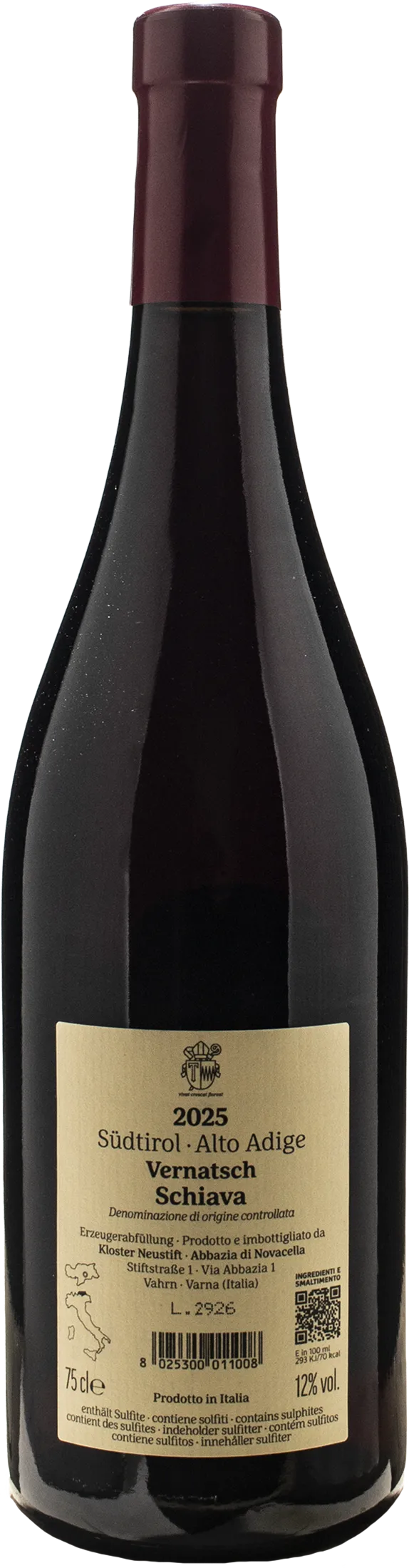
| Denomination | DOC Alto Adige Schiava |
|---|---|
| Size | 0,75 l |
| Alcohol content | 12.0% by volume |
| Area | Trentino Alto Adige (Italy) |
| Grape varieties | 100% Schiava - Vernatsch |
| Aging | Malolactic fermentation and maturation in stainless steel for 6 months |
- Grape variety and designation: 100% Schiava, Alto Adige DOC, vintage 2025
- Flavour profile: dry red, light-bodied, soft tannins and lively acidity
- Aromas and finish: cherry and strawberry, violet; persistent finish of bitter almond
- Vinification in steel: 5 days maceration, up to 28°C, then malolactic fermentation and 6 months ageing
- Serving and pairings: 12-14°C, decant for 1 hour; speck, smoked cured meats, white meats
Description
What kind of wine it is
Schiava from Abbazia di Novacella is a still red wine from Alto Adige with controlled designation of origin. Made from Schiava grapes and matured in steel, it is characterised by a light body and vibrant acidity, making it extremely pleasant and easy to drink. On the nose, it offers a fruity and fresh bouquet, enriched by clear notes of red fruits, violet, and subtle spicy hints. On the palate, it is dry and harmonious, supported by soft tannins, with a typical and persistent finish of bitter almond that highlights its innate elegance.
Where it comes from
The vineyards are located in the Marklhof estate in Cornaiano, in the municipality of Appiano. Here, the vines grow between 350 and 420 metres above sea level, enjoying the cool climate typical of Alto Adige and a northern exposure that favours balanced ripening of the Schiava grapes. The soil is characterised by permeable moraine deposits on a porphyritic substrate, a composition that gives the wine a dry and defined character. The Guyot training system, with a density of five thousand vines per hectare, ensures a yield of eighty hectolitres.
How it is produced
The vinification process involves a five-day maceration on the skins at a controlled temperature, ideal for achieving a delicate aromatic extraction. After malolactic fermentation, which gives roundness to the palate, the wine undergoes maturation in stainless steel for six months, preserving the pure varietal aromas of the Schiava. Best served chilled, between 12 and 14°C, it pairs beautifully with the region’s smoked cured meats, white meats, and dishes with authentic flavour such as rabbit fricassee.
History and Curiosities
The Abbey of Novacella has been cultivating vineyards since the 9th century and is recognised as one of the northernmost producers in Italy. Founded in 1142 by the Order of Augustinian Canons Regular, the community supports itself not only by producing wine, but also by growing apples and vegetables, and hosting a small school dedicated to viticulture studies. The winery boasts an international reputation of the highest level, confirmed in 2009 when the renowned Gambero Rosso guide named Celestino Lucin, the abbey's oenologist, as Oenologist of the Year.
Tasting notes

Perfume

Color

Taste
Serve at:
14 -16 °C
Longevity:
05 - 10 years
Decanting time:
1 hour
- Start up year: 1142
- Oenologist: Celestino Lucin
- Bottles produced: 900.000
- Hectares: 100
Also owned by the Abbey is a vineyard located in South Tyrol's main wine-growing area: the Marklhof estate in Cornaiano, on the 'wine road' near Bolzano. The sandy, dry soil and the airy climate of these hills make it possible to obtain excellent red wines, including a characteristic Kalterersee, a very fine Schiava and a very elegant Pinot Noir.
A third Novacella vineyard is located in Bolzano, around the ancient and tiny St. Mary's Monastery. Here, in the dry and very warm climate of the valley floor, a full-bodied dark Lagrein matures, which is particularly suitable for ageing.
In our wine cellar, the grapes from these three vineyards are raised to wines whose distinct character and quality has been rewarded by the loyalty of generations of friends and connoisseurs. Read more


| Name | Abbazia di Novacella Schiava 2025 |
|---|---|
| Type | Red still |
| Denomination | Alto Adige DOC |
| Vintage | 2025 |
| Size | 0,75 l |
| Alcohol content | 12.0% by volume |
| Grape varieties | 100% Schiava - Vernatsch |
| Country | Italy |
| Region | Trentino Alto Adige |
| Vendor | Abbazia di Novacella |
| Story | History and Curiosities The Abbey of Novacella has been cultivating vineyards since the 9th century and is recognised as one of the northernmost producers in Italy. Founded in 1142 by the Order of Augustinian Canons Regular, the community supports itself not only by producing wine, but also by growing apples and vegetables, and hosting a small school dedicated to viticulture studies. The winery boasts an international reputation of the highest level, confirmed in 2009 when the renowned Gambero Rosso guide named Celestino Lucin, the abbey's oenologist, as Oenologist of the Year. |
| Origin | Marklhof, Cornaiano (Appiano) |
| Climate | Cool alpine climate |
| Soil composition | Permeable moraine deposits on a porphyry base |
| Cultivation system | Guyot |
| Plants per hectare | 5000 |
| Yield per hectare | 80 hectolitres per hectare |
| Fermentation temperature | Up to 28 °C |
| Fermentation | Approximately 5 days |
| Production technique | Fermentation with a short maceration on the skins, followed by malolactic fermentation and maturation in stainless steel |
| Wine making | Fermentation at controlled temperature with maceration on the skins for 5 days (up to 28°C), followed by malolactic fermentation and ageing/maturation in stainless steel. |
| Aging | Malolactic fermentation and maturation in stainless steel for 6 months |
| Total acidity | 4.8 gr/L |
| Residual sugar | 0.9 gr/L |
| Allergens | Contains sulphites |