


Castellare di Castellina
I Sodi di San Niccolò 2022
| Denomination | IGT Toscana |
|---|---|
| Size | 0,75 l |
| Alcohol content | 14.0% by volume |
| Area | Tuscany (Italy) |
| Grape varieties | 85% Sangiovese, 15% Malvasia Nera |
| Aging | After fermentation in stainless steel, it matures for approximately 30 months in wood (including 50% new barriques for 24–30 months) and is then aged for 12 months in the bottle. |
- Type and grape varieties: Still red wine from Tuscany; 85% Sangiovese grapes, 15% Malvasia Nera grapes
- Origin and soil: Castellina in Chianti, altitude 350–400 metres; calcareous soils worked by hand
- Maturation: Fermentation in steel; ageing for 24–30 months in wood (half in new barriques) plus an additional 12 months
- Aromatic characteristics: Aromas of ripe red fruit and jam, spicy notes, vanilla and liquorice; intense ruby colour
- Flavour and pairings: Compact structure, soft tannins, persistent finish; recommended with roasts and mature cheeses
Description
What type of wine it is
I Sodi di San Niccolò by Castellare di Castellina is a full-bodied red wine, a celebrated expression of the Tuscan terroir. Born from an elegant blend of Sangiovese and Malvasia Nera, this majestic Supertuscan belongs to the prestigious Toscana designation. Visually, it presents an intense ruby-red colour, while the aromatic profile reveals great complexity with notes of ripe red fruit, jam, vanilla and liquorice. On the palate, it is distinguished by its dense and elegant texture, supported by a vibrant freshness and sweet, well-integrated tannins. It is a wine with a long and persistent finish, ideal for pairing with roasts and mature cheeses.
Where it comes from
This prestigious red is born in Castellina in Chianti, in the historic heart of Chianti Classico. The vineyards extend over hilly slopes located at an altitude of between 350 and 400 metres above sea level, offering optimal conditions for the ripening of the grapes. The composition of the soil, primarily characterised by a limestone soil, gives the wine a marked freshness and tannic precision. The name is a tribute to the "sodi", the particularly hard and impervious soils that require rigorous manual labour, an expression of true heroic viticulture. The estate draws inspiration from the historic 14th-century church of San Niccolò, situated among the rows, which overlooks this highly suited viticultural area.
How it is produced
The creation of this exceptional red begins with a meticulous harvest, carried out around mid-October. The grapes undergo a precise fermentation in stainless steel, also completing the malolactic process to soften the taste profile. Subsequently, the wine undergoes a long maturation period of about thirty months in wooden barrels, which enrich the bouquet with elegant spicy nuances and promote the perfect integration of the fruit. The production process concludes with a careful bottle ageing lasting twelve months, which ensures the achievement of impeccable harmony and guarantees extraordinary longevity.
History and Interesting Facts
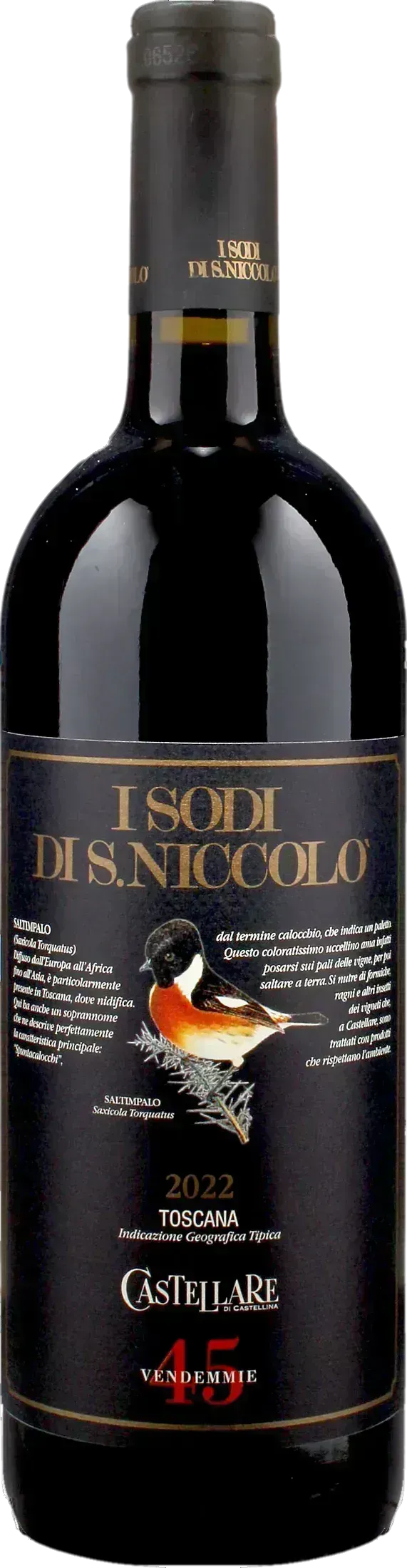
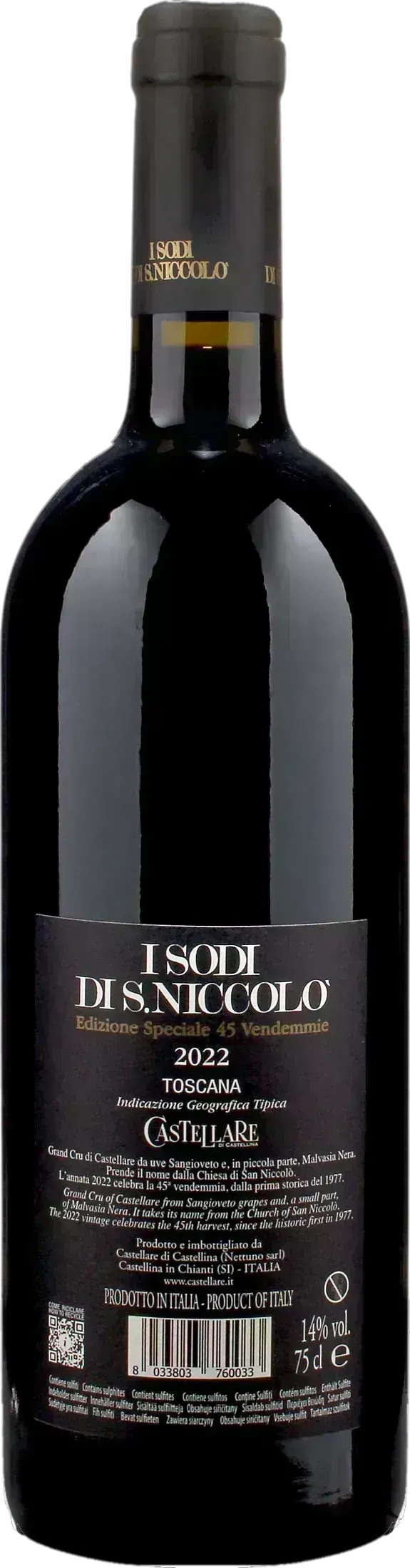
Created in 1977, I Sodi di San Niccolò is the historic Super Tuscan of Castellare di Castellina. The name pays homage to the "sodi", hard soils worked by hand, and the 14th-century church of San Niccolò located on the estate. The 2022 vintage celebrates the 45th harvest with an elegant black label. The little bird depicted symbolises the commitment to sustainable viticulture.
Awards
-
2022
 95
/100
James Suckling is an influential American wine critic and journalist who worked at Wine Spectator for 30 years. He left the magazine in 2010 to start his own website and guidebook (JamesSuckling.com). He specialises in Italian and Bordeaux wines.
-
2022
 96
/100
Vinous is the online guide from Antonio Galloni, one of the world's leading wine connoisseurs.
-
2022
 94
/100
Wine spectator is the most influential wine guide on the internet.
Tasting notes

Perfume

Color

Taste
Serve at:
16 - 18 °C
Longevity:
10 - 15 years
Decanting time:
1 hour

- Start up year: 1977
- Oenologist: Alessandro Cellai
- Bottles produced: 350.000
- Hectares: 33
The red wine I Sodi di S.Niccolò Toscana IGT, vintage 2021, from the Castellare di Castellina winery was rated 99 Falstaff points in 2025 by Othmar Kiem and Simon Staffler. It is a wine made from Sangiovese and Malvasia Nera grapes from the Chianti Classico region of Italy. Read more


| Name | Castellare di Castellina I Sodi di San Niccolo 2022 |
|---|---|
| Type | Red still |
| Denomination | Toscana IGT |
| Vintage | 2022 |
| Size | 0,75 l |
| Alcohol content | 14.0% by volume |
| Grape varieties | 85% Sangiovese, 15% Malvasia Nera |
| Country | Italy |
| Region | Tuscany |
| Vendor | Castellare di Castellina |
| Story | History and Interesting Facts Created in 1977, I Sodi di San Niccolò is the historic Super Tuscan of Castellare di Castellina. The name pays homage to the "sodi", hard soils worked by hand, and the 14th-century church of San Niccolò located on the estate. The 2022 vintage celebrates the 45th harvest with an elegant black label. The little bird depicted symbolises the commitment to sustainable viticulture. |
| Origin | Castellina in Chianti (Siena), in the heart of Chianti Classico, Tuscany, Italy |
| Soil composition | Calcareous |
| Cultivation system | Inverted Guyot |
| Plants per hectare | From 2,700 (old plantations) to 6,000 (new plantations) plants per hectare |
| Yield per hectare | 40-45 quintals per hectare |
| Harvest | Mid-October |
| Production technique | Fermentation in stainless steel, maturation in wood including barriques (50% new) and bottle ageing |
| Wine making | Harvest in mid-October; fermentation in stainless steel (malolactic completed), followed by maturation for approximately 30 months in wood, including 50% new barriques (24–30 months), and a subsequent 12 months of ageing in the bottle. |
| Aging | After fermentation in stainless steel, it matures for approximately 30 months in wood (including 50% new barriques for 24–30 months) and is then aged for 12 months in the bottle. |
| Allergens | Contains sulphites |