


Tuzko Birtok
Gruner Veltliner Pannon 2025
Other years:
2024| Denomination | N/A |
|---|---|
| Size | 0,75 l |
| Alcohol content | 12.5% by volume |
| Area | Szekszard/Tolna (Hungary) |
| Grape varieties | 100% Gruner Veltliner |
| Aging | Ageing in stainless steel tanks for a few months before bottling. |
| Other years | 2024 |
- Type and vintage: dry still white wine 2025 from Grüner Veltliner grapes
- Aromas and flavour: hints of citrus and flowers, characteristic peppery note; fresh and balanced taste
- Vinification: fermentation and maturation in stainless steel at less than 16 °C
- Food pairings: ideal as an aperitif, with lean fish, poultry and medium-aged cheeses
- Award received: Mundus Vini recognition, Best white wine of Hungary
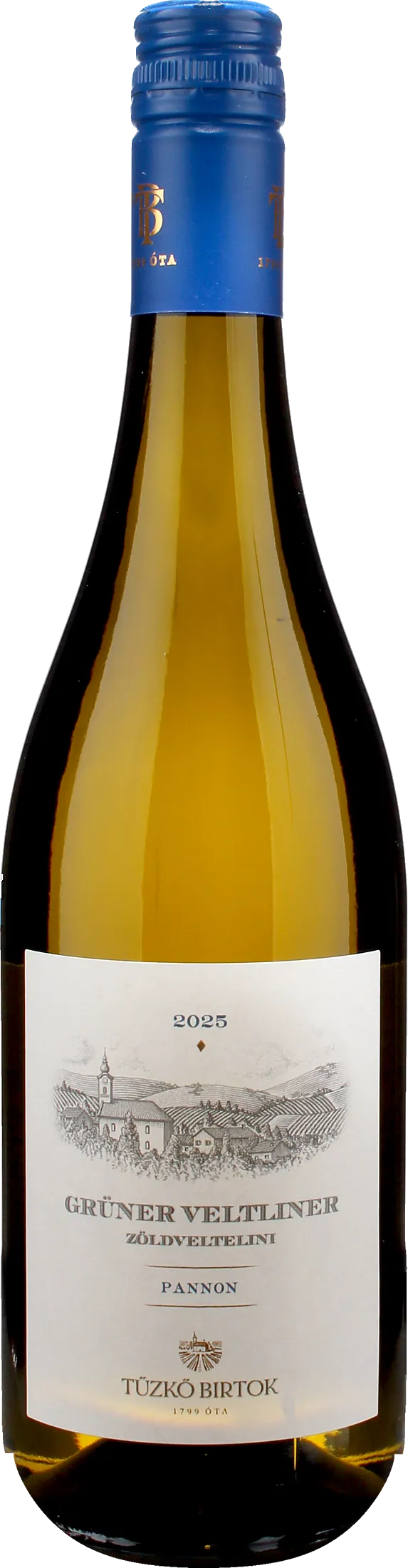
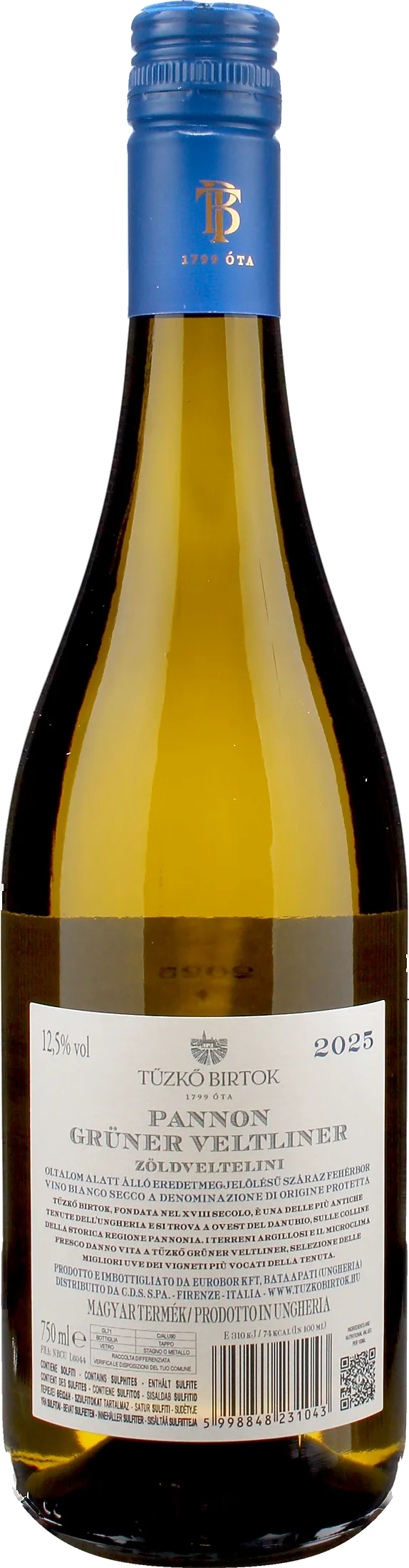
Description
What kind of wine it is
Tuzko Birtok's Gruner Veltliner Pannon is a dry white from the Hungarian region of Pannon, made from Grüner Veltliner grapes. In the glass, it displays a straw-yellow colour with greenish highlights, while the bouquet expresses distinct citrus and floral notes enhanced by the variety's typical peppery touch. Vinified and aged in stainless steel, on the palate it stands out for its vibrant freshness and balanced structure. Awarded Mundus Vini Best of Show Hungary, it ensures a smooth and complex sip.
Where it comes from
Produced by the historic Tuzko Birtok estate, the wine is born in an area famous for its cellars carved into the tuff; the company name means flint. The Grüner Veltliner vines grow between Szekszárd and Tolna, in the vineyards of Bátaapáti and Mőcsény, in the Pannon region. The optimal local conditions allow for the ideal ripening of the Grüner Veltliner, giving the wine a solid aromatic profile and a distinctive spicy character.
How it is produced
After careful selection, the grapes are destemmed and gently pressed. The temperature-controlled fermentation takes place in stainless steel tanks, protecting the integrity of the fragrant primary aromas. This is followed by ageing in steel for a few months, useful for stabilising the wine and preserving its natural gustatory tension.
History and trivia
Founded in 1799, the ancient Hungarian estate Tuzko Birtok links its name to the charm of flint. A historic property of the Apponyi Counts, since 2000 it has combined its precious heritage with the excellence of the Antinori and Mazzei families. The evocative cellars carved into the tuff bear witness to a centuries-old dedication, rooted in the prestigious territory of Pannonia. This commitment to the highest quality finds its expression in the Grüner Veltliner, a refined white wine capable of winning the prestigious Mundus Vini Best of Show Hungary award, thus celebrating an inimitable oenological passion.
Tasting notes

Perfume

Color

Taste
Serve at:
08 - 10 °C
Longevity:
05 - 10 years
- Start up year: 1799
The Antinori family was deeply inspired by the quality of the wines produced, the presence of existing vineyards on the land, the historical, impressive cellars excavated in tuff rock and the beauty of the landscape so, in 2000, they decided to take over management of the winery together with the Mazzei family. Read more


| Name | Tuzko Birtok Gruner Veltliner Pannon 2025 |
|---|---|
| Type | White still dry |
| Denomination | N/A |
| Vintage | 2025 |
| Size | 0,75 l |
| Alcohol content | 12.5% by volume |
| Grape varieties | 100% Gruner Veltliner |
| Country | Hungary |
| Region | Szekszard/Tolna |
| Vendor | Tuzko Birtok |
| Story | History and trivia Founded in 1799, the ancient Hungarian estate Tuzko Birtok links its name to the charm of flint. A historic property of the Apponyi Counts, since 2000 it has combined its precious heritage with the excellence of the Antinori and Mazzei families. The evocative cellars carved into the tuff bear witness to a centuries-old dedication, rooted in the prestigious territory of Pannonia. This commitment to the highest quality finds its expression in the Grüner Veltliner, a refined white wine capable of winning the prestigious Mundus Vini Best of Show Hungary award, thus celebrating an inimitable oenological passion. |
| Origin | Bátaapáti and Mőcsény (Szekszárd/Tolna, Pannon region, Hungary) |
| Cultivation system | Screw cap |
| Fermentation temperature | Below 16 °C |
| Fermentation | 12–14 days |
| Production technique | Alcoholic fermentation and ageing in stainless steel tanks |
| Wine making | The grapes are immediately taken to the winery, carefully selected, destemmed and gently pressed. Alcoholic fermentation takes place in stainless steel tanks at temperatures below 16°C for 12–14 days. The wine matures in stainless steel tanks for several months before bottling. |
| Aging | Ageing in stainless steel tanks for a few months before bottling. |
| Total acidity | 5.6 gr/L |
| Residual sugar | 1.4 gr/L |
| Allergens | Contains sulphites |