


Re Manfredi
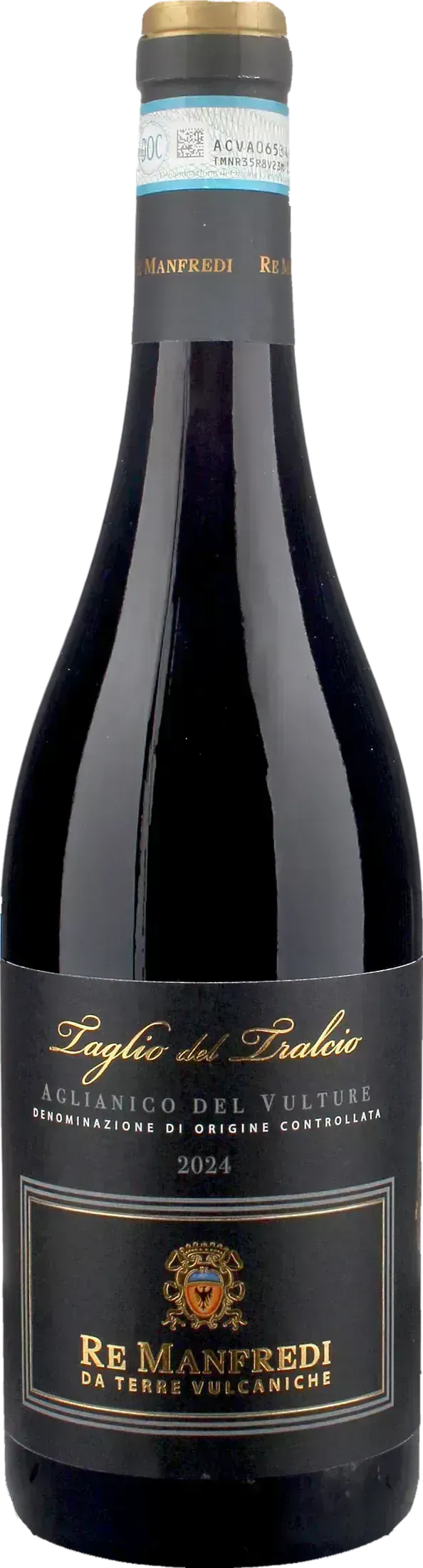
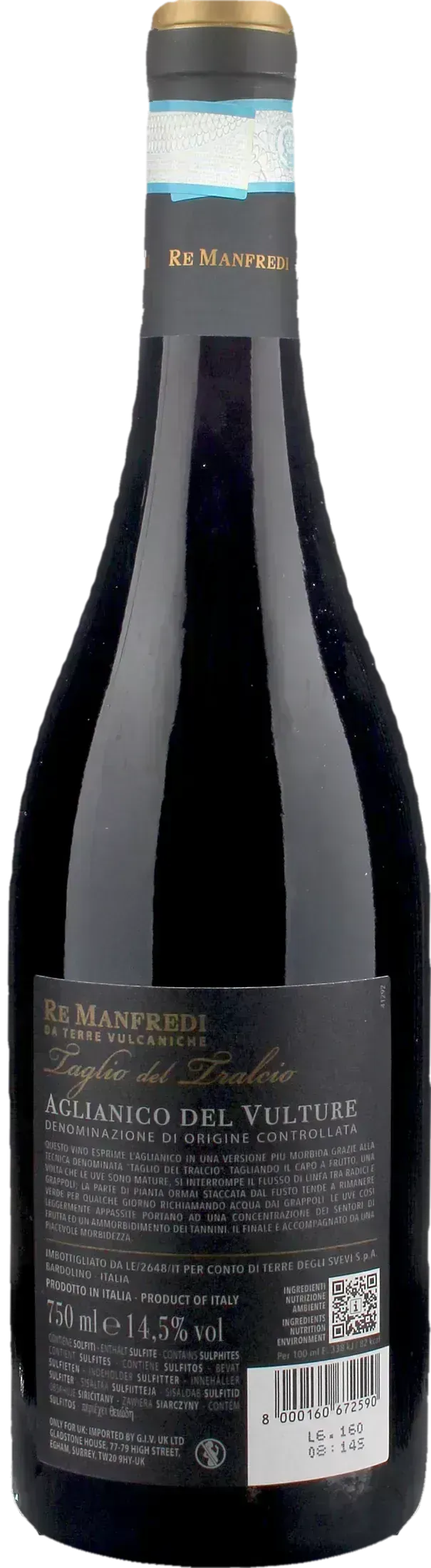
Aglianico del Vulture Taglio del Tralcio 2024
| Denomination | DOC Aglianico del Vulture |
|---|---|
| Size | 0,75 l |
| Alcohol content | 14.5% by volume |
| Area | Basilicata (Italy) |
| Grape varieties | 100% Aglianico |
| Aging | Aged in wood for 6 months and 6 months in the bottle. |
- Appellation and grapes: Vulture red wine DOC from 100% Aglianico grapes
- Vulture territory: Venosa at 500 metres, volcanic soils providing savoury minerality
- Drying technique: Grapes left to wither on the vine for 7–10 days for intense aromas
- Aromas: Plum, black cherry and persimmon, enriched by balsamic notes and cocoa
- Flavour and food pairings: Dense structure, silky tannins; ideal with red meats and pecorino
Description
What type of wine is it
Re Manfredi’s Aglianico del Vulture Taglio del Tralcio is a still red wine with a Denominazione di Origine Controllata (DOC) status, produced in Basilicata. Made from Aglianico grapes, this wine is distinguished by its powerful character and marked smoothness. On the palate, it is dense and enveloping, with a structure well-defined by silky tannins and a pleasant freshness, enriched by a mineral savouriness. The aromatic profile is dominated by hints of ripe fruit, such as plum and black cherry, accompanied by elegant balsamic notes, spicy hints, and nuances of cocoa, making it a complex yet accessible wine.
Where it comes from
This wine originates in the heart of Basilicata, specifically in the Vulture area, in the territory of Venosa. The vineyards are located at an altitude of approximately five hundred metres above sea level, rooted in soils of volcanic origin. This peculiar geological composition, rich in minerals, clay, calcium, and tuff, together with the significant temperature fluctuations between day and night, gives the Aglianico a decided vigour and a characteristic mineral savouriness. The interaction between altitude, climate, and volcanic soil unequivocally defines the style and aromatic expression of this wine, binding it indissolubly to its territory of origin.
How it is produced
The production of this wine is characterised by the peculiar 'taglio del tralcio' (cane-cutting) technique, carried out once maturation is complete. This practice interrupts the flow of sap to the bunches, inducing a slight natural withering on the vine for a period of seven to ten days. This process concentrates the aromas and encourages the softening of the tannins. After manual harvesting, the grapes undergo cold maceration for ten days, followed by alcoholic fermentation. Ageing takes place in French oak barrels for a period of six months, completed by six months of rest in the bottle.
History and interesting facts
Born in Venosa on ancient, high-altitude volcanic soils, this red wine offers a modern take on Aglianico. Its most intriguing secret lies in the historic technique of shoot cutting, a unique practice that interrupts the flow of vital sap to the grape clusters. This curious method initiates a natural ten-day withering on the vine, concentrating the aromas. The process harmoniously blends profound respect for local tradition with a very contemporary winemaking profile, creating a fascinating narrative that celebrates the region's historical heritage.
Tasting notes

Perfume

Color

Taste
Serve at:
16 - 18 °C
Longevity:
05 - 10 years
Decanting time:
1 hour

- Start up year: 1998
- Oenologist: Christian Scrinzi
- Bottles produced: 235.000
- Hectares: 110
Next to the farmhouse is Andrea Autino’s state-of-the-art, dynamic Terre degli Svevi winery,with its own modern winemaking facility and a prestigious barrel cellar for ageing its wines. Read more


| Name | Terre degli Svevi Re Manfredi Aglianico del Vulture Taglio del Tralcio 2024 |
|---|---|
| Type | Red still |
| Denomination | Aglianico del Vulture DOC |
| Vintage | 2024 |
| Size | 0,75 l |
| Alcohol content | 14.5% by volume |
| Grape varieties | 100% Aglianico |
| Country | Italy |
| Region | Basilicata |
| Vendor | Re Manfredi |
| Story | History and interesting facts Born in Venosa on ancient, high-altitude volcanic soils, this red wine offers a modern take on Aglianico. Its most intriguing secret lies in the historic technique of shoot cutting, a unique practice that interrupts the flow of vital sap to the grape clusters. This curious method initiates a natural ten-day withering on the vine, concentrating the aromas. The process harmoniously blends profound respect for local tradition with a very contemporary winemaking profile, creating a fascinating narrative that celebrates the region's historical heritage. |
| Origin | Venosa (Province of Potenza), Basilicata, Italy |
| Soil composition | Soils of predominantly volcanic origin |
| Production technique | Cutting of the vine shoot (slight natural drying of the grapes on the vine for 7–10 days) |
| Wine making | Cane-cutting technique carried out at full ripeness to interrupt the flow of sap and induce natural dehydration/wilting of the bunches on the vine for 7–10 days; hand-harvesting, cold maceration for 10 days followed by alcoholic fermentation; ageing in wood for 6 months (including in French oak barriques) and a subsequent rest in the bottle for a further 6 months. |
| Aging | Aged in wood for 6 months and 6 months in the bottle. |
| Total acidity | 5.0 gr/L |
| PH | 3.6 |
| Allergens | Contains sulphites |