


Scarpa
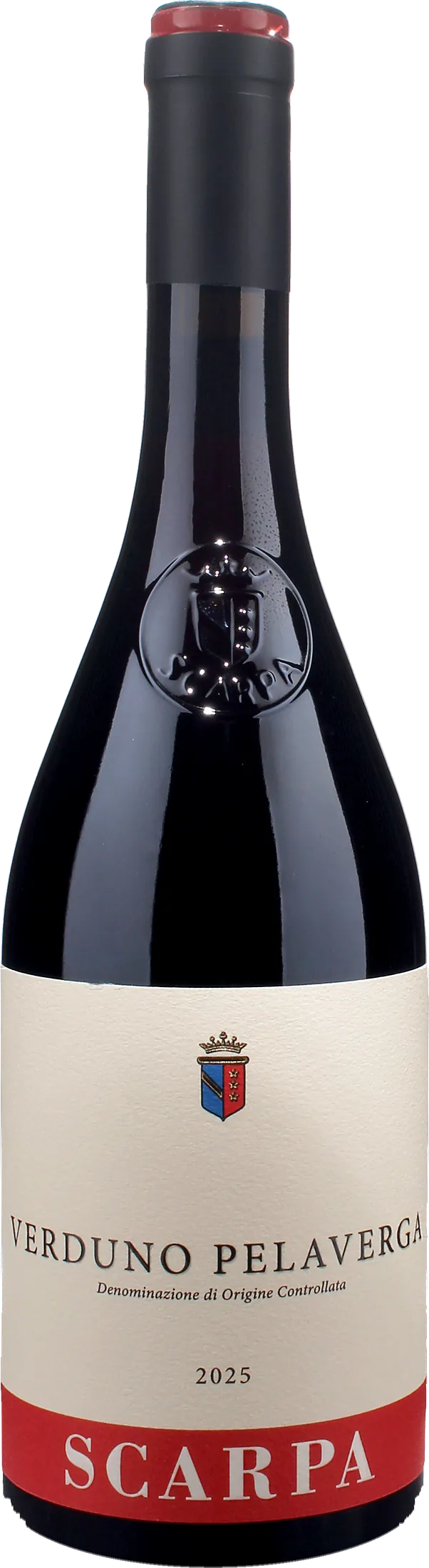
Verduno Pelaverga 2025
| Denomination | DOC Verduno Pelaverga |
|---|---|
| Size | 0,75 l |
| Alcohol content | 13.5% by volume |
| Area | Piedmont (Italy) |
| Grape varieties | 100% Pelaverga Piccolo di Verduno |
| Aging | At the end of the alcoholic fermentation, racking took place in stainless steel tanks until the completion of the malolactic fermentation, followed by ageing in steel for 6 months before being bottled. |
- Name and variety: Verduno red wine with controlled designation of origin from Piedmontese Pelaverga grapes
- Vinification in stainless steel: 10-day maceration with two manual pump-overs daily
- Aromatic profile: notes of red fruits, rose petals and distinct white pepper
- Taste and structure: fresh, refined, with delicate tannins and a spicy finish
- Pairings and service: ideal with cooked cured meats, mortadella, white meats and eel; decant for one hour
Description
What type of wine it is
The Verduno Pelaverga by Scarpa is a still red wine with a Protected Designation of Origin from Piedmont, expressing the authenticity of the Pelaverga grape variety vinified in steel. It presents a medium-intensity ruby colour and a fine olfactory profile, characterised by notes of red fruits, rose petals and a distinct touch of white pepper. On the palate, it is elegant, with a lively freshness, light tannins and a pleasantly spicy finish. Its agility makes it ideal for pairing with cooked cured meats, white meats and eel, while also guaranteeing an ageing potential of over five years.
Where it comes from
The grapes come from the municipality of Verduno, in the heart of the Verduno Pelaverga appellation, in Piedmont. The vineyard is situated at an altitude of approximately 350 metres, with an optimal south-east exposure that favours an harmonious ripening of the bunches. The vines grow on loose, light-coloured soils, predominantly composed of limestone and sand; these geological components translate in the glass into a marked expressive finesse and a very balanced tannic structure.
How it is produced
Harvested at the end of September, the grapes undergo maceration on the skins for ten days in stainless steel tanks, with two manual pump-overs daily to ensure a delicate extraction. Once malolactic fermentation is complete, the wine rests in the same containers. Careful ageing in steel for six months consolidates the typical aromatic freshness of the grape variety, outlining a dynamic and precise flavour profile before bottling.
History and Curiosities
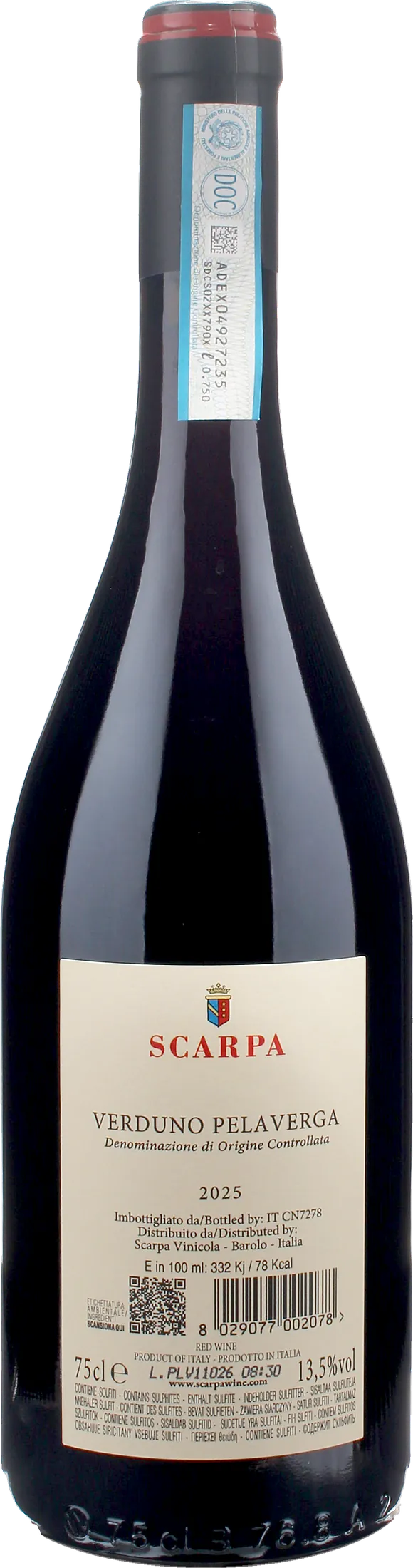
The Verduno Pelaverga 2025 from the Scarpa winery rests in an exclusive, bespoke amber Burgundy bottle, embellished with the company’s embossed logo, which celebrates its unmistakable style.
Tasting notes

Perfume

Color

Taste
Serve at:
14 -16 °C
Longevity:
05 - 10 years
Decanting time:
1 hour
- Start up year: 1854
- Oenologist: Silvio Trinchero, Gianfranco Cordero
- Bottles produced: 150.000
- Hectares: 32
From founder Antonio Scarpa to Mario Pesce, from Carlo Castino to Silvio Trinchero: style, elegance and longevity have never gone out of fashion. Because Scarpa «knows how to wait» and continues to write a story of greatness.
Our modern vision is simple: to expand our wine heritage to the most prestigious crus of Langhe and Monferrato and continue producing legendary labels. We believe that winemaking goes beyond the product: it is an emotion. That is why we decided to build the Scarpa Villas, offering an immersive experience among vineyards located in UNESCO World Heritage Sites: a place of luxury and relaxation, where the excellence of wine becomes beauty.
Today our goal is to invest in your emotions. Read more


| Name | Scarpa Verduno Pelaverga 2025 |
|---|---|
| Type | Red still |
| Denomination | Verduno Pelaverga DOC |
| Vintage | 2025 |
| Size | 0,75 l |
| Alcohol content | 13.5% by volume |
| Grape varieties | 100% Pelaverga Piccolo di Verduno |
| Country | Italy |
| Region | Piedmont |
| Vendor | Scarpa |
| Story | History and Curiosities The Verduno Pelaverga 2025 from the Scarpa winery rests in an exclusive, bespoke amber Burgundy bottle, embellished with the company’s embossed logo, which celebrates its unmistakable style. |
| Origin | Verduno |
| Climate | Altitude: 350 m above sea level; exposure: south-east. |
| Soil composition | Loose, light-coloured soils, rich in limestone and sand. |
| Yield per hectare | 90 quintals per hectare |
| Harvest | Late September |
| Fermentation | 10 days |
| Production technique | Maceration on the skins for 10 days in stainless steel tanks with manual pump-overs; ageing in stainless steel |
| Wine making | Maceration on the skins for 10 days in stainless steel tanks, with 2 manual pump-overs per day; after alcoholic fermentation, racking and remaining in steel until completion of malolactic fermentation, followed by ageing in steel for 6 months before bottling. |
| Aging | At the end of the alcoholic fermentation, racking took place in stainless steel tanks until the completion of the malolactic fermentation, followed by ageing in steel for 6 months before being bottled. |
| Total acidity | 5.1 gr/L |
| PH | 3.3 |
| Dry extract | 25.0 gr/L |
| Allergens | Contains sulphites |