


Planeta
Alastro Bio 2025
| Denomination | DOC Menfi Bianco |
|---|---|
| Size | 0,75 l |
| Alcohol content | 12.5% by volume |
| Area | Sicily (Italy) |
| Grape varieties | 80% Grecanico Dorato, 20% Sauvignon |
| Aging | Aged on fine lees for about 4 months in stainless steel tanks with bâtonnage (lees kept in suspension) |
- Organic Menfi DOC blend: 80% Grecanico Dorato, 20% Sauvignon Blanc
- Aromatic profile: notes of white peach, melon, citrus, citron and wild flowers
- On the palate: medium-bodied, creamy and silky texture, mineral freshness and a persistent finish
- Vinification in steel: fermentation at 15°C, aged for 4 months on fine lees with bâtonnage
- Recommended pairings: pasta with clams, seafood salads, vegetables and spicy Asian dishes
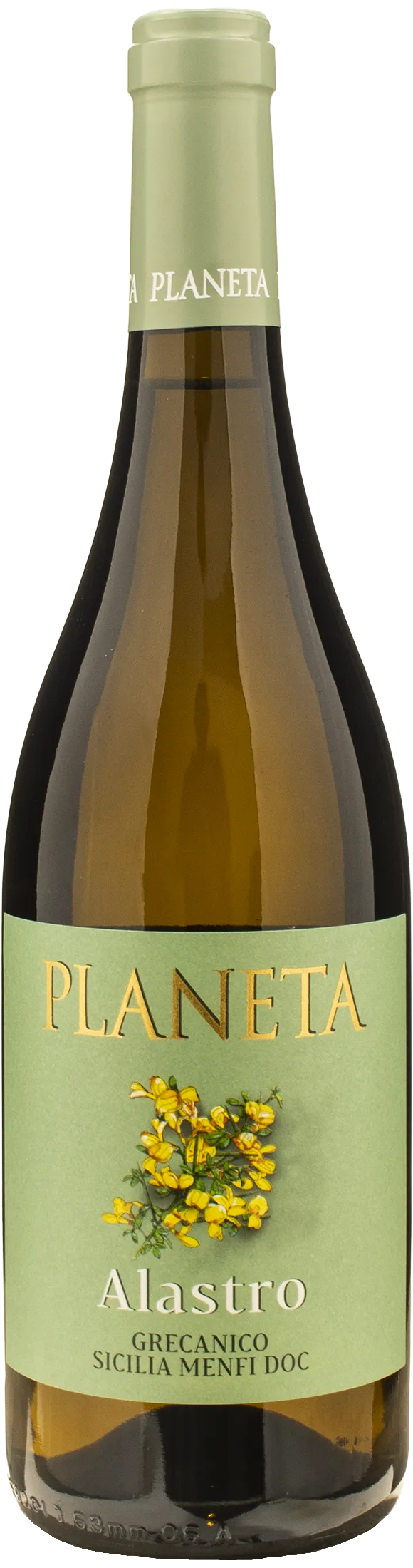
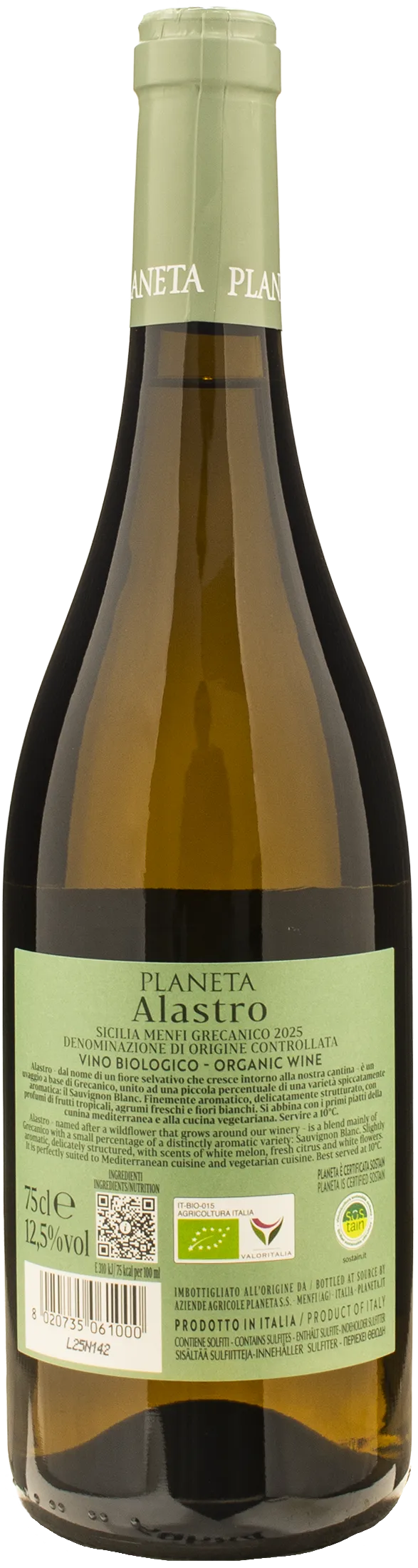
Description
What kind of wine it is
Alastro Bio by Planeta is an organic white wine made from a blend of Grecanico Dorato and Sauvignon Blanc. Produced in the Menfi area, it stands out for its clear aromatic profile. On the nose, it offers aromas of white peach, melon and citrus, enriched by notes of citron and wildflowers. On the palate, it reveals a medium body and a creamy texture, perfectly balanced by fresh acidity. The fruity nuances combine with a vibrant mineral component, finishing with a long, floral aftertaste, ideal for pairing with Asian cuisine.
Where it comes from
This Sicilian wine originates near Lake Arancio, in the territory of Sambuca di Sicilia. The vineyards, located at an altitude between two hundred and two hundred and fifty metres, benefit from ideal conditions to enhance aromatic precision. The soils have a deep medium texture, characterised by an abundance of pebbles and dark earth rich in organic matter, which give the glass a distinct savoury imprint. The name Alastro is a tribute to a wildflower that grows spontaneously in the surrounding valleys, celebrating the rich biodiversity of Menfi.
How it is produced
The grapes are harvested with careful attention to ripening times. After destemming and gentle pressing, the must settles at a low temperature. Fermentation in steel takes place at a controlled temperature to preserve the integrity of the varietal aromas. This is followed by ageing on fine lees for about four months, during which the bâtonnage technique is used to keep the yeasts in suspension. This process enriches the structure of the wine, giving volume and silkiness to the palate and enhancing the overall balance without sacrificing the natural freshness of the sip.
History and Curiosities
Alastro by Planeta takes its name from the wildflower that grows along the shores of Lake Arancio, paying tribute to Sicily's rich biodiversity. This elegant organic white wine from the Menfi DOC is born from the union of Grecanico and Sauvignon Blanc grapes, reflecting the winery's sustainable philosophy. Ageing on fine lees gives a vibrant and silky sip, where the fresh aromas of white peach and citrus blend in perfect gustatory harmony. An expression of mineral excellence, ideal for seafood and vegetarian cuisine.
Tasting notes
Perfume

Color

Taste
Serve at:
10 - 12 °C
Longevity:
03 - 05 years
- Start up year: 1995
- Oenologist: Alessio Planeta
- Bottles produced: 2.500.000
- Hectares: 371
Xtrawine offers a selection of Planeta wines awarded by AIS, representing high‑quality vintages such as 2016 and 2017. These wines showcase the richness of Sicilian terroirs through intense, harmonious aromas with fruity and floral notes, and a defined, balanced and deeply distinctive palate. Read more


| Name | Planeta Alastro 2025 |
|---|---|
| Type | White organic still |
| Denomination | Menfi DOC |
| Vintage | 2025 |
| Size | 0,75 l |
| Alcohol content | 12.5% by volume |
| Grape varieties | 80% Grecanico Dorato, 20% Sauvignon |
| Country | Italy |
| Region | Sicily |
| Vendor | Planeta |
| Story | History and Curiosities Alastro by Planeta takes its name from the wildflower that grows along the shores of Lake Arancio, paying tribute to Sicily's rich biodiversity. This elegant organic white wine from the Menfi DOC is born from the union of Grecanico and Sauvignon Blanc grapes, reflecting the winery's sustainable philosophy. Ageing on fine lees gives a vibrant and silky sip, where the fresh aromas of white peach and citrus blend in perfect gustatory harmony. An expression of mineral excellence, ideal for seafood and vegetarian cuisine. |
| Origin | Ulmo - Sambuca di Sicilia (Agrigento) |
| Soil composition | Medium-textured soil, moderately deep to deep with abundant coarse fragments consisting of pebbles, weakly calcareous and with fractions of dark soils rich in organic matter |
| Cultivation system | Spurred cordon |
| Plants per hectare | Grecanico: 3,800–4,500 plants/ha; Sauvignon Blanc: 3,800 plants/ha |
| Yield per hectare | Grecanico: 100 quintals/ha; Sauvignon Blanc: 75 quintals/ha |
| Harvest | Fine agosto, fine settembre |
| Fermentation temperature | 15 °C |
| Production technique | Fermentation at 15°C in stainless steel tanks; ageing on fine lees with bâtonnage |
| Wine making | After destemming and gentle pressing, the must settles at a low temperature and ferments at 15°C. |
| Aging | Aged on fine lees for about 4 months in stainless steel tanks with bâtonnage (lees kept in suspension) |
| Total acidity | 5.9 gr/L |
| PH | 3.41 |
| Allergens | Contains sulphites |