


Inama
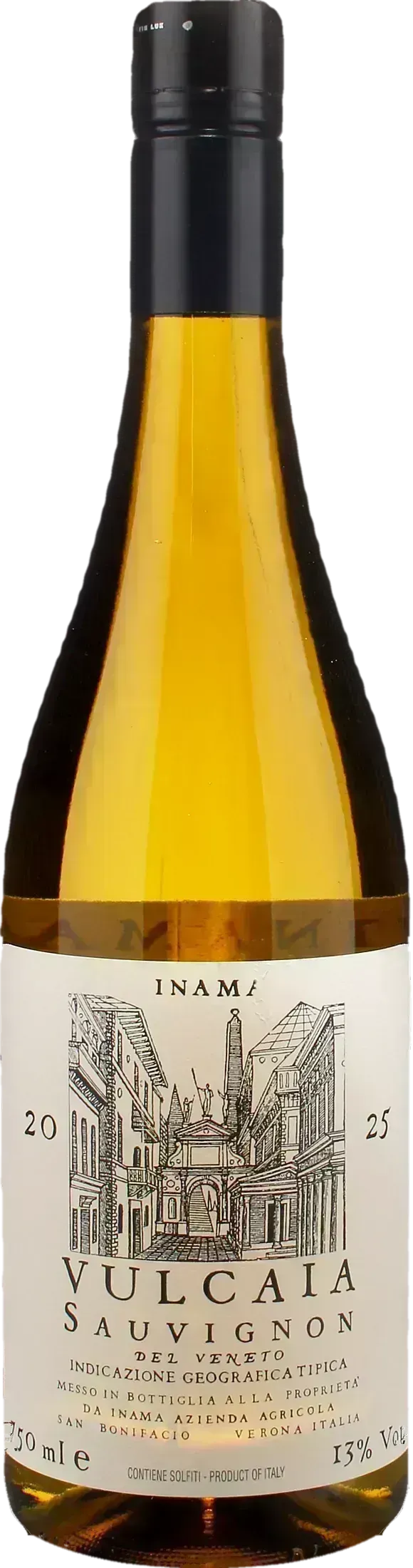
Sauvignon Vulcaia 2025
| Denomination | IGT Veneto |
|---|---|
| Size | 0,75 l |
| Alcohol content | 13.0% by volume |
| Area | Veneto (Italy) |
| Grape varieties | 100% Sauvignon |
| Aging | Ageing in stainless steel before bottling. |
- Grape variety and style: Still white wine from Sauvignon grapes, with no residual sugar
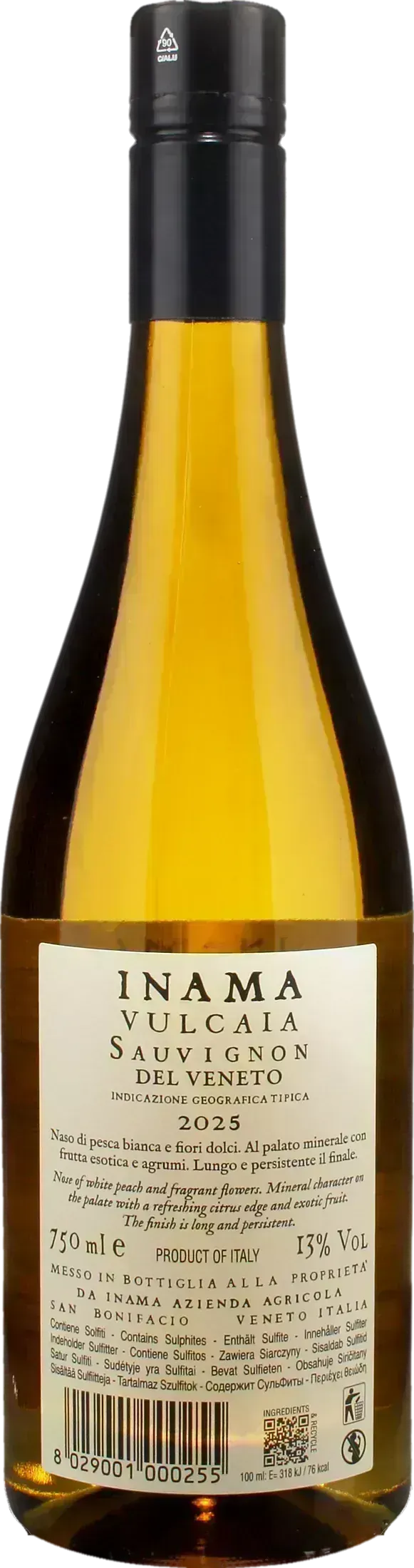
- Aromatic profile: Notes of grapefruit, pineapple, peach, elderflower and aromatic herbs
- On the palate: Enveloping freshness, savoury mineral structure and a long-lasting finish
- Territory: Vineyards on Mount Foscarino, on basalt and tuff soils
- Vinification in steel: Manual harvesting of grapes and temperature-controlled fermentation
Description
What type of wine it is
Inama's Vulcaia is a white wine that is an authentic expression of the Veneto region, produced entirely from Sauvignon grapes. This Indicazione Geografica Tipica wine stands out for its fresh and enveloping aromatic profile, capable of combining citrus notes with a distinct mineral character. On the nose, it offers clear hints of grapefruit, pineapple and peach, enriched by notes of elderflower and aromatic herbs. The palate proves well-structured and balanced, supported by light vegetal nuances and a long, clean finish, outlining a varietal profile of great technical precision.
Where it comes from
The grapes used for this wine come from the area between the municipalities of Monteforte d’Alpone and Soave, grown on the slopes of Mount Foscarino in Veneto. The vineyards are situated at an altitude ranging from 30 to 150 metres above sea level, benefiting from optimal south and south-west exposure. The vines take root in soils of volcanic origin, composed mainly of basalt and tuff, pedological characteristics that give the wine its evident savoury character. These unique territorial conditions allow the grapes to achieve perfect aromatic concentration during the ripening phase.
How it is produced
The production process begins with a careful manual harvest, followed by destemming and gentle pressing of the bunches. Subsequently, the crushed grapes undergo a brief skin maceration for a few hours to best extract the aromatic precursors of the grapes, followed by cold static decantation. Alcoholic fermentation takes place entirely in temperature-controlled stainless steel tanks, the same material used for the subsequent ageing period. A final light filtration precedes bottling, thus ensuring the organoleptic integrity of the product.
History and curiosities
Inama Sauvignon Vulcaia was created over twenty-five years ago on the slopes of Monte Foscarino, combining a famous French grape variety with ancient soils rich in basalt. This project valorises the history of the territory by creating a synergy between volcanic nature and international traditions. An element of great historical charm embellishes the bottle: the label reproduces a Renaissance perspective study by the well-known architect Sebastiano Serlio, a work of art taken faithfully from the famous sixteenth-century treatise entitled The Tragic Scene (La Scena Tragica) of 1545.
Tasting notes

Perfume

Color

Taste
Serve at:
12 - 14 °C
Longevity:
03 - 05 years
- Start up year: 1965
- Oenologist: Alessandro Sterchele
- Bottles produced: 700.000
- Hectares: 70


| Name | Inama Sauvignon Vulcaia 2025 |
|---|---|
| Type | White still |
| Denomination | Veneto IGT |
| Vintage | 2025 |
| Size | 0,75 l |
| Alcohol content | 13.0% by volume |
| Grape varieties | 100% Sauvignon |
| Country | Italy |
| Region | Veneto |
| Vendor | Inama |
| Story | History and curiosities Inama Sauvignon Vulcaia was created over twenty-five years ago on the slopes of Monte Foscarino, combining a famous French grape variety with ancient soils rich in basalt. This project valorises the history of the territory by creating a synergy between volcanic nature and international traditions. An element of great historical charm embellishes the bottle: the label reproduces a Renaissance perspective study by the well-known architect Sebastiano Serlio, a work of art taken faithfully from the famous sixteenth-century treatise entitled The Tragic Scene (La Scena Tragica) of 1545. |
| Origin | Monteforte d'Alpone and Soave (slopes of Mount Foscarino, province of Verona, Veneto, Italy) |
| Soil composition | Basalt and tuff of volcanic origin |
| Plants per hectare | 4,500 plants/ha |
| Yield per hectare | 60 hectolitres per hectare |
| Production technique | Manual harvesting; destemming; soft pressing; short skin maceration (1–3 hours); cold static settling of the must (12 hours); alcoholic fermentation in temperature-controlled stainless steel tanks; ageing in stainless steel; light final filtration before bottling. |
| Wine making | Manual harvesting; destemming; soft pressing; skin maceration for 1–3 hours; cold static settling of the must for 12 hours; alcoholic fermentation in temperature-controlled stainless steel tanks; ageing in stainless steel; light final filtration before bottling. |
| Aging | Ageing in stainless steel before bottling. |
| Allergens | Contains sulphites |