


Delouvin Nowack Champagne
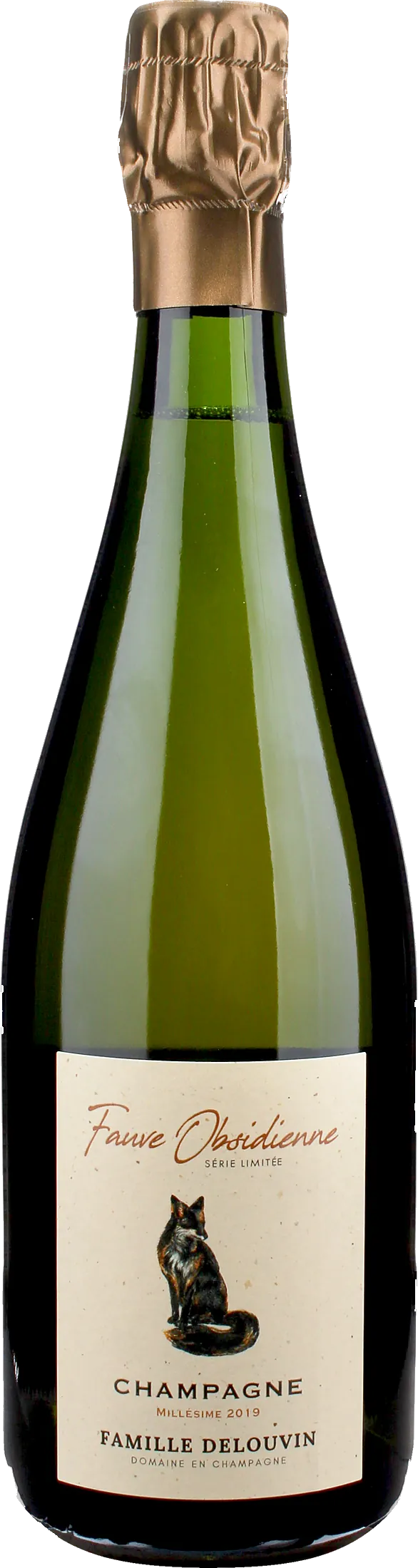
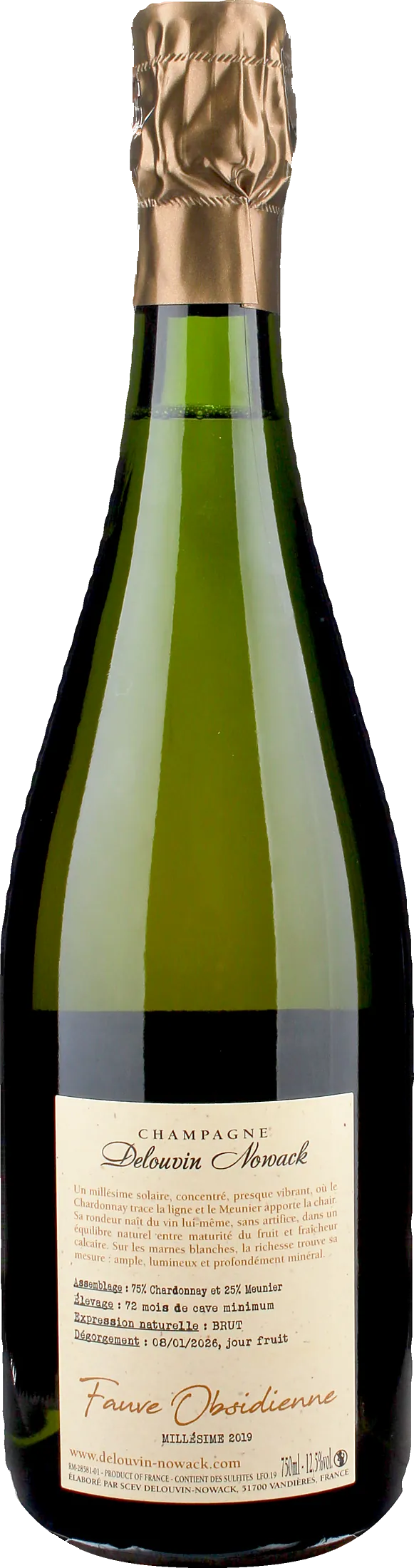
Champagne Fauve Brut 2019
| Denomination | AOC Champagne Brut |
|---|---|
| Size | 0,75 l |
| Alcohol content | 12.5% by volume |
| Area | Champagne region (France) |
| Grape varieties | 75% Chardonnay, 25% Pinot Meunier |
| Aging | Minimum ageing of 72 months on the lees |
- Type and grape varieties: Dry sparkling wine, zero dosage, from Chardonnay and Pinot Meunier, 2019 vintage
- Ageing: Secondary fermentation in the bottle using the Traditional Method and 72 months of maturation on the lees
- Aromas: notes of yuzu citrus and fresh apple, with refined pastry nuances on the nose
- Palate: precise and defined on the palate, with chalky minerality and a lively saline tension
- Origin and pairings: Vandières (Marne Valley), ideal with oysters, sushi, and scallops
Description
What type of wine it is
The Champagne Fauve Obsidienne Brut by Delouvin Nowack comes from a refined blend of Chardonnay and Pinot Meunier. Crafted strictly according to the Traditional Method, it is distinguished by its Pas Dosé profile, which offers a crystalline and direct palate. On the nose, it expresses clear notes of yuzu and fresh apple, enriched by delicate hints of pastry. On the palate, it reveals itself as linear, supported by a deep chalky minerality and a vibrant saline tension that extends the length of the finish, making it perfect for pairing with oysters and sushi.
Where it comes from
The grapes come from the south-facing slopes of Vandières, in the heart of the Vallée de la Marne, within the Champagne region. Here, Delouvin Nowack cultivates their vineyards following strict organic methods and sustainable practices, operating as an independent winemaker. The vines sink their roots into soils dominated by outcropping chalk, a fundamental geological composition that gives the wine its unmistakable mineral character and a pronounced savouriness.
How it is produced
The production process is based on the Traditional Method, with secondary fermentation in the bottle. The cuvée undergoes a long period of ageing on the lees of at least seventy-two months, which is essential for enriching the structure and developing a profound aromatic complexity. The choice to present the wine as a Brut Nature, with a total absence of dosage, aims to preserve the integrity and original freshness of the grapes. The result is a pure and dry glass, defined by a precise palate that enhances the savouriness in a remarkably clean finish.
History and curiosities
Champagne Fauve Obsidienne Brut 2019 is born from the mastery of the Delouvin Nowack family, independent winegrowers in Vandières. This exclusive limited edition combines Chardonnay and Pinot Meunier, grown using organic methods on soils characterised by outcropping chalk. The wine is aged for at least 72 months on the lees, developing a complexity that allows it to evolve beautifully in the cellar over the next 5-10 years.
Tasting notes
Perfume
Color
Taste
Serve at:
10 - 12 °C
Longevity:
05 - 10 years
- Bottles produced: 50.000
- Hectares: 6
The Delouvin, winemakers in these areas since the 1500s, have started marketing champagne since 1949; Mr Bertrand cultivates the 6 hectares of property (5 vines to Pinot Meunier and 1 to chardonnay for the vintage cuesée Extra Sélection) in a rigorous manner, personally carrying out all the operations of winemaking and analysis, to ensure the specificity of its champagne and the result they are very pleasant champagne, which meet the favor of many tasters thanks to the particularity of pure Pinot Meunier vinified in a simple way, without frills or excess. Read more


| Name | Delouvin Nowack Champagne Fauve Obsidienne Brut 2019 |
|---|---|
| Type | White green classic method sparkling wine brut |
| Denomination | Champagne AOC |
| Vintage | 2019 |
| Size | 0,75 l |
| Alcohol content | 12.5% by volume |
| Grape varieties | 75% Chardonnay, 25% Pinot Meunier |
| Country | France |
| Region | Champagne region |
| Vendor | Delouvin Nowack Champagne |
| Story | History and curiosities Champagne Fauve Obsidienne Brut 2019 is born from the mastery of the Delouvin Nowack family, independent winegrowers in Vandières. This exclusive limited edition combines Chardonnay and Pinot Meunier, grown using organic methods on soils characterised by outcropping chalk. The wine is aged for at least 72 months on the lees, developing a complexity that allows it to evolve beautifully in the cellar over the next 5 0 years. |
| Origin | Vandières, Marne Valley, Champagne, France |
| Soil composition | Outcropping gypsum |
| Fermentation | A minimum of 72 months on the lees |
| Production technique | Traditional classic method with second fermentation in the bottle |
| Wine making | Traditional method with second fermentation in the bottle; brut nature (zero dosage); minimum ageing of 72 months on the lees. |
| Aging | Minimum ageing of 72 months on the lees |
| Allergens | Contains sulphites |