


Castello dei Rampolla
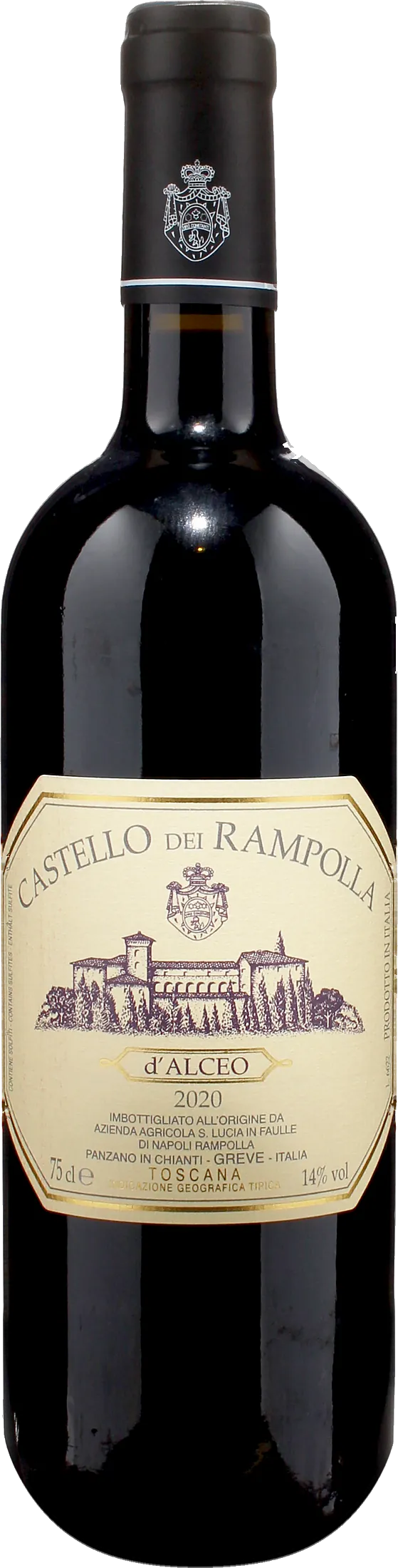
Vigna d'Alceo 2020
| Denomination | IGT Toscana |
|---|---|
| Size | 0,75 l |
| Alcohol content | 14.0% by volume |
| Area | Tuscany (Italy) |
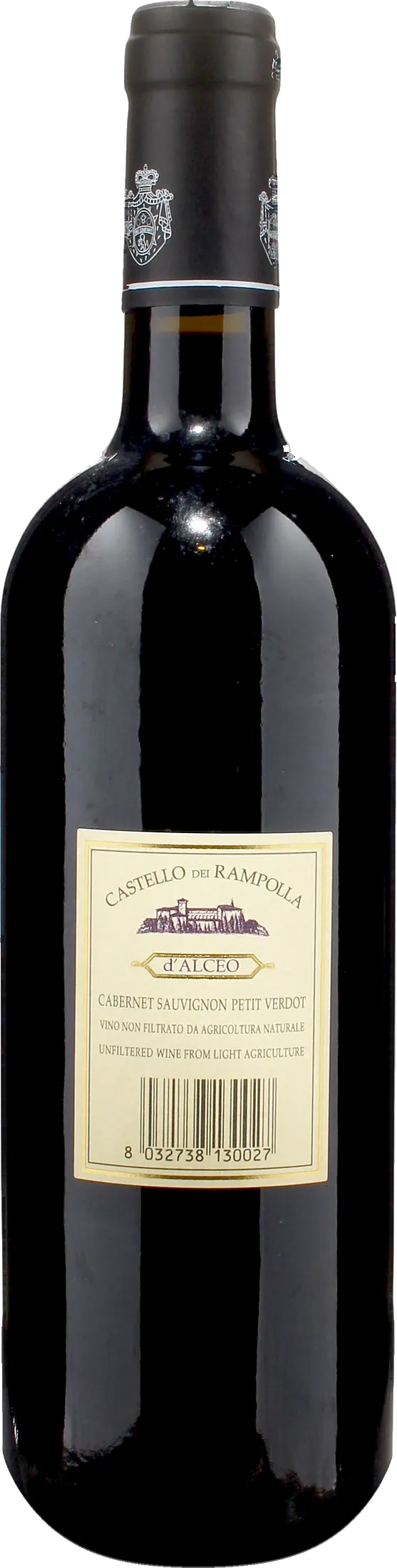
| Grape varieties | 85% Cabernet Sauvignon, 15% Petit Verdot |
| Aging | Aged in barriques for 20 months. |
- Appellation: 2020 Tuscany IGT still red wine, 14% alcohol content
- Composition and format: 85% Cabernet Sauvignon and 15% Petit Verdot; 0.75-litre bottle
- Aromatic profile: black fruits, forest floor, Mediterranean herbs, dark spices and mineral notes
- Palate: vertical structure, lively acidity, chalky tannins and almond aftertaste
- Winemaking: in concrete and barriques, ageing in wood (12-15 months), unfiltered
Description
What kind of wine it is
Vigna d’Alceo by Castello dei Rampolla is a Tuscan red with an intense and defined character, born from a blend of Cabernet Sauvignon and Petit Verdot. The olfactory profile opens with aromas of small black fruits, hints of undergrowth and notes of medicinal herbs, enriched by slight touches of tobacco and dark spices. On the palate, it shows a vertical and focused structure, supported by a vibrant acidity and fine, chalky tannins. The sip, austere and elegant, matured in oak barrels and unfiltered, closes with a remarkable persistence, leaving a distinct almond note.
Where it comes from
The viticultural origin lies in the famous Conca d’Oro of Panzano. The grapes come from a single terraced vineyard, located on calcareous and rocky soils that support the gustatory tension and the definition of the tannins. The agronomic management preserves the health of the soil by integrating cover crops and green manure to enrich the organic matrix. This targeted management yields a faithful expression of the Tuscan soil, maintaining the high concentration of fruit without ever making the sip feel heavy.
How it is produced
Production begins with a strictly manual harvest. The must undergoes an initial fermentation with maceration in concrete tanks, followed by fermentation processes in wood. Ageing takes place in oak barrels with toasting levels calibrated for each lot, bestowing breadth and structural balance. The wine is finally bottled without filtration to retain every aromatic and tactile nuance, completing its cycle with prolonged bottle ageing that ensures a long and complex evolution over time.
History and curiosities
Vigna d’Alceo was born in the renowned Conca d’Oro of Panzano, carrying forward the Di Napoli family tradition since 1964. This elegant red comes from a single terraced vineyard, embodying the ideal synthesis between the soil and the grape varieties chosen by Alceo. Produced from hand-harvested grapes without the use of chemical treatments and bottled without filtration, the wine ages for a long time in the bottle, guaranteeing great ageing potential.
Awards
-
2020
 97
97/100
James Suckling is an influential American wine critic and journalist who worked at Wine Spectator for 30 years. He left the magazine in 2010 to start his own website and guidebook (JamesSuckling.com). He specialises in Italian and Bordeaux wines.
-
2020
 97
97/100
The prestigious international wine guide from the renowned Robert Parker, the world's most experienced and trusted wine taster.
-
2020
 97
97/100
Vinous is the online guide from Antonio Galloni, one of the world's leading wine connoisseurs.
-
2020
 95
95/100
Wine spectator is the most influential wine guide on the internet.
Tasting notes

Perfume

Color

Taste
Serve at:
18 - 20 °C
Longevity:
15 - 25 years
Decanting time:
1 hour

- Start up year: 1965
- Oenologist: Luca di Napoli Rampolla
- Bottles produced: 80.000
- Hectares: 30


| Name | Castello dei Rampolla Vigna d'Alceo 2020 |
|---|---|
| Type | Red still |
| Denomination | Toscana IGT |
| Vintage | 2020 |
| Size | 0,75 l |
| Alcohol content | 14.0% by volume |
| Grape varieties | 85% Cabernet Sauvignon, 15% Petit Verdot |
| Country | Italy |
| Region | Tuscany |
| Vendor | Castello dei Rampolla |
| Story | History and curiosities Vigna d’Alceo was born in the renowned Conca d’Oro of Panzano, carrying forward the Di Napoli family tradition since 1964. This elegant red comes from a single terraced vineyard, embodying the ideal synthesis between the soil and the grape varieties chosen by Alceo. Produced from hand-harvested grapes without the use of chemical treatments and bottled without filtration, the wine ages for a long time in the bottle, guaranteeing great ageing potential. |
| Origin | Panzano (Florence) |
| Soil composition | Calcareous, rocky. |
| Cultivation system | Tablemount |
| Fermentation | 15–20 days |
| Production technique | Initial fermentation and/or maceration in concrete vats; alcoholic and malolactic fermentation in barriques; ageing in tonneaux and barriques, followed by an extended period in the bottle; unfiltered wine. |
| Wine making | Initial fermentation and/or early maceration in concrete tanks; subsequent ageing for 12–15 months in a combination of 500 L tonneaux and barriques (toasting ranging from none to medium depending on the batch), with 3 months spent in concrete prior to the wood. Alcoholic fermentation in barriques for 15–20 days for both Cabernet Sauvignon and Petit Verdot, followed by malolactic fermentation in barriques. Prolonged ageing in the bottle (typically 18–24 months) before release. |
| Aging | Aged in barriques for 20 months. |
| Allergens | Contains sulphites |