


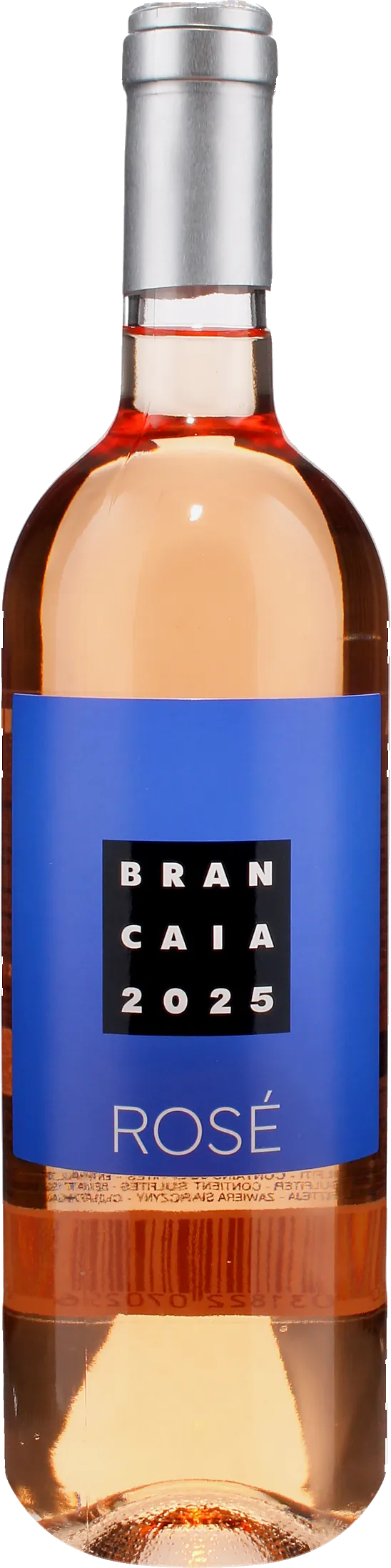
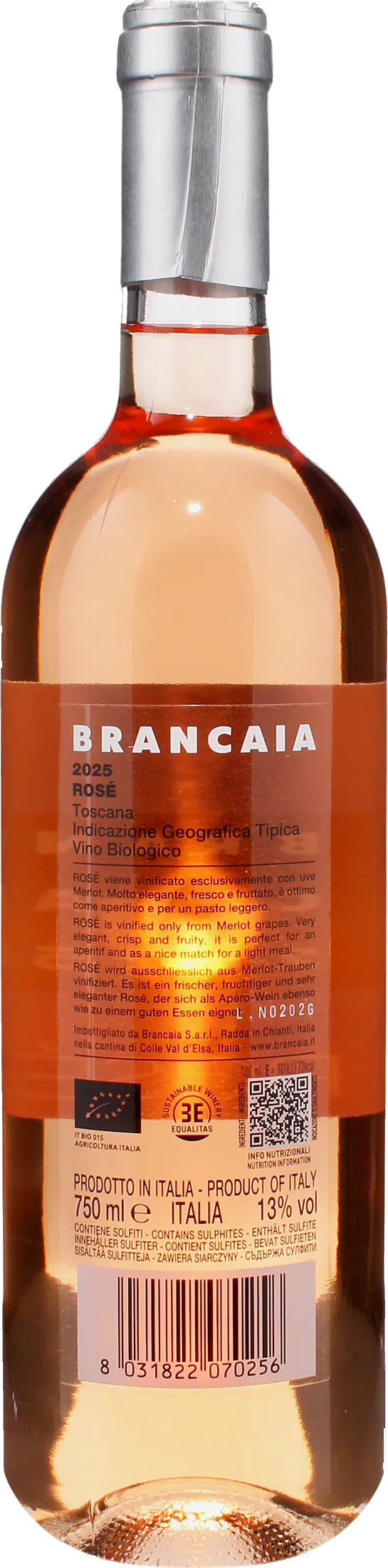
Brancaia
Rosé 2025
| Denomination | IGT Toscana |
|---|---|
| Size | 0,75 l |
| Alcohol content | 13.0% by volume |
| Area | Tuscany (Italy) |
| Grape varieties | 100% Merlot |
| Aging | Aged for 3 months on the fine lees in stainless steel, followed by several months of bottle ageing. |
- Type and grapes: Still and dry organic rosé wine from 100% Merlot (IGT Toscana)
- Aromas and flavour: Scents of wild strawberries and lilac, hints of pomegranate; fresh, mineral and lively taste
- Vinification in steel: Brief maceration on the skins and temperature-controlled fermentation
- Ageing on the lees: 3 months on fine lees in steel, then resting in the bottle
- Recommended pairings: Ideal as an aperitif, with shellfish, lean fish and white meats
Description
What kind of wine it is
Brancaia Rosé di Brancaia is a still and dry organic rosé wine that enhances Merlot grapes grown in Tuscany, with fermentation in stainless steel. Within the Toscana denomination, this label offers a light profile, supported by a distinct mineral character. On the nose, it releases clear scents of wild strawberries and lilac, combined with harmonious nuances of pomegranate, white peach, apple and lemon. On the palate, the good structure is paired with a subtle texture, ensuring a refreshing sip that finishes with great vivacity and precision.
Where it comes from
The grapes come from selected vineyards situated in the picturesque territory between Radda in Chianti and the Maremma. The vines enjoy excellent west and south-west exposure at a moderate altitude, on predominantly sandy soils enriched with silt and clay. The Mediterranean climate, with its marked diurnal temperature variations, promotes ideal aromatic ripening. A delicate sea breeze constantly caresses the bunches, preserving their natural vivacity and supporting Brancaia's agricultural management, oriented towards maximum respect for the environment.
How it is produced
The process begins with a very brief skin contact of the freshly pressed Merlot grapes, a necessary step to obtain the pale pink hue and preserve its gustatory agility. Fermentation takes place at a low temperature in stainless steel tanks, protecting the delicate primary aromas. The wine then evolves for three months on the fine lees in the same steel containers, gaining roundness and an enveloping texture. The journey ends with an adequate rest in the bottle, a fundamental phase to definitively harmonise the entire organoleptic profile.
History and curiosities
Founded in 1981 from the passion of the Widmer family, this rosé combines Swiss precision with Italian charm in a tribute to Tuscany. Under the guidance of Barbara Widmer and Carlo Ferrini, the project highlights the potential of 100% Merlot, organically grown between Radda in Chianti and the Maremma. The combination of sandy soils, rich in silt and clay, and the brisk sea breeze gives the wine an extraordinary vitality. This cultural encounter gives life to a masterpiece of balance and sustainability, establishing Brancaia as a symbol of authentic rigour.
Tasting notes

Perfume

Color
Taste
Serve at:
10 - 12 °C
Longevity:
03 - 05 years
- Start up year: 1981
- Oenologist: Barbara Widmer, Carlo Ferrini
- Bottles produced: 614.000
- Hectares: 90


| Name | Brancaia Rosè 2025 |
|---|---|
| Type | Rosé organic still |
| Denomination | Toscana IGT |
| Vintage | 2025 |
| Size | 0,75 l |
| Alcohol content | 13.0% by volume |
| Grape varieties | 100% Merlot |
| Country | Italy |
| Region | Tuscany |
| Vendor | Brancaia |
| Story | History and curiosities Founded in 1981 from the passion of the Widmer family, this rosé combines Swiss precision with Italian charm in a tribute to Tuscany. Under the guidance of Barbara Widmer and Carlo Ferrini, the project highlights the potential of 100% Merlot, organically grown between Radda in Chianti and the Maremma. The combination of sandy soils, rich in silt and clay, and the brisk sea breeze gives the wine an extraordinary vitality. This cultural encounter gives life to a masterpiece of balance and sustainability, establishing Brancaia as a symbol of authentic rigour. |
| Origin | Between Radda in Chianti and the Maremma (Tuscany) |
| Climate | Mediterranean climate with very hot summers, very mild winters, a significant diurnal temperature range and a light sea breeze |
| Soil composition | Predominantly sandy with silt and clay components |
| Fermentation temperature | At low temperature |
| Production technique | Vinification with very short skin contact and low-temperature fermentation in stainless steel, with ageing on the lees. |
| Wine making | Vinification of Merlot with very brief skin contact; the must ferments at a low temperature in stainless steel tanks; rested on the fine lees for three months in steel, followed by bottle ageing for several months. |
| Aging | Aged for 3 months on the fine lees in stainless steel, followed by several months of bottle ageing. |
| Allergens | Contains sulphites |