


Benanti
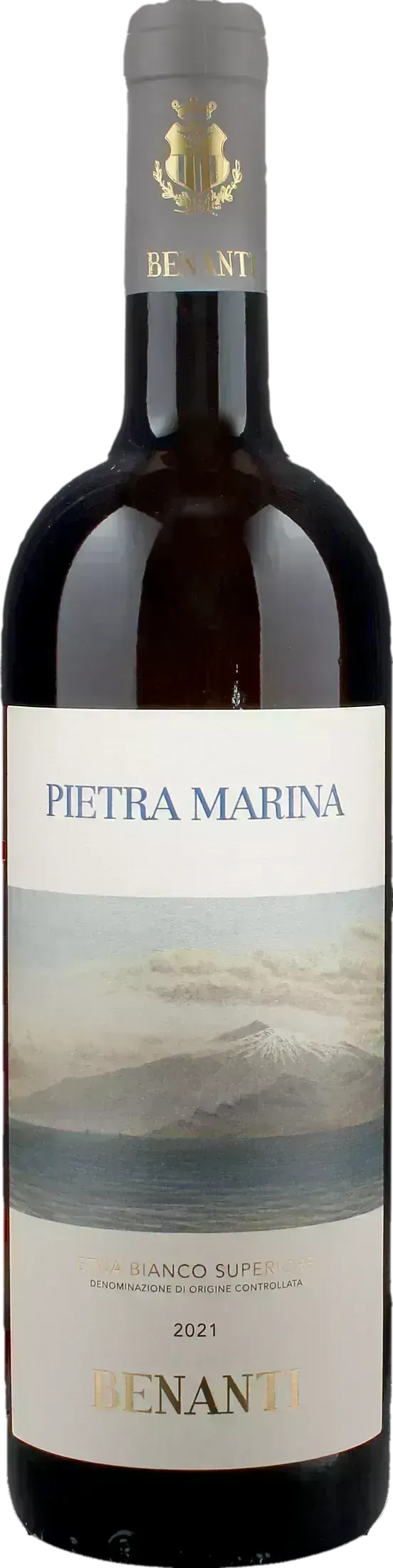
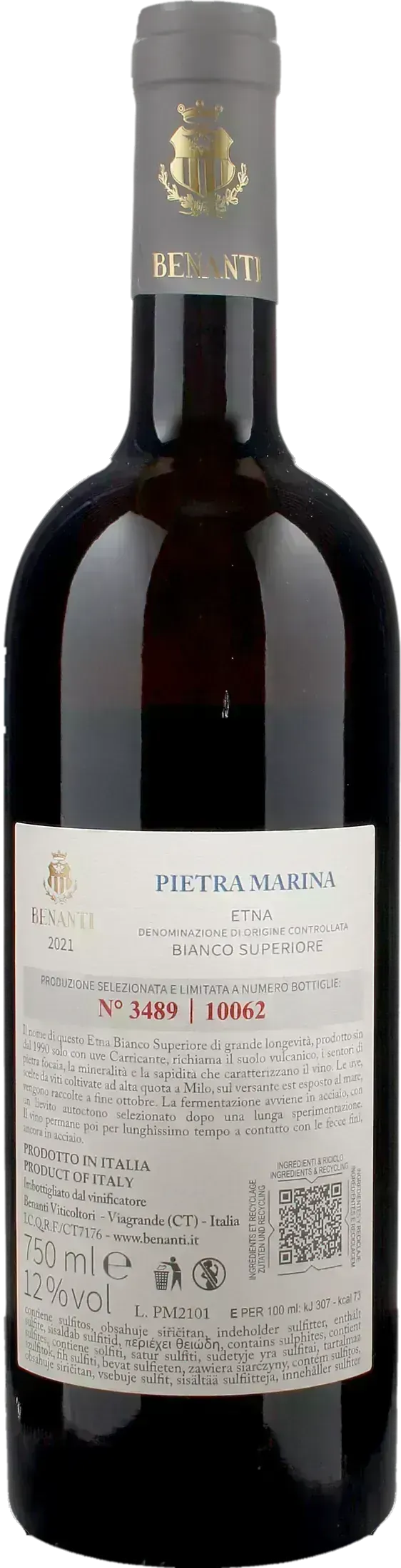
Etna Bianco Superiore Pietra Marina 2021
| Denomination | DOC Etna Bianco Superiore |
|---|---|
| Size | 0,75 l |
| Alcohol content | 12.0% by volume |
| Area | Sicily (Italy) |
| Grape varieties | 100% Carricante |
| Aging | Prolonged maturation in stainless steel on the fine lees for approximately 30 months with periodic bâtonnage, followed by bottle ageing for 12 months. |
- Type: Etna Superiore DOC white wine, 100% pure Carricante
- Aromas: Scents of orange blossom and ripe apple; lingering finish with notes of aniseed and almond
- Terroir: Over ninety-year-old bush vines on volcanic sands between 800 and 950 metres
- Winemaking: Fermentation and ageing in stainless steel for 30 months on the lees with bâtonnage
- Awards and pairings: 5 bunches (Bibenda); excellent with fresh fish dishes and seafood
Description
What type of wine it is
Pietra Marina by Benanti is a still white wine produced in Sicily, a pure expression of the native Carricante grape variety. Part of the Etna Bianco Superiore appellation, it is distinguished by a structured, complex and extremely elegant profile. On the palate, it offers a dry and harmonious sip, supported by a vibrant acidity that lengthens its persistence with refined notes of anise and almond. Careful processing exclusively in stainless steel tanks enhances the marked mineral tension and the freshness of the fruity and floral aromas, giving the wine exceptional ageing potential.
Where it comes from
The wine originates in Sicily, along the eastern slopes of the volcano, in the territories of Viagrande and Contrada Rinazzo in the municipality of Milo. The vineyards are located at an altitude of between eight hundred and nine hundred and fifty metres, where the mountain climate ensures strong ventilation and high temperature shifts, ideal for slow phenolic ripening. The historic alberello-trained vines, some over ninety years old, grow on sandy volcanic soils, rich in minerals and moderately acidic. These volcanic terraces, often surrounded by dry-stone walls, convey to the glass the deep mineral drive and the unmistakable identity of the Etna terroir.
How it is produced
Production begins with a late manual harvest, carried out towards the end of October. Once in the cellar, the grapes undergo de-stemming and soft whole-bunch pressing to gently extract the must. Fermentation takes place in temperature-controlled steel tanks, activated by selected indigenous yeasts. Maturation continues in steel for about thirty months in contact with the fine lees, thanks to periodic bâtonnage which expands the structure of the sip. Before reaching the market, the wine undergoes long bottle ageing for twelve months, thus reaching its definitive balance.
History and Facts
Born from the Benanti family's vision in 1988, this masterpiece embodies the true soul of the volcano. Its prestige takes shape through ancient roots, with exceptional vines over ninety years old grown on evocative terraces protected by dry-stone walls. Its formidable structure ensures priceless longevity, allowing the wine to age beautifully for well over a decade. This creation has won the famous Bibenda five bunches and the glorious Veronelli three gold stars, sublime symbols of excellence that defies ceaseless eternity.
Awards
-
2021
 95
/100
James Suckling is an influential American wine critic and journalist who worked at Wine Spectator for 30 years. He left the magazine in 2010 to start his own website and guidebook (JamesSuckling.com). He specialises in Italian and Bordeaux wines.
-
2021
 96
/100
Vinous is the online guide from Antonio Galloni, one of the world's leading wine connoisseurs.
Tasting notes

Perfume

Color

Taste
Serve at:
12 - 14 °C
Longevity:
10 - 15 years
- Start up year: 1988
- Oenologist: Enzo Calì
- Bottles produced: 250.000
- Hectares: 30
The Benanti family has been instrumental in Etna’s viticulture throughout history, contributing first hand to its evolution. Now managed by Giuseppe Benanti’s two sons, Antonio and Salvino Benanti, the winery has an annual production of about 250.000 bottles that are distributed throughout the most important markets worldwide. Read more


| Name | Benanti Etna Bianco Superiore Pietra Marina 2021 |
|---|---|
| Type | White green still |
| Denomination | Etna DOC |
| Vintage | 2021 |
| Size | 0,75 l |
| Alcohol content | 12.0% by volume |
| Grape varieties | 100% Carricante |
| Country | Italy |
| Region | Sicily |
| Vendor | Benanti |
| Story | History and Facts Born from the Benanti family's vision in 1988, this masterpiece embodies the true soul of the volcano. Its prestige takes shape through ancient roots, with exceptional vines over ninety years old grown on evocative terraces protected by dry-stone walls. Its formidable structure ensures priceless longevity, allowing the wine to age beautifully for well over a decade. This creation has won the famous Bibenda five bunches and the glorious Veronelli three gold stars, sublime symbols of excellence that defies ceaseless eternity. |
| Origin | Municipality of Viagrande (Catania), Sicily |
| Climate | Mountain climate, humid with frequent rainfall and snow during the cold season, high winds and significant temperature variations. |
| Soil composition | Sandy volcanic soil, rich in minerals, moderately acidic (pH 6.5) |
| Plants per hectare | 8,000–9,000 vines per hectare |
| Yield per hectare | Approximately 5,500 kg/ha |
| Harvest | End of October (late harvest, after mid-October) |
| Fermentation | About 12 days |
| Production technique | Late manual harvest; destemming and gentle pressing of the whole bunch; fermentation in stainless steel at a controlled temperature with indigenous yeasts; maturation in stainless steel on the fine lees with bâtonnage; bottle ageing. |
| Wine making | Late manual harvest (mid-to-late October). Destemming and soft pressing of the whole bunch; fermentation for approximately 12 days in temperature-controlled stainless steel tanks with selected indigenous yeast. Maturation in steel on the fine lees for approximately 30 months with periodic bâtonnage, followed by bottle ageing for 12 months. |
| Aging | Prolonged maturation in stainless steel on the fine lees for approximately 30 months with periodic bâtonnage, followed by bottle ageing for 12 months. |
| Allergens | Contains sulphites |