


Vietti
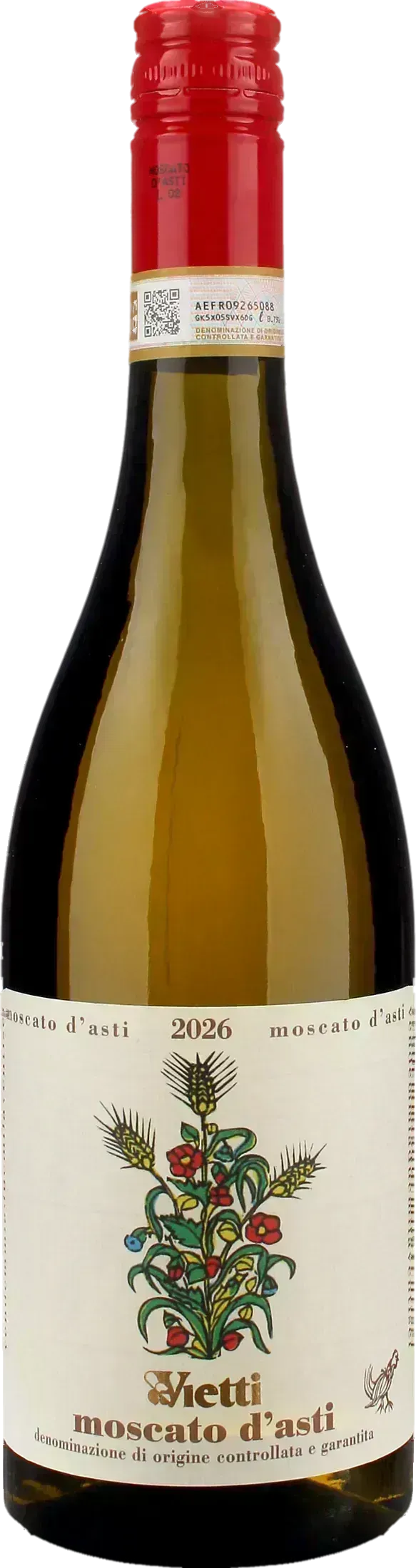
Moscato d'Asti 2026
| Denomination | DOCG Moscato d'Asti |
|---|---|
| Size | 0,75 l |
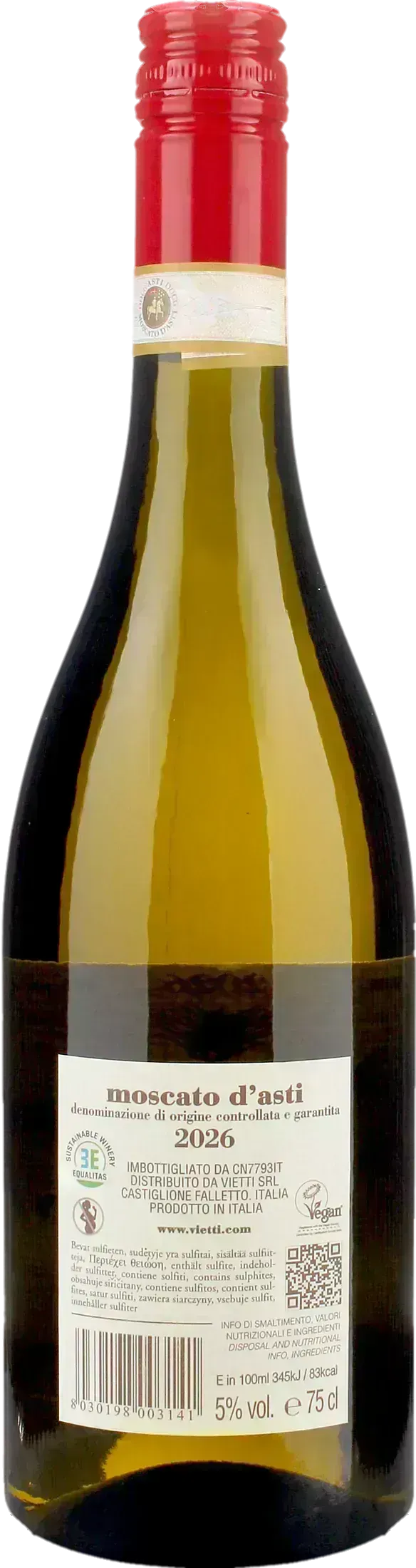
| Alcohol content | 5.0% by volume |
| Area | Piedmont (Italy) |
| Grape varieties | 100% Moscato Bianco/Moscato Reale |
| Aging | Moscato does not undergo malolactic fermentation and is bottled using sterile filtration, thus maintaining its natural freshness, aromatic character and fine bubbles. |
- Wine style: Sweet sparkling white DOCG, fine perlage, 5% alcohol
- Aromatic profile: Peach, apricot, rose, orange blossom and ginger
- On the palate: Sweetness balanced by a lively freshness; light, juicy and fruit-rich sip
- Origin: Castiglione Tinella, clay-limestone soils, 40-year-old vines
- Production: Manual harvesting, fermentation at 12-14°C, cold stopping, sterile filtration
Description
Style of wine
Vietti's Moscato d'Asti is a sweet, aromatic and semi-sparkling white wine from Piedmont, made exclusively from Moscato Bianco and produced using the Charmat Method. In the glass, it displays a bright straw-yellow colour, with a fine and soft perlage, revealing aromas of peach, apricot, rose, ginger and orange blossom. On the palate, it is light, with a balanced freshness and a long finish reminiscent of fresh apricot. It pairs harmoniously with citrus desserts, blue cheeses and Asian cuisine.
Origin
The wine comes from small plots located in Castiglione Tinella, in Piedmont, within the Moscato d'Asti zone. The vines, which reach an age of around 40 years, are trained using the Guyot system. The plants are rooted in soils characterised by a composition of calcareous clay.
Production method
The harvest is carried out manually between late August and early September, followed by gentle pressing and natural cold settling. The must is stored at a low temperature in stainless steel tanks. Partial fermentation takes place in pressure tanks using the Charmat Method and is interrupted by rapid cooling to preserve the grapes' natural sugars and develop effervescence. The wine does not undergo malolactic fermentation and is finally subjected to sterile filtration.
History and interesting facts
Founded in 1873, the Vietti winery combines tradition and innovation in the heart of Piedmont, representing a milestone of Italian winemaking excellence. The Vietti Moscato d'Asti DOCG is adorned with a beautiful artistic floral label, which bears witness to the attention to detail and the sophisticated aesthetics of the brand. Interestingly, it originates from historic vineyards over forty years old in Castiglione Tinella, a fascinating detail that, combined with the mastery of winemaker Eugenio Palumbo, tells the story of authentic Piedmontese excellence.
Tasting notes

Perlage

Perfume

Color

Taste
Serve at:
06 - 08 °C
Longevity:
03 - 05 years

- Start up year: 1873
- Oenologist: Eugenio Palumbo
- Bottles produced: 600.000
- Hectares: 80
We train our expertise and winemakers’ sensitivity, while looking after every detail. That’s the style that makes our winery stand out.
We have always opted for the most natural and artisanal processing techniques. This commitment stems from continuous observation, patient waiting, and from the respect for the natural cycle followed by our plants. We know every vineyard, observe each of them in their unique growing season, and respect them.
We respect our land, the techniques, and the ancient knowledge that, along with continuous training, make our wine unique. We take care of the work that we do, aligned with the values of respect, inclusivity, fairness, and social well-being.
This is part of our philosophy and approach because what makes our wine great is the complete respect towards our territory. While working, we aim to reduce the interventions on the vineyard, and we use natural resources with care and consideration. Read more


| Name | Vietti Moscato d'Asti 2026 |
|---|---|
| Type | White bubbly dessert wine aromatic |
| Denomination | Asti DOCG |
| Vintage | 2026 |
| Size | 0,75 l |
| Alcohol content | 5.0% by volume |
| Grape varieties | 100% Moscato Bianco/Moscato Reale |
| Country | Italy |
| Region | Piedmont |
| Vendor | Vietti |
| Story | History and interesting facts Founded in 1873, the Vietti winery combines tradition and innovation in the heart of Piedmont, representing a milestone of Italian winemaking excellence. The Vietti Moscato d'Asti DOCG is adorned with a beautiful artistic floral label, which bears witness to the attention to detail and the sophisticated aesthetics of the brand. Interestingly, it originates from historic vineyards over forty years old in Castiglione Tinella, a fascinating detail that, combined with the mastery of winemaker Eugenio Palumbo, tells the story of authentic Piedmontese excellence. |
| Origin | Castiglione Tinella, Piedmont |
| Soil composition | Calcareous clay |
| Cultivation system | Guyot |
| Plants per hectare | 4,500 |
| Harvest | Late August / early September |
| Fermentation temperature | 12–14°C |
| Production technique | Soft pressing and natural cold settling; partial fermentation in a stainless steel autoclave (Charmat method), stopped by rapid cooling; sterile filtration before bottling. |
| Wine making | Soft pressing of the grapes and natural cold settling. The must is stored at a very low temperature in stainless steel tanks to prevent spontaneous fermentation; throughout the year, portions of the must are fermented in pressure tanks at 12–14°C. Fermentation is halted by rapid cooling when it reaches approximately 5.5% abv; the partially fermented wine is then subjected to sterile filtration before bottling. It does not undergo malolactic fermentation. |
| Aging | Moscato does not undergo malolactic fermentation and is bottled using sterile filtration, thus maintaining its natural freshness, aromatic character and fine bubbles. |
| Allergens | Contains sulphites |