


Orlando Abrigo
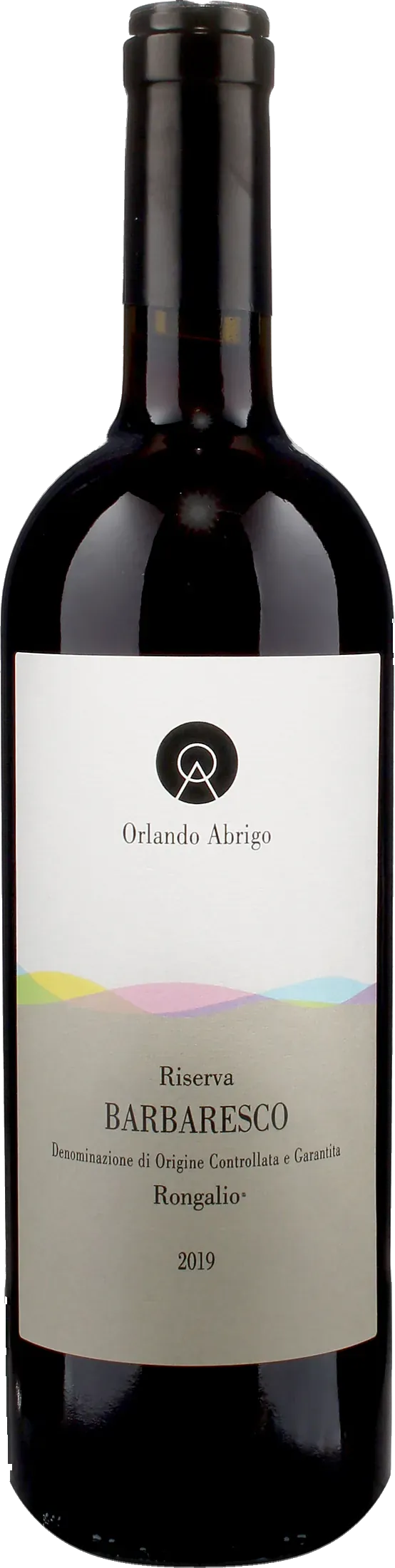
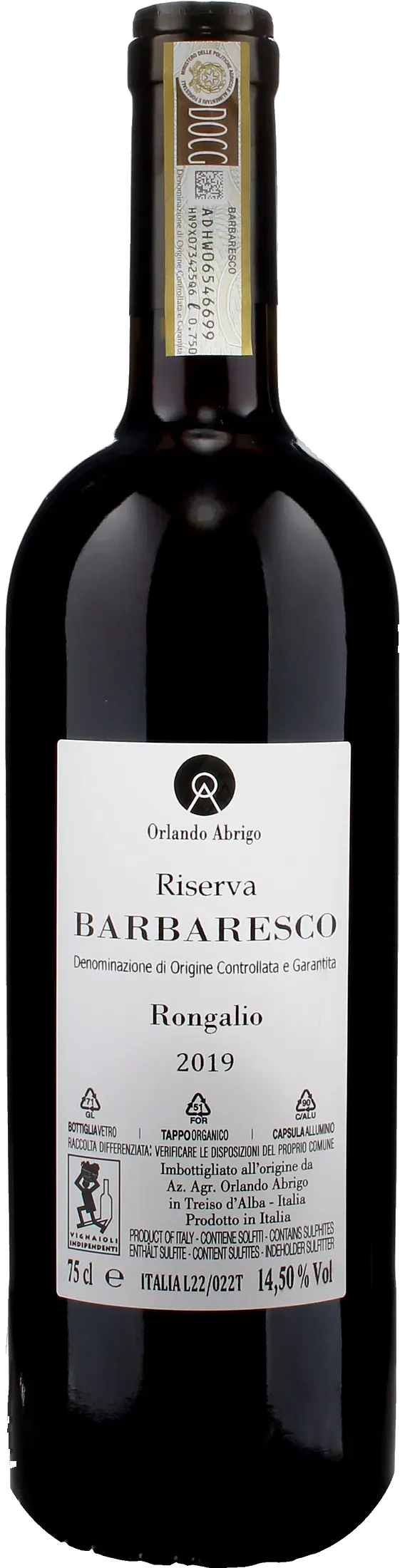
Barbaresco Riserva Rongalio 2019
| Denomination | DOCG Barbaresco Riserva |
|---|---|
| Size | 0,75 l |
| Alcohol content | 14.5% by volume |
| Area | Piedmont (Italy) |
| Grape varieties | 100% Nebbiolo |
| Aging | Maturation for 24 months in large casks, followed by at least 12 months of bottle ageing |
- Appellation and grape variety: Barbaresco Riserva DOCG from Nebbiolo Lampia grapes (2019)
- Origin: Meruzzano, Treiso; 300 metres above sea level, mineral-rich calcareous soils
- Vinification: separate batches, 20-25 days maceration and 40-45 days submerged cap
- Ageing: 24 months in large wooden casks, followed by at least 12 months of bottle ageing
- Profile and data: complex palate, pronounced tannins; 14.5% vol; production of 7,050 bottles
Description
What kind of wine it is
The Barbaresco Riserva Rongalio by Orlando Abrigo is a Piedmontese red wine with a Controlled and Guaranteed Designation of Origin (DOCG) made from Nebbiolo grapes. In the glass, it reveals a structured and elegant profile, characterised by a complex palate and a solid tannic texture. Careful winemaking involves soft pressing, temperature-controlled fermentation, and prolonged maceration. Subsequent maturation in wood and a long final resting period give life to a precise Barbaresco, capable of combining fruit integrity with a clear propensity for ageing.
Where it comes from
This wine originates from the Meruzzano geographical mention, within the historic Rongalio vineyard located in the municipality of Treiso. The rows follow the natural slopes of the hill at three hundred metres above sea level, benefiting from a valuable south-west exposure, which is crucial for the perfect ripening of the bunches. The medium-textured soil features a limestone matrix interspersed with veins of silt and clay. The presence of trace elements such as iron and zinc gives the wine an unmistakable territorial identity and a rigorous structure.
How it is made
Production is based on low yields obtained from old Guyot-trained vines. After soft pressing, the grapes are vinified in separate batches based on the specific portion of the vineyard. Most of the must undergoes temperature-controlled fermentative maceration, while a selected portion continues with a submerged-cap maceration of over forty days—a fundamental technique to maximise polyphenolic extraction. The wine then matures for twenty-four months in large casks, completing its evolution with a long ageing period that stabilises its evolutionary potential.
History and interesting facts
Born from the dedication of Giovanni Abrigo, Barbaresco Rongalio® comes to life in the prestigious Meruzzano Mention in Treiso. Produced only in the best vintages, it originates from historic vines located at an altitude of 300 metres with a perfect south-west exposure. To faithfully reflect the soul of the cru, the grapes from the two-hectare vineyard are vinified in three distinct batches. Having become a Riserva starting from the 2011 vintage and multi-award-winning by critics, this red wine offers an enveloping experience, enhanced by a limited run of 7,050 bottles in classic, Magnum and three-litre formats.
Awards
-
2019
 4
4Italian Sommelier Foundation (FIS) guide This has been one of the most prestigious wine guides in Italy for over 10 years.
-
2019
 2
2This guide is highly respected and offers the most comprehensive review of Italian wines. It has a long tradition and is based on blind tastings carried out by over 100 experts.
-
2019
 3
3Italian Sommelier Association (AIS) guide
Tasting notes

Color

Taste
Serve at:
18 - 20 °C
Longevity:
10 - 15 years
Decanting time:
1 hour
- Start up year: 1964
- Oenologist: Mario Ronco, Giovanni Abrigo
- Bottles produced: 100.000
- Hectares: 23


| Name | Orlando Abrigo Barbaresco Riserva Rongalio 2019 |
|---|---|
| Type | Red still |
| Denomination | Barbaresco DOCG |
| Vintage | 2019 |
| Size | 0,75 l |
| Alcohol content | 14.5% by volume |
| Grape varieties | 100% Nebbiolo |
| Country | Italy |
| Region | Piedmont |
| Vendor | Orlando Abrigo |
| Story | History and interesting facts Born from the dedication of Giovanni Abrigo, Barbaresco Rongalio® comes to life in the prestigious Meruzzano Mention in Treiso. Produced only in the best vintages, it originates from historic vines located at an altitude of 300 metres with a perfect south-west exposure. To faithfully reflect the soul of the cru, the grapes from the two-hectare vineyard are vinified in three distinct batches. Having become a Riserva starting from the 2011 vintage and multi-award-winning by critics, this red wine offers an enveloping experience, enhanced by a limited run of 7,050 bottles in classic, Magnum and three-litre formats. |
| Origin | Meruzzano Designation, Rongalio Vineyard, Treiso (Piedmont) |
| Soil composition | Medium-textured soil with a good limestone content, rich in micronutrients such as iron and zinc, with veins of silt and clay in some areas. |
| Cultivation system | Guyot system |
| Plants per hectare | Four thousand, five hundred |
| Yield per hectare | 50–60 quintals per hectare |
| Fermentation temperature | 28°C |
| Fermentation | Approximately 20–25 days (for 2/3 of the grapes) and 40–45 days (for the remaining part, with a submerged cap) |
| Production technique | Soft pressing; temperature-controlled maceration (28 °C); submerged-cap maceration |
| Wine making | Soft pressing; fermentation in separate batches; fermentative maceration for approximately 20–25 days at a controlled temperature of 28 °C for two-thirds of the grapes; submerged cap maceration for 40–45 days for the remainder; maturation for 24 months in large casks; ageing for at least 12 months in the bottle. |
| Aging | Maturation for 24 months in large casks, followed by at least 12 months of bottle ageing |
| Allergens | Contains sulphites |