

Joseph Drouhin
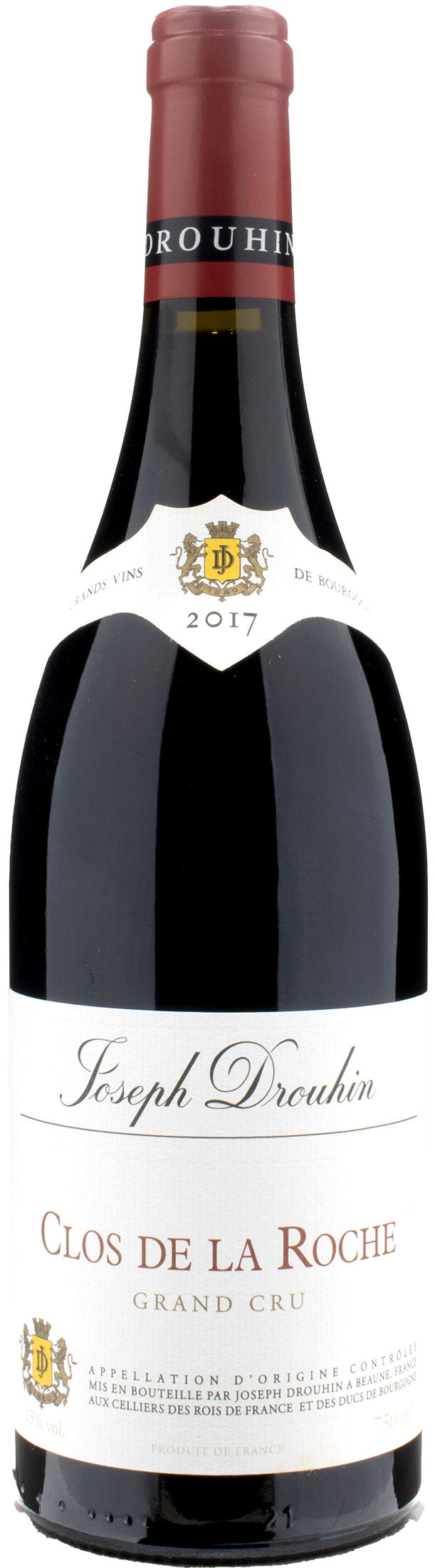
Clos de la Roche Grand Cru 2017
| Denomination | Clos de la Roche AOC |
|---|---|
| Size | 0,75 l |
| Alcohol content | 13.0% by volume |
| Area | Burgundy (France) |
| Grape varieties | 100% Pinot Nero |
| Aging | 14-18 months in barrels (20% new oak). |
| Year | 2017 |
| Biologic | Sì |
| Product name | Clos de la Roche Grand Cru 2017 |
| Color | Beautiful deep ruby red. |
| Perfume | Complex and reminiscent of sour cherries, with notes of musk and cigar. |
| Taste | Velvety tannins with a long aftertaste. Flavours of spices and candied fruit. |
| History | The geological strata of the Borgona are rich in outcrops of white chalk, which can sometimes be seen on the surface. This is perhaps the origin of the wine's name, or 'roche' indicates a Druidic domen from Celtic times. |
| Region | Burgundy |
| Country | France |
Description
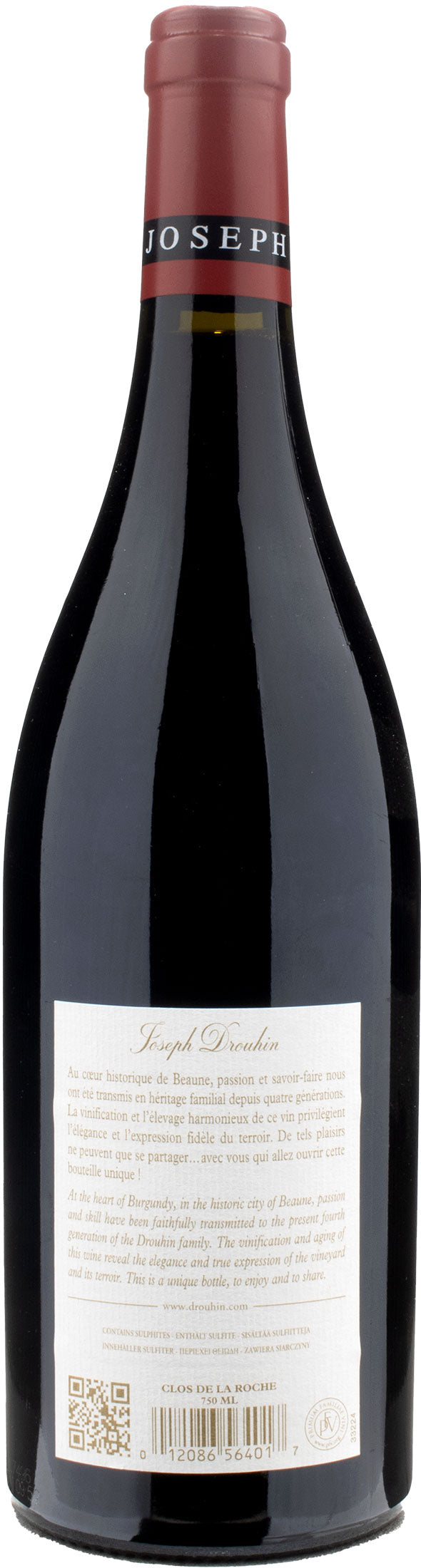
Still red from Burgundy, Clos de la Roche Grand Cru, 13% ABV, 100% Pinot Noir, 2017 vintage, produced by Joseph Drouhin. A complex wine reminiscent of black cherries, with notes of musk and cigar. A Grand Cru that expresses the excellence of the Burgundian terroir, with velvety tannins and a long finish, with flavors of spice and candied fruit.
Details

Perfume

Color
Taste
Serve at:
18 - 20 °C.
Longevity:
Over 25 years
Decanting time:
1 hour
Pairings
- Start up year: 1880
- Hectares: 73
His son Maurice succeeded him and began to establish a vineyard domaine for the House, purchasing land in some outstanding appellations such as Clos des Mouches and Clos de Vougeot.
Robert Drouhin, who succeeded Maurice in 1957, gave the domaine its present dimension, acquiring many vineyards, especially in Chablis where he was able to recognize the true potential. He was one of the first in Burgundy to introduce "culture raisonnée" (doing away with pesticides and other chemicals) and to build a laboratory of enology run by Laurence Jobard, the very first woman enologist in Burgundy.
Philippe, Véronique, Laurent and Frédéric are Robert and Françoise Drouhin's four children. They uphold the values of the House and its constant quest for quality, for the pleasure of all those who have a deep appreciation for the natural elegance of Burgundy. Read more
| Name | Joseph Drouhin Clos de la Roche Grand Cru 2017 |
|---|---|
| Type | Red green still |
| Denomination | Clos de la Roche AOC |
| Vintage | 2017 |
| Size | 0,75 l |
| Alcohol content | 13.0% by volume |
| Grape varieties | 100% Pinot Nero |
| Country | France |
| Region | Burgundy |
| Vendor | Joseph Drouhin |
| Story | The geological strata of the Borgona are rich in outcrops of white chalk, which can sometimes be seen on the surface. This is perhaps the origin of the wine's name, or 'roche' indicates a Druidic domen from Celtic times. |
| Origin | Beaune (France) |
| Soil composition | Rocky soil, with outcrops of white chalk. |
| Cultivation system | Guyot |
| Yield per hectare | 35 h/Ha |
| Wine making | Maceration and vinification lasts 2-3 weeks on indigenous yeasts. |
| Aging | 14 8 months in barrels (20% new oak). |
| Allergens | Contains sulphites |