

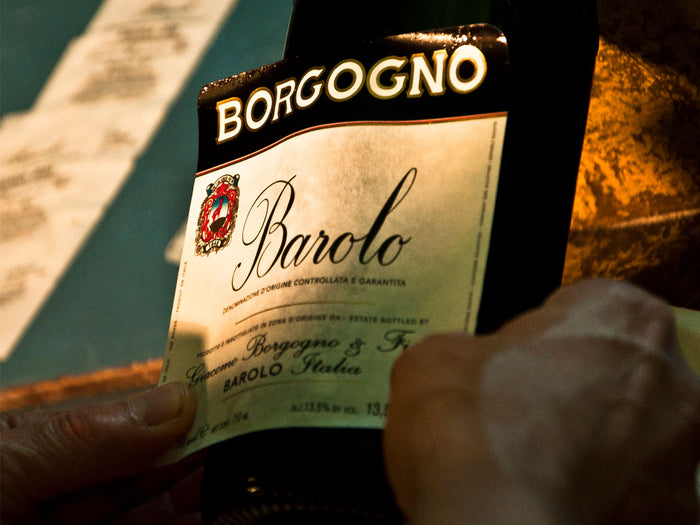
Giacomo Borgogno e Figli
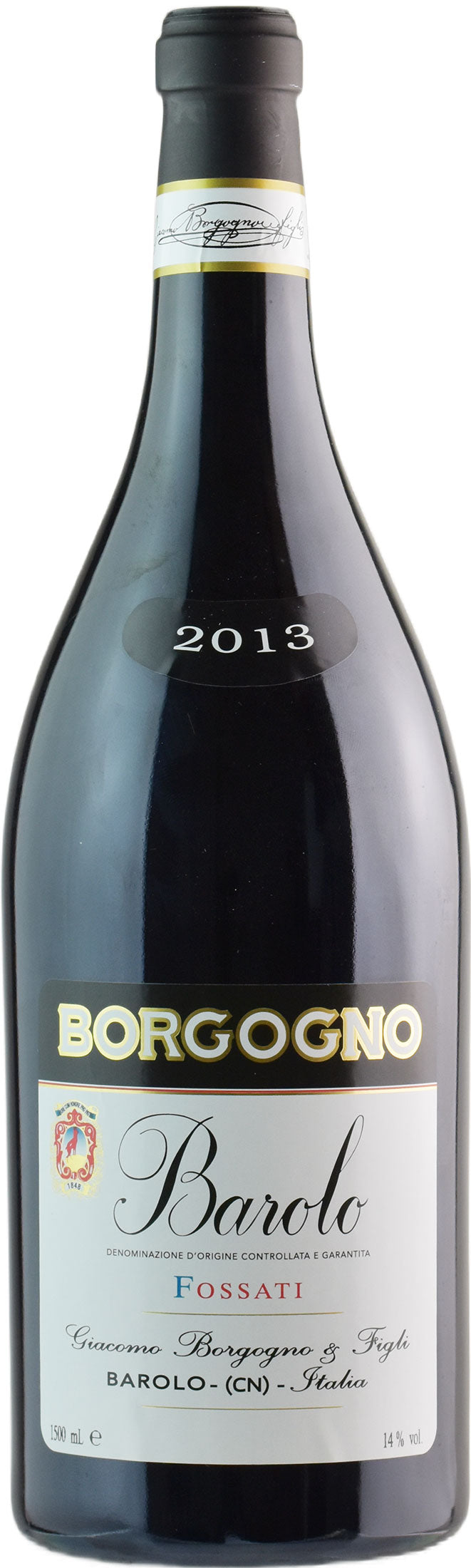
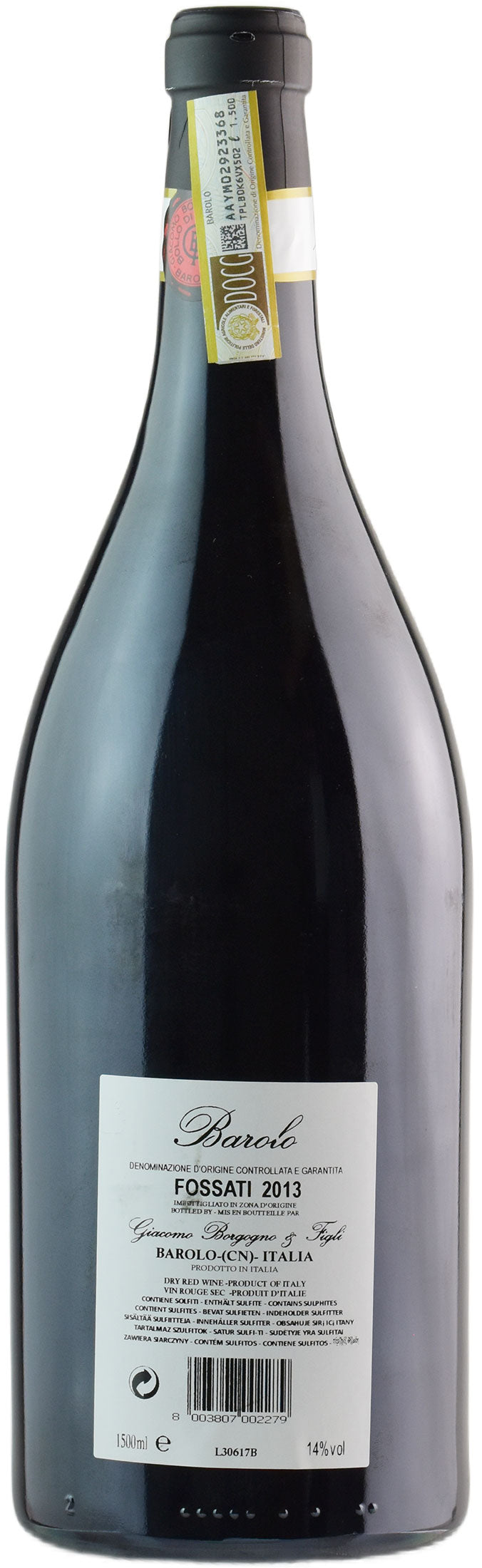
Barolo Fossati Magnum 2013
Other years:
2016| Denomination | Barolo DOCG |
|---|---|
| Size | 1,50 l |
| Alcohol content | 14.0% by volume |
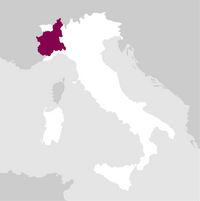
| Area | Piedmont (Italy) |
| Grape varieties | 100% Nebbiolo |
| Aging | The wine then goes into 4500 L Slavonian oak barrels to mature for 4 years, followed by a further 6 months of bottle ageing. |
| Year | 2013 |
| Product name | Barolo Fossati Magnum 2013 |
| Color | Ruby red turning to garnet. |
| Perfume | Empyreumatic hints distinguish the opening of a rich and complex olfactory range. Followed by notes of jammy cherry, carcadè, mint tea, star anise. |
| Taste | Silky and pulpy on the palate, it displays a fruity crispness supported by freshness and a well-woven texture. Tannins still evolving. Balsamic finish. Persistent. Authoritative. |
| Region | Piedmont |
| Country | Italy |
| Other years | 2016 |
Description
It comes from our youngest vineyard, the one that has been giving Barolo di Borgogno its floral and fruity aromas since 2008: FOSSATI, in the commune of Barolo. It grows for at least 4 years in the smallest barrels (so to speak!) that are able to enhance the typicality of the Nebbiolo da Barolo grape. It means an elegant, perfumed, balanced, soft and round wine that makes you realise how different our land can be.
Awards
-
2013
 94
94/100
Decanter is a wine and lifestyle magazine, published monthly in around 90 countries. The magazine includes industry news, classic guides and advice on wine and spirits.
-
2013
 93
93/100
James Suckling is an influential American wine critic and journalist who worked at Wine Spectator for 30 years. He left the magazine in 2010 to start his own website and guidebook (JamesSuckling.com). He specialises in Italian and Bordeaux wines.
-
2013
 90
90/100
The prestigious international wine guide from the renowned Robert Parker, the world's most experienced and trusted wine taster.
-
2013
 95
95/100
Wine spectator is the most influential wine guide on the internet.
Details

Perfume

Color

Taste
Serve at:
18 - 20 °C.
Longevity:
Over 25 years
Decanting time:
2 hours
Pairings
- Start up year: 1761
- Oenologist: Simone Borsari
- Bottles produced: 250.000
- Hectares: 40
The winery has some interesting records: in 1861, Barolo Borgogno sealed the pact for the birth of Italian unity, and in 1908, it was served to the Tsar of all Russia during a visit to Racconigi.
The turning point came in 1920, when Cesare Borgogno began exporting abroad. However his greatest insight came when he decided to "forget" half of the production of Barolo Riserva in order to sell it 20 years later, realising the great versatility and power of Nebbiolo.
Borgogno is synonymous with slowness: the winery chooses to take its time understanding things and doing them correctly. The vineyards are cared for and attended to with only organic products.
This has resulted in the winery to gain their first Biological harvest.
The decision to plant forest on eight of their 39 hectars is to protect the biodiversity of the Langa fauna from being decimated by the cultivation of vineyards.
Borgogno has a sense of history, tradition, and roots that blend with the innovation of the changing times. Read more

| Name | Giacomo Borgogno Barolo Fossati Magnum 2013 |
|---|---|
| Type | Red still |
| Denomination | Barolo DOCG |
| Vintage | 2013 |
| Size | 1,50 l |
| Alcohol content | 14.0% by volume |
| Grape varieties | 100% Nebbiolo |
| Country | Italy |
| Region | Piedmont |
| Vendor | Giacomo Borgogno e Figli |
| Origin | Barolo (CN) |
| Climate | Altitude: 290-500 m. a.s.l. Exposure: South-East. |
| Soil composition | Calcareous clayey marls, slightly sandy. |
| Cultivation system | Modified Guyot (Headband). |
| Plants per hectare | 4000 |
| Harvest | First ten days of October. |
| Fermentation | Approx. 12 days. |
| Wine making | Natural fermentation without added yeasts in cement vats for about 12 days at temperatures from 22 °C to 29 °C, followed by submerged cap maceration for at least 40 days at a temperature of 29 °C. Following racking, malolactic fermentation is initiated, about 15 days at a constant temperature of 22 °C.days. |
| Aging | The wine then goes into 4500 L Slavonian oak barrels to mature for 4 years, followed by a further 6 months of bottle ageing. |
| Allergens | Contains sulphites |