


Castello di Ama
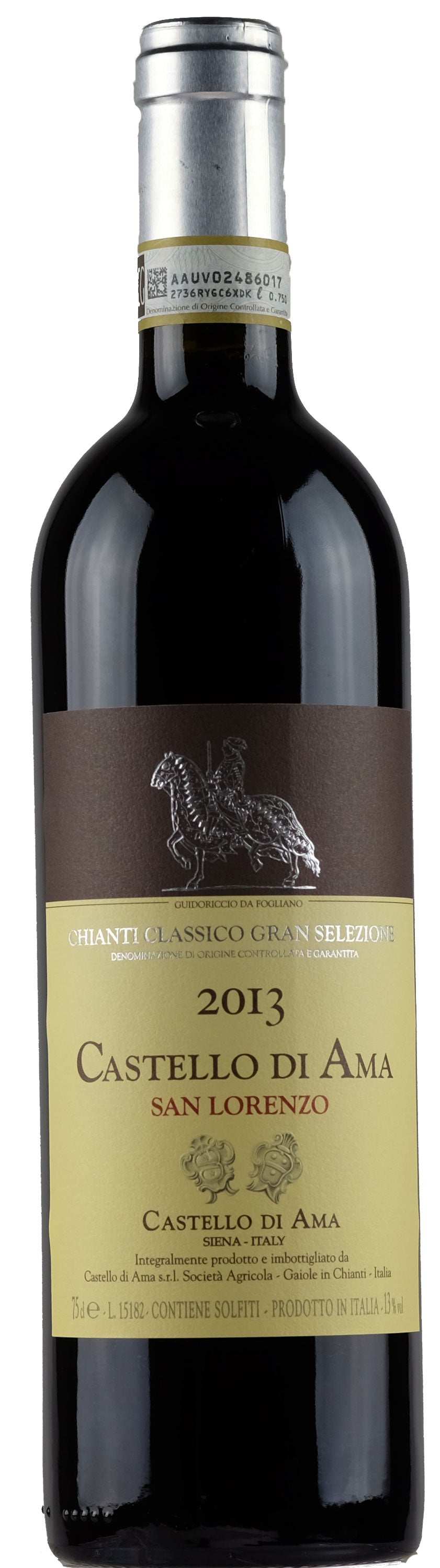
Chianti Classico Gran Selezione San Lorenzo 2013
| Denomination | DOCG Chianti Classico Gran Selezione |
|---|---|
| Size | 0,75 l |
| Alcohol content | 13.0% by volume |
| Area | Tuscany (Italy) |
| Grape varieties | 80% Sangiovese, 10% Malvasia Nera, 10% Merlot |
| Aging | After blending, the wine is aged entirely in barriques (20% new and 80% used) for about 12 months. |
| Other years | 2015 , 2018 , 2020 , 2022 |
- Name and vintage: Chianti Classico Gran Selezione DOCG, 2013 harvest
- Grape composition: Sangiovese 80%, Merlot 13%, Malvasia Nera 7% for balance and structure
- Vinification: fermentation in steel with indigenous yeasts, maceration for 21-23 days at 30-32 °C
- Ageing: 12 months in barriques (20% new, 80% used) after malolactic fermentation in wood
- Tasting and serving: notes of red fruits and tobacco; decant for 1 hour and serve at 18–20 °C

Description
What kind of wine it is
Chianti Classico Gran Selezione San Lorenzo represents a profound and defined expression of the territory, signed by Castello di Ama. This red wine is born from a balanced blend of Sangiovese, Merlot and Malvasia Nera, varieties vinified separately to preserve their aromatic integrity. The sensory profile reveals a bright entry, with clear notes of small red fruits, plum and jam, intertwined with hints of cinnamon, tobacco and leather. On the palate it is rich and rounded, supported by velvety tannins and a pleasant spicy vein. The sip finishes with a long persistence, outlining a structured and harmonious character.
Where it comes from
The grapes come from estate-owned vineyards located in the San Lorenzo valley, in the heart of the Ama area. The rows rest on clay-limestone soils of medium texture, a matrix that ensures optimal drainage. The east and south-east exposure guarantees ideal sunlight, while the strong temperature variations between day and night favour complete phenolic development. These microclimatic conditions allow for optimal ripening, giving the wine high aromatic intensity and clear gustatory precision.
How it is produced
The manual harvest takes place between the end of September and the beginning of October. The grapes ferment spontaneously thanks to the action of indigenous yeasts in stainless steel tanks, with macerations lasting over twenty days managed through constant pumping over for optimal extraction of colour and structure. Once malolactic fermentation in wood is complete, the different bases are blended to create the final blend. Ageing continues in oak barrels for about twelve months, an essential phase to soften the tannic texture and enrich the structural complexity of the wine.
History and Curiosities
The renowned San Lorenzo wine takes its name from the evocative Tuscan valley where it originates, framed by eighteenth-century villas and the small church of the same name, acquired by the Castello di Ama. Crafted by oenologist Marco Pallanti in accordance with strict regulations, this Gran Selezione DOCG is produced exclusively from estate-grown grapes and matures for thirty months before release. The 2013 vintage represents the absolute pinnacle of this terroir, an extraordinary qualitative achievement sealed by the prestigious 95 points awarded by both James Suckling and Robert Parker.
Awards
-
2013
 3
3This guide is highly respected and offers the most comprehensive review of Italian wines. It has a long tradition and is based on blind tastings carried out by over 100 experts.
-
2013
 95
95/100
James Suckling is an influential American wine critic and journalist who worked at Wine Spectator for 30 years. He left the magazine in 2010 to start his own website and guidebook (JamesSuckling.com). He specialises in Italian and Bordeaux wines.
Tasting notes

Perfume

Color

Taste
Serve at:
18 - 20 °C
Longevity:
10 - 15 years
Decanting time:
1 hour
- Start up year: 1976
- Oenologist: Marco Pallanti
- Bottles produced: 320.000
- Hectares: 75
To date, Castello di Ama owns and manages about 75 hectares of vineyards and 40 hectares of olive groves, relying on the work of more than 60 people. The role of general manager and oenologist is held continuously by Marco Pallanti, who served, between 2006 and 2012, as President of the Chianti Classico Consortium, bringing the contribution of the creation of the 'Gran Selezione' category with the aim of highlighting the extraordinary quality and diversity of the region's wines. Read more


| Name | Castello di Ama Chianti Classico Gran Selezione San Lorenzo 2013 |
|---|---|
| Type | Red still |
| Denomination | Chianti Classico DOCG |
| Vintage | 2013 |
| Size | 0,75 l |
| Alcohol content | 13.0% by volume |
| Grape varieties | 80% Sangiovese, 10% Malvasia Nera, 10% Merlot |
| Country | Italy |
| Region | Tuscany |
| Vendor | Castello di Ama |
| Story | History and Curiosities The renowned San Lorenzo wine takes its name from the evocative Tuscan valley where it originates, framed by eighteenth-century villas and the small church of the same name, acquired by the Castello di Ama. Crafted by oenologist Marco Pallanti in accordance with strict regulations, this Gran Selezione DOCG is produced exclusively from estate-grown grapes and matures for thirty months before release. The 2013 vintage represents the absolute pinnacle of this terroir, an extraordinary qualitative achievement sealed by the prestigious 95 points awarded by both James Suckling and Robert Parker. |
| Origin | Ama (Chianti Classico), Tuscany, Italy |
| Soil composition | Medium-textured clay-calcareous |
| Harvest | Between late September and early October (around 28 September–8 October) |
| Fermentation temperature | Around 30–32 °C |
| Fermentation | Approximately 21–23 days |
| Production technique | Manual harvest; separate vinification by grape variety; fermentation in stainless steel tanks with indigenous yeasts and maceration with pump-overs; malolactic fermentation and ageing in barriques. |
| Wine making | Manual harvest in crates; grapes vinified separately (Malvasia, then Merlot, then Sangiovese), crushed and destemmed; fermentation in stainless steel tanks with indigenous yeasts at around 30–32 °C with maceration for 21–23 days and frequent pump-overs; after racking, malolactic fermentation in barriques; blending and ageing in barriques (20% new, 80% used) for about 12 months. |
| Aging | After blending, the wine is aged entirely in barriques (20% new and 80% used) for about 12 months. |
| Allergens | Contains sulphites |