

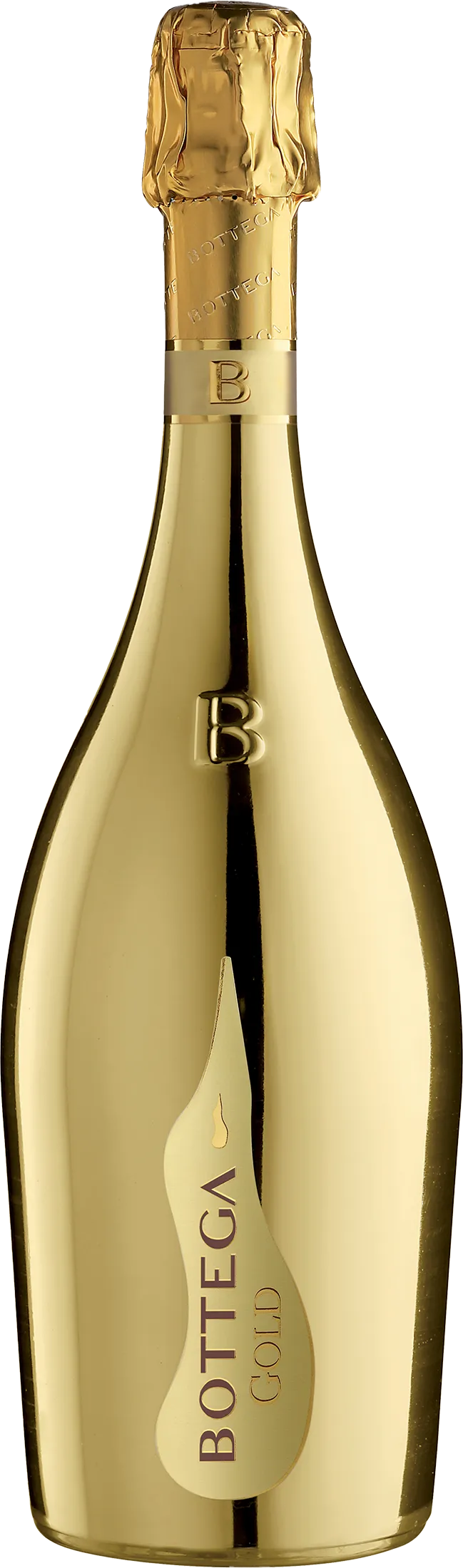
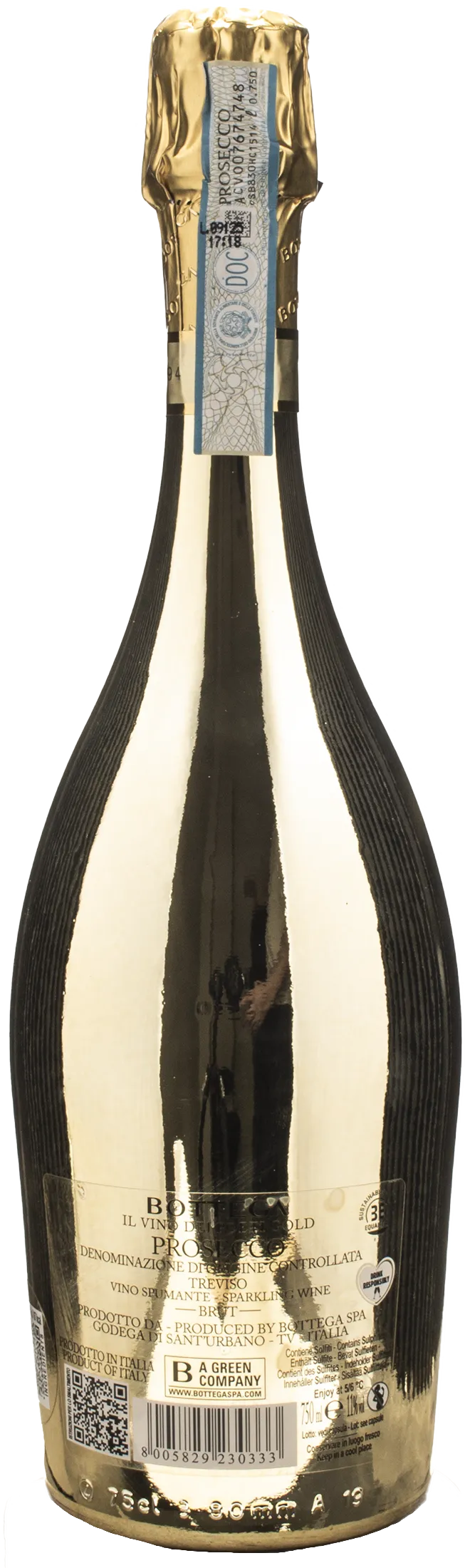
Bottega
Gold
| Denomination | Prosecco DOC |
|---|---|
| Size | 0,75 l |
| Alcohol content | 11.0% by volume |
| Area | Veneto (Italy) |
| Grape varieties | Chardonnay, Glera, Pinot Bianco, Pinot Grigio, Pinot Meunier, Pinot Nero |
| Aging | The first fermentation takes place in steel tanks following the addition of selected yeasts. In accordance with the Martinotti method, the second fermentation takes place in autoclaves, at a temperature that is maintained at 14 °C, to preserve the fragrance and typical aromas present in the grapes of origin. At the end of the sparkling process, the wine is cold stabilised, filtered and bottled. |
| Biologic | Sì |
| Product name | Gold |
| Color | Straw yellow with golden reflections. |
| Perfume | Fruity (with distinct hints of apple, white peach and citrus fruits) and floral notes (with delicate hints of acacia and wisteria). |
| Taste | Fresh, delicate, balanced, with a harmonious blend of acidity and softness. |
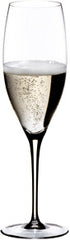
| Pairings | Aperitif and cocktails. Local charcuterie board, quinoa with mushrooms and radicchio, veal roll with radicchio. |
| Region | Veneto |
| Country | Italy |
Description
Vino dei Poeti Prosecco DOC is a Brut sparkling wine that originates from Glera grapes grown in the province of Treviso. This type of grape is cultivated according to classic and traditional techniques and has maintained over the years the quality and typicality that characterises Prosecco wine, the best known and most sold Italian sparkling wine in the world.
Details

Perlage

Perfume

Color

Taste
Serve at:
06 - 08 °C.
Longevity:
03 - 05 years
Pairings
- Start up year: 1977
- Oenologist: Fabrizio Dorigo
Bottega products are made with unique ingredients, craftsmanship and reflect the company's constant dedication to quality and sustainability.
Bottega's commitment to sustainability is also paramount: they recycle siliconised paper, use at least 85% recycled glass dark bottles, choose water-based paints for metallised bottles, follow organic farming criteria in their vineyards, and incorporate recycled ocean plastics. In addition, the company uses only 100% renewable energy. Read more


| Name | Bottega Gold |
|---|---|
| Type | White green charmat method sparkling wine brut |
| Denomination | Prosecco DOC |
| Size | 0,75 l |
| Alcohol content | 11.0% by volume |
| Grape varieties | Chardonnay, Glera, Pinot Bianco, Pinot Grigio, Pinot Meunier, Pinot Nero |
| Country | Italy |
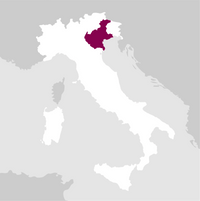
| Region | Veneto |
| Vendor | Bottega |
| Origin | Hills in the Province of Treviso (Veneto) |
| Soil composition | This area is characterised by a mild climate and clayey soils of alluvial origin rich in minerals, ideal conditions for best expressing the properties of the Glera grape. |
| Cultivation system | "Modified Cappuccina - Sylvoz |
| Plants per hectare | 2500-3000 |
| Yield per hectare | 150 q/Ha |
| Harvest | From mid-September. The grapes are harvested when sensory analyses carried out on the berries in the vineyard and ripening index analyses show natural acidity and good minerality (induced by the soil). |
| Wine making | bunches, generally harvested around mid-September, are brought quickly to the cellar to avoid mechanical damage and early oxidation. This is followed by destemming and soft pressing of the grapes to separate the skins from the must, and finally by decanting, i.e. cleaning the must. |
| Aging | The first fermentation takes place in steel tanks following the addition of selected yeasts. In accordance with the Martinotti method, the second fermentation takes place in autoclaves, at a temperature that is maintained at 14 °C, to preserve the fragrance and typical aromas present in the grapes of origin. At the end of the sparkling process, the wine is cold stabilised, filtered and bottled. |
| Residual sugar | 12.0 gr/L |
| Allergens | Contains sulphites |