


Attems - Frescobaldi
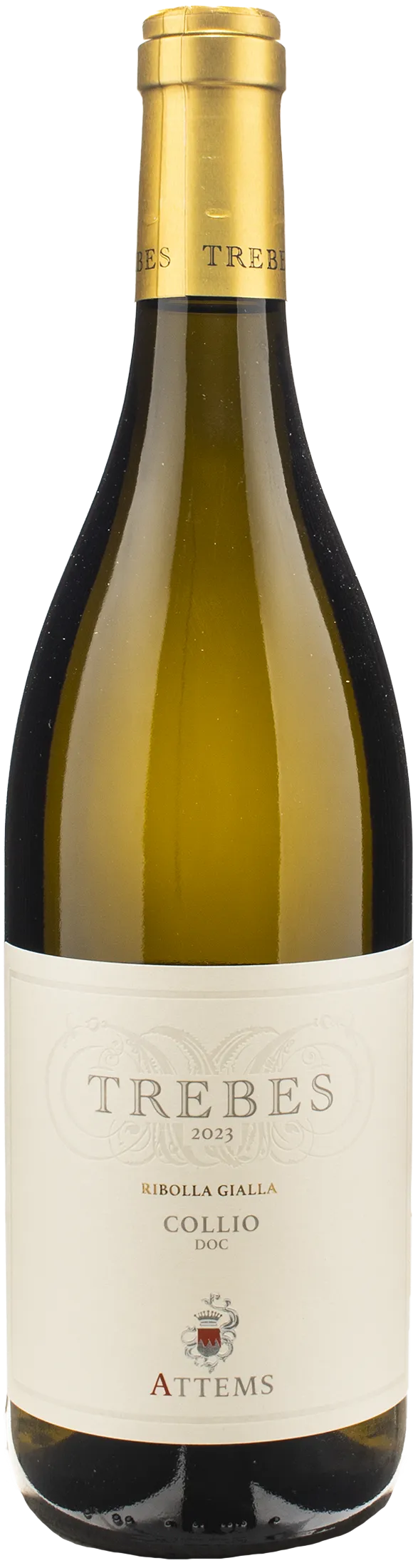
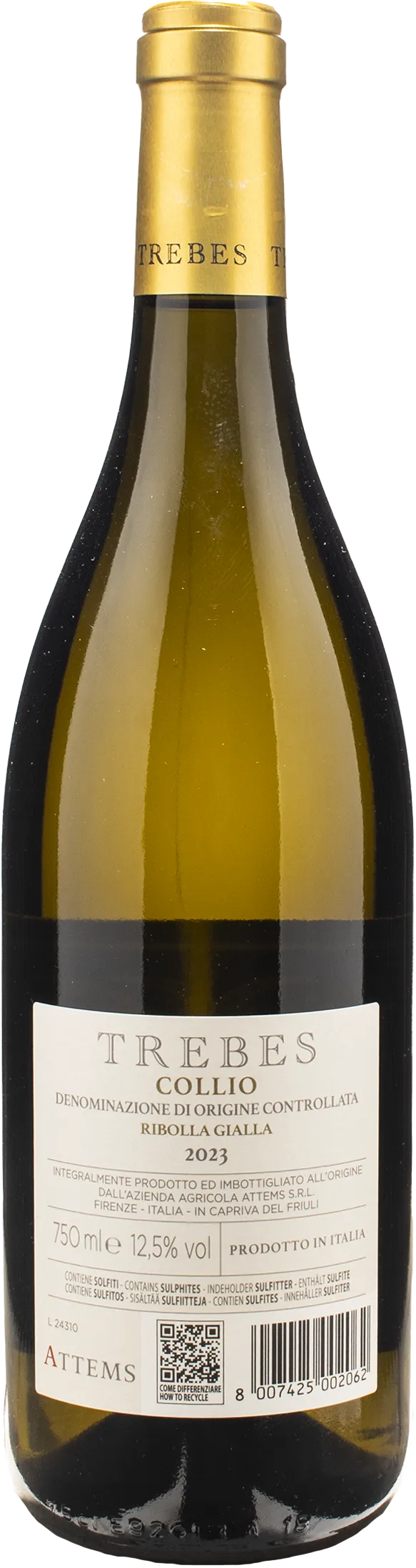
Ribolla Gialla Trebes 2023
| Denomination | DOC Collio Goriziano Ribolla Gialla |
|---|---|
| Size | 0,75 l |
| Alcohol content | 12.5% by volume |
| Area | Friuli-Venezia Giulia (Italy) |
| Grape varieties | 100% Ribolla Gialla |
| Aging | Aged in barrels for 6 months, then 2 months in concrete; after bottling, it matures in the bottle for a further 2 months; aged for 10 months on fine lees at low temperature. |
- Origin: Collio DOC, Friuli-Venezia Giulia; soil of calcareous marl of marine origin
- Grape variety: 100% Ribolla Gialla; dry wine with lively acidity, solid structure and delicate tannin
- Vinification: fermentation on the skins, natural punch-downs, no malolactic fermentation
- Ageing: 10 months on fine lees, 6 months in barrel, 2 months in concrete, 2 months in bottle
- Aromas: linden, dandelion, hazelnut, vanilla and pepper; persistent and savoury finish with mandarin
Description
What kind of wine it is
Ribolla Gialla Trebes by Attems is a still white wine with the Collio denomination from Friuli-Venezia Giulia, an authentic expression of Ribolla Gialla. This dry white boasts a solid structure and vibrant acidity, accompanied by a slight tannic texture derived from skin maceration. The bouquet ranges from elegant notes of linden and dandelion flowers, enriched by hints of hazelnut, vanilla, white pepper and a delicate smoky touch. On the palate, it is dynamic, finishing with a long and savoury finish that offers pleasant returns of mandarin and spices.
Where it comes from
This white originates in Collio, a hilly area historically linked to viticulture where the Attems estate has operated since the 16th century. The vineyards grow on dedicated terraces, sinking their roots into a unique soil called Ponca. This particular calcareous marl, composed of ancient seabeds with sandstones and sands of Eocene origin, imparts its distinctive marine savouriness to the wine. The management of the soil and vineyard ensures regular ripening, consistently defining the decisive and linear character of this native variety.
How it is produced
Manual harvesting ensures the selection of perfectly ripe grapes. The winemaking process involves fermentation on the skins with natural punch-downs, avoiding malolactic fermentation to preserve freshness. The process continues with a long ageing on fine lees at low temperature for ten months. Maturation continues for six months in barrels and two months in concrete, concluding with two months of bottle ageing.
History and Curiosities
The identity of Ribolla Gialla Trebes 2023 is deeply rooted in the tradition of Attems, a historic estate present in the Collio region since 1506. The vines thrive on the characteristic terraces of Ponca, a soil formed from ancient seabeds that imparts elegance to the grapes, which are strictly hand-picked. Ribolla Gialla has also been cultivated for centuries in the hilly vineyards of Friuli, where the renowned ‘Rabiole de Collibus’ originates.
Tasting notes
Perfume
Color
Taste
Serve at:
10 - 12 °C
Longevity:
03 - 05 years
- Start up year: 1506
- Oenologist: Daniele Vuerich
- Bottles produced: 725.000
- Hectares: 44
A thousand-year-old tradition that has made this winery a point of reference in the territory and that has seen Count Douglas Attems as its protagonist: he is credited with founding, in 1964, the Consorzio dei Vini del Collio, the third largest in Italy and the first in Friuli.
The history of Attems is thus intertwined with the history of Friuli Venezia Giulia itself: from the Patriarchate of Aquileia to the County of Gorizia, from the First World War to the present day.
Since 2000, Attems has been owned by the Frescobaldi family, which has preserved its historical value intact, giving it a future of innovation. Read more


| Name | Attems Ribolla Gialla Trebes 2023 |
|---|---|
| Type | White still |
| Denomination | Collio DOC |
| Vintage | 2023 |
| Size | 0,75 l |
| Alcohol content | 12.5% by volume |
| Grape varieties | 100% Ribolla Gialla |
| Country | Italy |
| Region | Friuli-Venezia Giulia |
| Vendor | Attems - Frescobaldi |
| Story | History and Curiosities The identity of Ribolla Gialla Trebes 2023 is deeply rooted in the tradition of Attems, a historic estate present in the Collio region since 1506. The vines thrive on the characteristic terraces of Ponca, a soil formed from ancient seabeds that imparts elegance to the grapes, which are strictly hand-picked. Ribolla Gialla has also been cultivated for centuries in the hilly vineyards of Friuli, where the renowned ‘Rabiole de Collibus’ originates. |
| Origin | Collio, Friuli-Venezia Giulia |
| Soil composition | "Ponca" consisting of fragmented sandstone rocks, silt and an evident sandy component, of Eocene origin |
| Cultivation system | Spurred cordon |
| Yield per hectare | 60 q.li |
| Production technique | Fermentation in contact with the skins (skin maceration) with natural pump-overs and pigeage |
| Wine making | Manual harvest, fermentation with maceration on the skins (fermentation in contact with the skins) with natural pump-overs/pigeage; separation of the skins at the end of fermentation; ageing for 10 months on fine lees at low temperature, then 6 months in barrel and 2 months in concrete; followed by 2 months of maturation in bottle; malolactic fermentation avoided. |
| Aging | Aged in barrels for 6 months, then 2 months in concrete; after bottling, it matures in the bottle for a further 2 months; aged for 10 months on fine lees at low temperature. |
| Total acidity | 5.7 gr/L |
| Residual sugar | 0.5 gr/L |
| Allergens | Contains sulphites |