


Argentiera
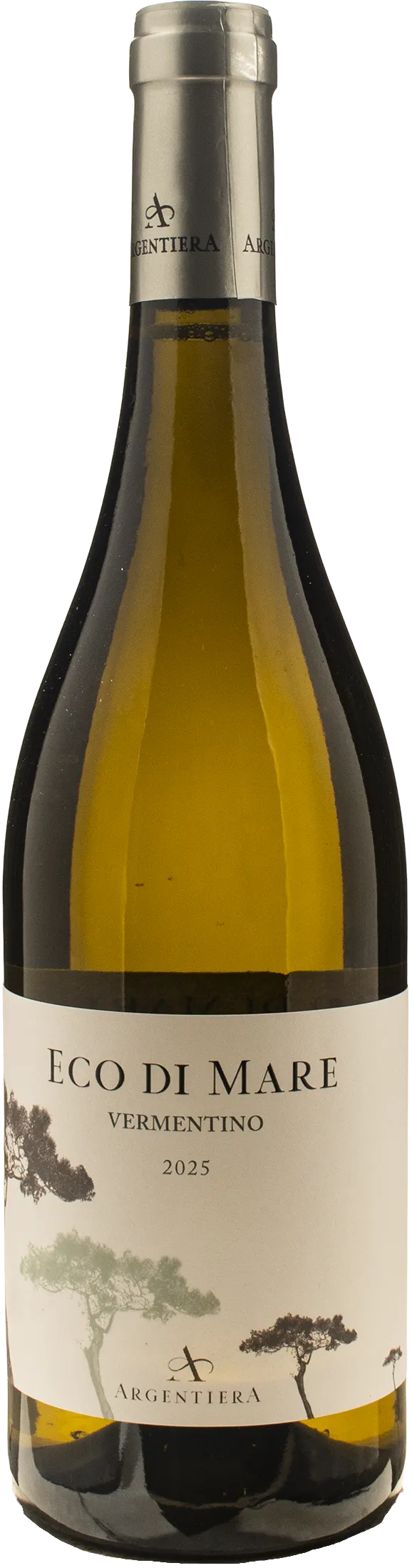
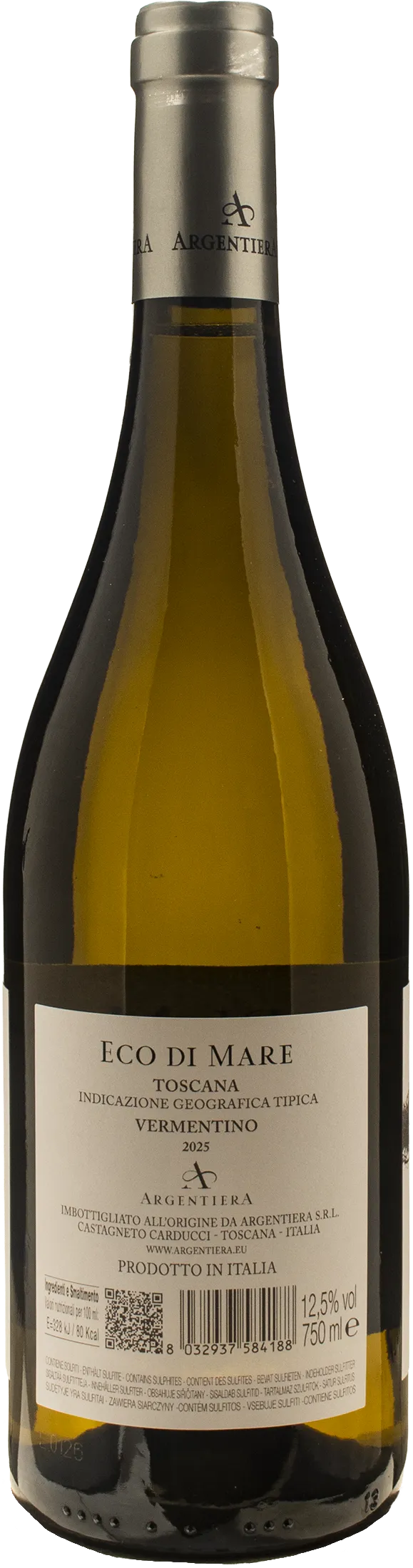
Vermentino Eco di Mare 2025
| Denomination | IGT Toscana |
|---|---|
| Size | 0,75 l |
| Alcohol content | 12.5% by volume |
| Area | Tuscany (Italy) |
| Grape varieties | 100% Vermentino |
| Aging | Aged for several months in stainless steel; further ageing in the bottle before being released for sale. |
- Tuscan Vermentino: dry white wine, vintage 2025, 12.5% vol, Toscana Bianco IGT
- Fruity and floral aromas: notes of pear, apricot, banana, white flowers and sage
- Tasting: fresh and balanced, soft and juicy texture, savoury and mineral finish
- Vinification: hand-picked, 15 days at controlled temperature, aged on fine lees
- Pairings: 10-12°C, ideal for shellfish, fried foods, risottos, asparagus and white meats
Description
What kind of wine it is
Eco di Mare by Argentiera is a refined still white wine made from Vermentino, an authentic expression of Tuscany. On the nose, it reveals an inviting bouquet of pear, apricot and white flowers, enriched by delicate hints of sage. On the palate, it displays a perfect balance between freshness and a pleasant structural softness. It stands out for its vibrant mineral character that leads the tasting towards a savoury and persistent finish, ideal for accompanying shellfish, delicate risottos and asparagus.
Where it comes from
This wine originates from the hills of the Maremma, in the southernmost part of the Bolgheri area. The vines sink their roots into complex soils, rich in clay, marl and calcareous components, situated at altitudes between sixty and two hundred metres. Protected by dense woods, the rows benefit from excellent sun exposure and the constant breezes coming from the Mediterranean Sea. This daytime ventilation ensures the health of the grapes and imparts the characteristic saline note.
How it is produced
Care in the vineyard culminates with a manual harvest, aimed at picking the grapes at the ideal stage of ripeness. In the winery, fermentation takes place in steel tanks at a controlled temperature for fifteen days. Prolonged contact with the fine lees enriches the structure and aromatic complexity, preserving the purity of the fruit. Maturation continues in steel for several months to maintain the vibrancy of the sensory profile, concluding with a final rest that stabilises its elegance.
History and Curiosities
Founded in 1999 in the enchanting southern Bolgheri region, the Argentiera estate represents an outstanding example of winemaking excellence overlooking the Mediterranean Sea. Its 85 hectares are nestled within lush woodlands rich in biodiversity, creating a microclimate ideal for the vineyards situated between 60 and 200 metres above sea level. Under the guidance of an expert team of oenologists, the winery transforms these gifts of nature into masterpieces such as Eco di Mare, celebrated by international critics with the prestigious score of 94 awarded by both Decanter and James Suckling.
Tasting notes

Perfume

Color

Taste
Serve at:
10 - 12 °C
Longevity:
03 - 05 years
- Start up year: 1999
- Oenologist: Nicolò Carrara
- Bottles produced: 480.000
- Hectares: 85
The name Argentiera derives from ancient silver mines, whose traces are preserved by the history ’s pen since the Etruscans. The Etruscan civilisation developed the peninsula’s first metallurgy, and their far-trading ships brought the art of metalworking to the remote corners of the flourishing archaic Greek settlements.
The estate extends over 153 hectares and embraces a one-of-a-kind biodiversity, a fundamentally important biological mosaic that allows the vineyards to flourish to their optimum extent, protected from insects, harmful animals, and climate-change stress. Read more


| Name | Argentiera Vermentino Eco di Mare 2025 |
|---|---|
| Type | White still |
| Denomination | Toscana IGT |
| Vintage | 2025 |
| Size | 0,75 l |
| Alcohol content | 12.5% by volume |
| Grape varieties | 100% Vermentino |
| Country | Italy |
| Region | Tuscany |
| Vendor | Argentiera |
| Story | History and Curiosities Founded in 1999 in the enchanting southern Bolgheri region, the Argentiera estate represents an outstanding example of winemaking excellence overlooking the Mediterranean Sea. Its 85 hectares are nestled within lush woodlands rich in biodiversity, creating a microclimate ideal for the vineyards situated between 60 and 200 metres above sea level. Under the guidance of an expert team of oenologists, the winery transforms these gifts of nature into masterpieces such as Eco di Mare, celebrated by international critics with the prestigious score of 94 awarded by both Decanter and James Suckling. |
| Origin | Colline vicino al Mar Mediterraneo, a Bolgheri (Maremma), in Toscana, Italia |
| Soil composition | Complex soils including limestone, clay, marl, calcareous components and a high organic matter content |
| Fermentation | About 15 days |
| Production technique | Manual harvest; temperature-controlled fermentation in stainless steel tanks with contact on the fine lees; ageing for a few months in steel and subsequent ageing in the bottle |
| Wine making | Manual harvest; fermentation at controlled temperature in stainless steel tanks for about 15 days with contact on fine lees; maturation for several months in steel to integrate the aromas; further ageing in bottle before release to preserve varietal freshness and minerality. |
| Aging | Aged for several months in stainless steel; further ageing in the bottle before being released for sale. |
| Allergens | Contains sulphites |