


Marchesi Antinori
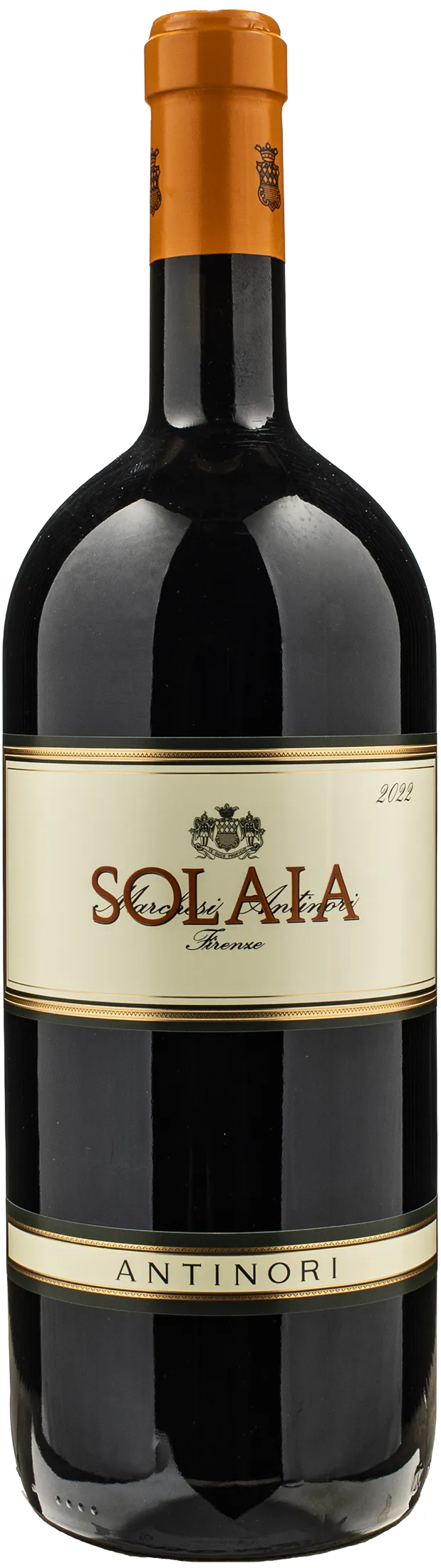
Solaia 2022
| Denomination | IGT Toscana |
|---|---|
| Size | 1,50 l |
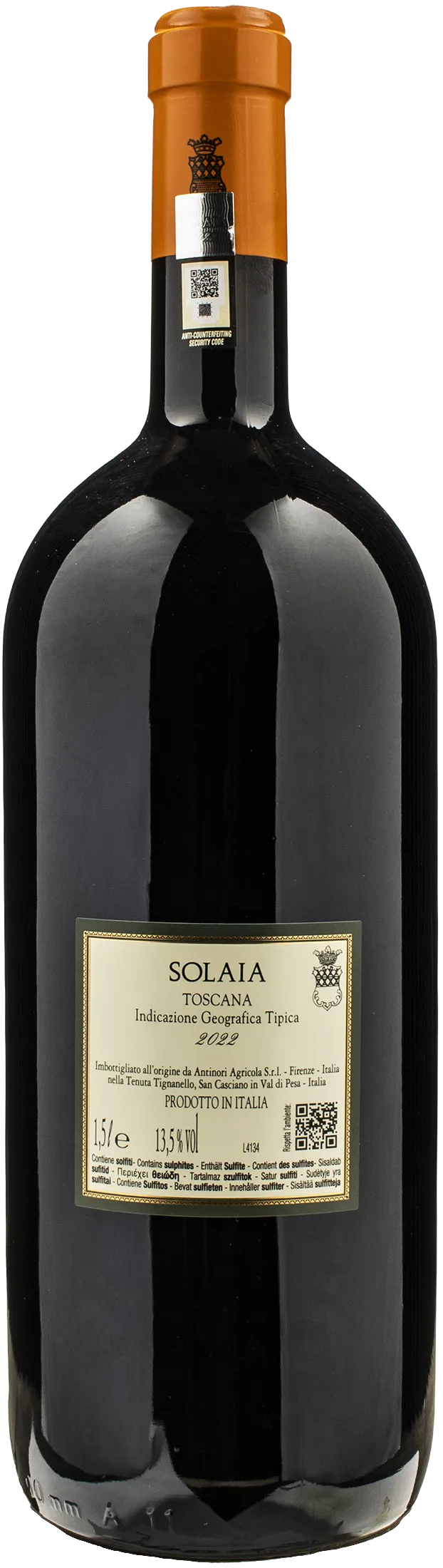
| Alcohol content | 13.5% by volume |
| Area | Tuscany (Italy) |
| Grape varieties | 75% Cabernet Sauvignon, 20% Sangiovese, 5% Cabernet Franc |
| Aging | They were then blended, rested for about 12 months in barriques, racked and finally, after careful tasting barrique by barrique, the wine was bottled. Market introduction took place after a further year of ageing. |
Description
From the Tignanello estate, in the heart of Chianti Classico between the Greve and Pesa valleys, comes one of the pearls of the Italian wine renaissance, Solaia. The estate, owned by the Marchesi Antinori family since the mid-19th century, has always been dedicated to viticulture, and its two products, Solaia and Tignanello, are among the most well-known and appreciated wines in the world. Solaia is treated and vinified in a dedicated cellar to best enhance the peculiarities and all the details of the grapes. The estate, constantly evolving, is In the 1970s, it was a “Laboratory” for viticultural experimentation, both in techniques and in the introduction of new vineyard varieties, Cabernet Sauvignon and Cabernet Franc.
Solaia is a giant of Italian wines and has distinguished itself for its complexity, body and great longevity. Composed of a blend of the best Cabernet Sauvignon, Cabernet Franc grapes and a percentage of Sangiovese from the vineyard that bears the wine's name. After careful harvesting, the grapes are destemmed and the berries are selected on the sorting table, delicately pressed, and transferred to 60Hl truncated cone-shaped tanks where the prestigious art of winemaking begins. The goal during fermentation and maceration is to maintain the perfect balance between fruit and tannin quality, to enhance sweetness and fragrance. The winemaking process takes place in separate batches to better control the evolution of the fruit's flavors. Once the skins and wine have been separated, malolactic fermentation begins in barriques, which enhances the complexity of the wine. and pleasantness, culminating in approximately 18 months of aging in new French oak barrels. Before being bottled, the lots are combined to complete the evolution in wood and achieve greater cohesion.
Solaia has received top marks from the best Italian wine guides over the years, and not only that. Over the years, it has also managed to be considered one of the best wines in the world, so much so that it is one of the precursors of the "SuperTuscan" tradition.
Awards
-
2022
 5
5Italian Sommelier Foundation (FIS) guide This has been one of the most prestigious wine guides in Italy for over 10 years.
-
2022
 98
98/100
Decanter is a wine and lifestyle magazine, published monthly in around 90 countries. The magazine includes industry news, classic guides and advice on wine and spirits.
-
2022
 3
3This guide is highly respected and offers the most comprehensive review of Italian wines. It has a long tradition and is based on blind tastings carried out by over 100 experts.
-
2022
 98
98/100
James Suckling is an influential American wine critic and journalist who worked at Wine Spectator for 30 years. He left the magazine in 2010 to start his own website and guidebook (JamesSuckling.com). He specialises in Italian and Bordeaux wines.
-
2022
 96
96/100
Vinous is the online guide from Antonio Galloni, one of the world's leading wine connoisseurs.
-
2022
 95
95/100
Wine spectator is the most influential wine guide on the internet.
Tasting notes

Perfume

Color
Taste
Serve at:
18 - 20 °C
Longevity:
Over 25 years
Decanting time:
1 hour
- Start up year: 1385
- Oenologist: Renzo Cotarella
The Antinori family’s first encounter with wine dates back to 1385, when Giovanni di Piero Antinori joined the Guild of Wine Merchants to make the best use of the family’s country properties in Valdarno, around Florence.
However, it was not until the 16th century that banker and merchant Alessandro Antinori made the wine from his estates famous in Italy and abroad, travelling from Lyons to Flanders, and from Spain to Algiers.
Wine was to remain the family’s passion and main business activity, so much so that in 1898 the "Fattoria dei Marchesi Lodovico e Piero Antinori" was created by brothers Lodovico and Piero, the sons of Marchese Niccolò – a direct descendent of that other Niccolò who purchased Palazzo Antinori in 1506 and poured his efforts into publicising Tuscan wines around the world and creating fine quality products. For 26 generations the Antinori family have continued to make history.
In 2023, at the beginning of February, Villa Antinori Toscana IGT 2019 was named the third wine in the world, the only Italian wine, in Wine Specator's Top 10 Values 2022: the list of the 10 wines that according to the American magazine represent world excellence in terms of value for money. Read more


| Name | Antinori Solaia Magnum 2022 |
|---|---|
| Type | Red still |
| Denomination | Toscana IGT |
| Vintage | 2022 |
| Size | 1,50 l |
| Alcohol content | 13.5% by volume |
| Grape varieties | 75% Cabernet Sauvignon, 20% Sangiovese, 5% Cabernet Franc |
| Country | Italy |
| Region | Tuscany |
| Vendor | Marchesi Antinori |
| Origin | Solaia is a vineyard of approximately 10 hectares exposed to the south-west between the 350 and 400 meters above sea level on a limestone full of rocks ground with alberese rock, situated near Held Tignanello |
| Soil composition | Limestone full of rocks ground with alberese rock. |
| Yield per hectare | Less than 8,000 kg. |
| Production technique | For all three varieties, fermentation was conducted at an average temperature of 27 °C, without ever exceeding 31 °C, in order to preserve as much as possible the olfactory sensations and typicality of the fruit. Right from the start, the musts showed great complexity, great varietal typicality in aroma, elegance and colour, immediately foreshadowing a vintage of great potential. |
| Wine making | Devatting, at the end of alcoholic fermentation, the wines were placed in new oak barriques where malolactic fermentation took place by the end of the year. |
| Aging | They were then blended, rested for about 12 months in barriques, racked and finally, after careful tasting barrique by barrique, the wine was bottled. Market introduction took place after a further year of ageing. |
| Allergens | Contains sulphites |