


Villa Matilde
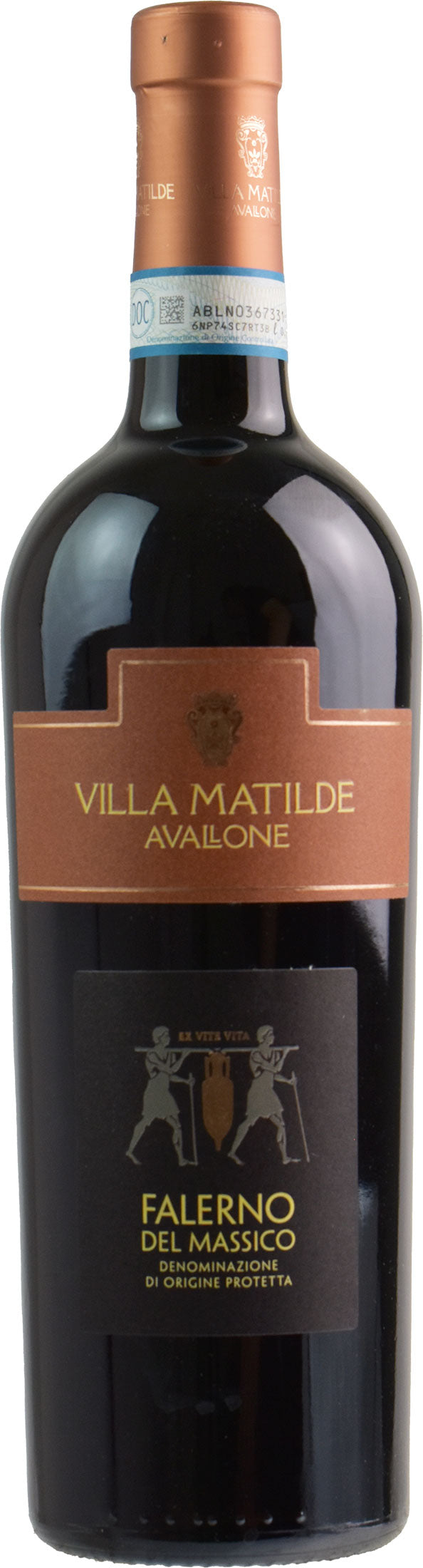
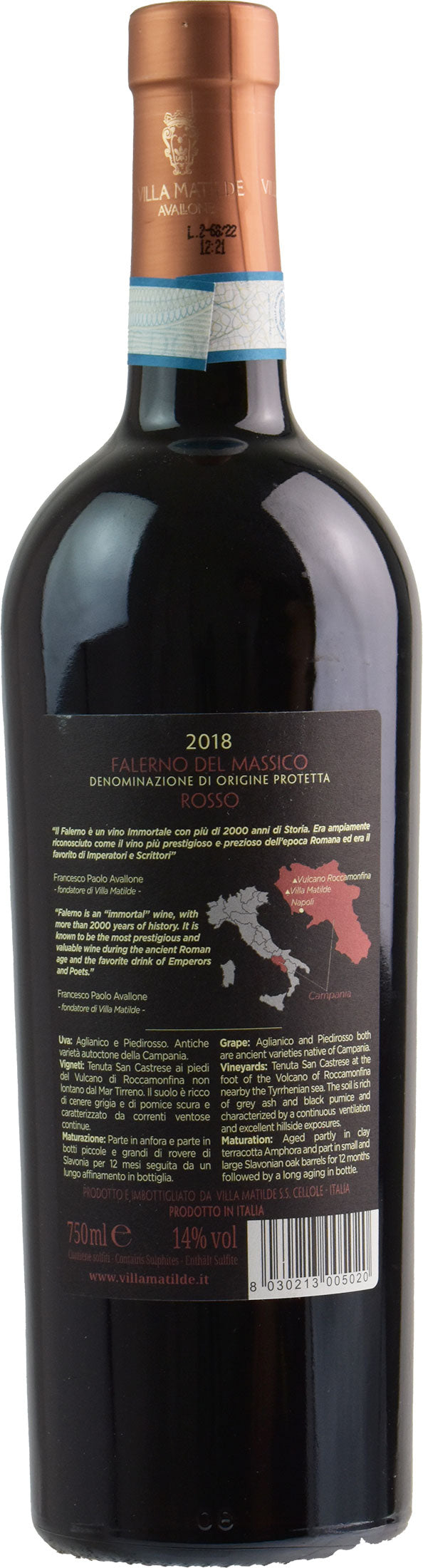
Falerno del Massico Rosso 2018
| Denomination | DOC Falerno del Massico Rosso |
|---|---|
| Size | 0,75 l |
| Alcohol content | 14.0% by volume |
| Area | Campania (Italy) |
| Grape varieties | 80% Aglianico, 20% Piedirosso |
| Aging | A portion of the wine (50%) matures in Allier oak barriques (one third of which are new), while the remaining 50% rests in traditional Slavonian oak casks of 10 to 35 hl for 10–12 months; this is followed by a period of bottle ageing. |
- Blend and alcohol content: 80% Aglianico, 20% Piedirosso; 14% vol
- Aroma and taste: notes of violet, dark fruits, spices and tobacco; soft tannins
- Volcanic origin: San Castrese vineyards in Cellole, volcanic soils of Roccamonfina
- Vinification: maceration for 20–25 days at 25–26°C with pumping over and délestage
- Serving and pairings: serve at 16–18°C, decant for 1 hour; ideal with red meats, game and cheeses
Description
What kind of wine it is
Villa Matilde Falerno del Massico Rosso is a renowned still red wine from Campania that expresses the authentic character of Falerno del Massico. It is made from a blend of Aglianico and Piedirosso, presenting in the glass with a deep ruby red colour. On the nose, it reveals an intense and complex bouquet, dominated by notes of violet, black fruits, blackberry and raspberry, enriched with spicy nuances, tobacco and delicate hints of humus. On the palate, it offers a warm and enveloping structure, where the persistence of soft tannins blends perfectly with a distinct mineral imprint and a pleasant toasted aftertaste.
Where it comes from
This wine has its roots in the hillside vineyards of the San Castrese estate, located in the municipality of Cellole. The vines grow at around one hundred and forty metres above sea level on the slopes of the extinct volcano of Roccamonfina, a territory with a millennia-old winemaking tradition, praised since classical literature. The volcanic soils, particularly rich in phosphorus, potassium and trace elements, nourish the plants and give the wine its unmistakable savouriness. The rigorous selection of bunches directly in the vineyard allows the historic territorial identity of this renowned Campanian area to be fully expressed.
How it is produced
The harvest takes place in two distinct phases in October, respecting the ripening times of Aglianico and Piedirosso. After destemming and crushing, the must undergoes maceration on the skins for about twenty to twenty-five days at a controlled temperature, supported by daily pump-overs and délestage to optimally extract colour and aromas. Once malolactic fermentation is complete, the wine begins its maturation: part rests in Allier oak barrels, while the other part matures in traditional Slavonian oak barrels. This process concludes with careful bottle ageing, which gives the wine its final balance and remarkable longevity.
History and Curiosities
Famous since ancient times and praised by the poet Virgil, Falerno del Massico represents a fundamental piece of wine history. Villa Matilde produces this prestigious label at the San Castrese estate, on the slopes of the extinct Roccamonfina volcano, where they have skilfully revived the historic Falernum grape varieties. Appreciated by experts such as James Suckling and Bibenda, the renowned 2018 vintage boasts an extraordinary ageing potential ranging from ten to fifteen years, offering an experience of timeless charm.
Awards
-
2018
 91
91/100
James Suckling is an influential American wine critic and journalist who worked at Wine Spectator for 30 years. He left the magazine in 2010 to start his own website and guidebook (JamesSuckling.com). He specialises in Italian and Bordeaux wines.
Tasting notes

Perfume

Color

Taste
Serve at:
16 - 18 °C
Longevity:
10 - 15 years
Decanting time:
1 hour

- Start up year: 1965
- Oenologist: Fabio Gennarelli, Riccardo Cotarella
- Bottles produced: 700.000
- Hectares: 125
Today, the company is run by Francesco Paolo's children, Maria Ida and Salvatore Avallone, with exclusive dedication to continuing their father's dream and project, taking up the important inheritance and looking even further. From the Ager Falernus, they have gone as far as the province of Avellino with new vineyards, new projects and wines that tell of the strong identity of Campania Felix. In 2004, Villa Matilde opened the Pietrafusa Estates in the Irpinia DOCG region, in the province of Avellino, starting the production of new wines. Read more


| Name | Villa Matilde Falerno del Massico Rosso 2018 |
|---|---|
| Type | Red still |
| Denomination | Falerno del Massico DOC |
| Vintage | 2018 |
| Size | 0,75 l |
| Alcohol content | 14.0% by volume |
| Grape varieties | 80% Aglianico, 20% Piedirosso |
| Country | Italy |
| Region | Campania |
| Vendor | Villa Matilde |
| Story | History and Curiosities Famous since ancient times and praised by the poet Virgil, Falerno del Massico represents a fundamental piece of wine history. Villa Matilde produces this prestigious label at the San Castrese estate, on the slopes of the extinct Roccamonfina volcano, where they have skilfully revived the historic Falernum grape varieties. Appreciated by experts such as James Suckling and Bibenda, the renowned 2018 vintage boasts an extraordinary ageing potential ranging from ten to fifteen years, offering an experience of timeless charm. |
| Origin | Vineyards on the hills of the San Castrese estate, at the foot of the extinct volcano of Roccamonfina, in the province of Caserta (Cellole) |
| Soil composition | Vulcanico, ricco di fosforo, potassio e microelementi |
| Cultivation system | Guyot (about 6 buds per plant) |
| Plants per hectare | 5,000–7,000 |
| Yield per hectare | Approximately 6,000 kg/ha |
| Harvest | Aglianico: third ten days of October; Piedirosso: second ten days of October |
| Fermentation temperature | 25–26 °C |
| Fermentation | 20–25 days |
| Production technique | Destemming and pressing with maceration on the skins for 20–25 days at 25–26 °C with daily pumping over and rack and return; subsequent malolactic fermentation and maturation in Allier oak barriques and large Slavonian oak casks |
| Wine making | Destemming and crushing followed by maceration of the grape skins at 25-26 °C for about 20-25 days, with daily pump-overs and délestage; after the alcoholic fermentation, malolactic fermentation takes place. |
| Aging | A portion of the wine (50%) matures in Allier oak barriques (one third of which are new), while the remaining 50% rests in traditional Slavonian oak casks of 10 to 35 hl for 10–12 months; this is followed by a period of bottle ageing. |
| Year production | 130000 bottles |
| Allergens | Contains sulphites |